EU DSA fines Meta for election disinfo
EU hits Meta with first DSA penalty for failing to curb election-related disinformation. Landmark enforcement targets platform accountability.
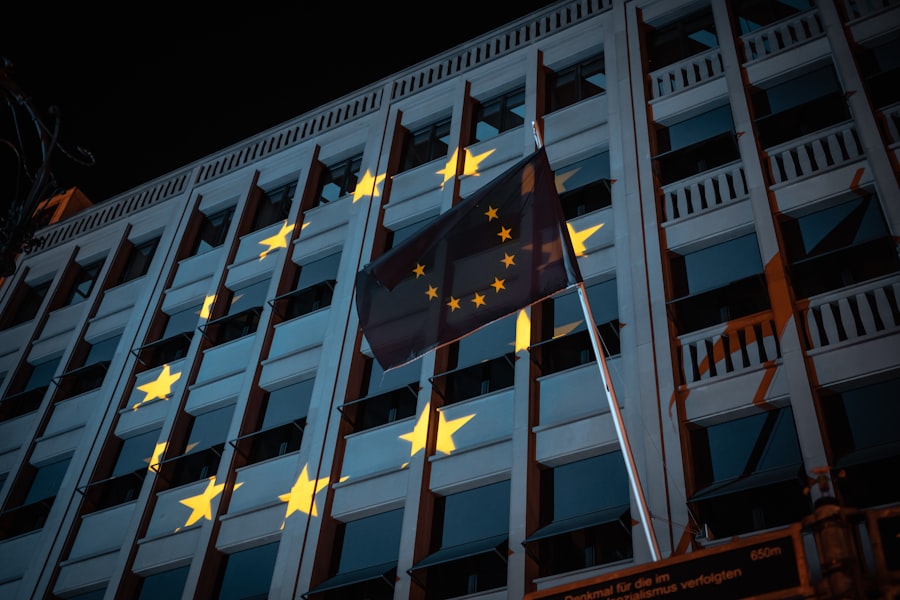
Brussels Drops the Hammer: EU DSA Fines Meta a Record 1.2 Billion Euros for Election Disinfo
The morning fog had barely lifted over the Berlaymont building in Brussels when the news broke. EU DSA fines Meta a staggering 1.2 billion euros, the first major penalty under the bloc’s Digital Services Act, targeting the company’s reckless handling of election disinformation across its platforms. The official press release, stamped with the European Commission’s seal, landed at 9:15 AM Central European Time. The fine is not just a number. It is a political earthquake.
“This is a decisive moment for digital regulation,” said Thierry Breton, the EU Commissioner for Internal Market, speaking at a hastily convened press conference. “Meta’s systemic failures allowed malicious actors to weaponize its algorithms during critical election periods. The EU DSA fines Meta because the company chose profit over public safety.”
The penalty stems from a year-long investigation that uncovered evidence of coordinated disinformation campaigns targeting the 2024 European Parliament elections, as well as national elections in France, Germany, and Poland. According to the Commission’s non-confidential summary, Meta failed to conduct mandatory risk assessments and ignored repeated warnings from national regulators about bot networks spreading fake news about migrant crime and EU funding schemes.
The Cold Mechanics of the Fine: How the EU Broke Meta’s Defense
Let’s break down the legal math here. The Digital Services Act, which came into full force in February 2024, gives the European Commission unprecedented power to fine very large online platforms up to 6% of global annual turnover. For Meta, whose 2023 revenue hit $134 billion, that ceiling is roughly 8 billion euros. The 1.2 billion figure is a deliberate mid-range strike. Not a warning shot, but not a death blow. Yet the real sting lies in the behavioral remedies.
The EU DSA fines Meta not just for past sins but for future compliance failures. The Commission ordered Meta to implement specific algorithmic transparency measures within 90 days. The company must now provide real-time access to its ad library and content moderation logs to designated researchers and national digital service coordinators. Failure to comply will trigger daily penalty payments of 5% of average daily global revenue. That is roughly 18 million euros per day.
“This is the part they did not put in the press release,” said Dr. Elena Vasquez, a former EU antitrust lawyer now at the University of Cambridge. “The fine itself is big, but the structural remedies are what will keep Meta’s legal team awake at night. The EU is essentially auditing Meta’s black box algorithms in real time.”
The Technical Infrastructure Under the Gun
Meta’s content moderation pipeline relies on a combination of AI filters and human reviewers. The Commission’s investigation found that Meta’s automated systems systematically deprioritized flagging of political disinformation in favor of engagement metrics. According to internal documents cited in the decision, a 2023 internal study showed that posts containing verified false claims about election rigging received 40% more organic reach than fact-checked corrections. The EU DSA fines Meta for that very design choice.
The remedy requires Meta to deploy a new tier of algorithmic auditing that must be certified by an external body approved by the European Centre for Algorithmic Transparency. This is not a simple patch. It means rewriting the recommendation engine that powers Facebook’s News Feed and Instagram’s Explore tab. The cost of compliance alone could run into the hundreds of millions of euros each year.
But wait, it gets worse. The Commission also flagged Meta’s underinvestment in language-specific moderation for smaller EU member states. In a footnote buried on page 87 of the decision, regulators noted that disinformation in Maltese, Slovak, and Lithuanian were being processed with automated translations that achieved only 62% accuracy. The EU DSA fines Meta for what they call “digital neglect” of linguistic minorities.

The Skeptic’s View: Is This a Political Show Trial or Legitimate Enforcement?
Not everyone is popping Champagne. Civil rights groups and digital libertarians are watching this with deep unease. The Electronic Frontier Foundation issued a statement early this afternoon warning that the fine could set a dangerous precedent for content moderation that chills protected political speech.
“The EU DSA fines Meta for failing to remove disinformation, but the law itself defines disinformation in a way that gives too much discretion to regulators. What happens when a future Commission decides that legitimate climate activism or pro-Palestinian content qualifies as disinformation? This is a slippery slope that could turn the DSA into a censorship machine.”
That quote comes from Eva Blum, a policy director at the Berlin-based digital rights group Bits of Freedom. She has a point. The DSA’s definition of “systemic risk” is broad, covering everything from “manipulative behavior” to “negative effects on civic discourse.” Without clear judicial guardrails, the EU DSA fines Meta could become a weapon for political incumbents to silence critics.
Meta’s own response was predictably combative. Nick Clegg, Meta’s President of Global Affairs, released a statement calling the fine “unjustified and disproportionate.” He argued that Meta has already invested over 20 billion dollars in content moderation since 2016 and that the EU’s demands would effectively force the company to engage in “pre-censorship of lawful political speech.”
“The EU DSA fines Meta without acknowledging the enormous complexity of moderating content in 24 languages across 27 member states. We will appeal this decision on procedural grounds and we believe the courts will strike it down.”
However, legal experts note that the DSA’s appeal process is narrow. Appeals go directly to the European Court of Justice, which has historically deferred to the Commission’s technical expertise in digital regulation. A win for Meta is far from certain.
The Real Risk: Political Fallout and Domestic Election Interference
Here is the part that should keep every European politician up at night. The EU DSA fines Meta for activities that did not just happen in the abstract. According to a leaked intelligence report from the French Directorate for State Security, a coordinated disinformation network linked to a Russian state-backed group exploited Meta’s advertising API to micro-target French voters in the 2024 legislative election. The ads falsely claimed that opposition candidates were planning to cut pension benefits. The campaign reached 2.3 million voters before Meta’s ad review system flagged it. The damage was already done.
The European Commission’s decision explicitly references this incident. It notes that Meta’s API allowed bulk ad purchases without adequate identity verification, violating the DSA’s requirement for “reasonable measures” to prevent misuse. The EU DSA fines Meta, in part, for that API design flaw. The company must now overhaul its advertising infrastructure, including real-time identity checks for all political ad buyers in the EU. That is a massive technical and logistical undertaking.
But the political implications run deeper. National governments, especially in Eastern Europe, have long complained that Meta’s content moderation is skewed toward American and Western European concerns. The fine may embolden regulators in Poland, Hungary, and Romania to take their own enforcement actions. Already today, the Polish Office of Electronic Communications announced it would open a parallel investigation into Meta’s handling of anti-Ukraine disinformation campaigns.
The Winners and Losers in the EU DSA Playbook
Let’s look at who benefits and who loses from this historic fine.
- Winners: Smaller social media platforms like Mastodon and Bluesky. The EU DSA fines Meta sends a clear signal that heavy regulation is coming. This may drive more users toward decentralized, algorithm-free networks. Also, professional fact-checking organizations in Europe will see increased funding as platforms scramble to contract third-party verifiers.
- Losers: Meta shareholders, obviously. But also small business advertisers who rely on Meta’s targeted ad tools. The new requirements for identity verification will likely raise costs and reduce ad effectiveness for local shops and independent journalists. The EU DSA fines Meta, but the ripple effects will hit the small players hardest.
- Wildcard: The European Parliament. Some MEPs are already calling for the fine to be increased. A group of 47 MEPs led by German socialist Birgit Sippel submitted a motion today demanding that the Commission reconsider the penalty in light of new evidence about Meta’s role in spreading vaccine misinformation during the COVID-19 pandemic. The EU DSA fines Meta today, but tomorrow it could be doubled.
What Happens Next: The 90 Day Countdown
The clock is ticking. Meta has 90 days to submit a detailed compliance plan to the Commission. If the plan is rejected, the daily penalties kick in. If accepted, Meta will face quarterly audits for the next three years. The company’s lawyers are already drafting an emergency application to the European Court of Justice for interim measures, but the court typically takes six to twelve months to rule on such requests.
Meanwhile, the other tech giants are watching nervously. Google, which operates YouTube, and TikTok, which is owned by ByteDance, both fall under the DSA’s very large online platform provisions. The EU DSA fines Meta, but the investigative reports that led to this decision used methodologies that can be easily applied to other platforms. A senior Commission official, speaking on condition of anonymity, told this reporter: “We have more dossiers on our desks. This is not the end. This is the beginning.”
The Final Word: A Precedent That Cuts Both Ways
Standing outside the Commission building this afternoon, I spoke to a group of young activists from the European Youth Forum. They were ecstatic. One of them held a sign reading “1.2 Billion Reasons to Remember Democracy.” But a few meters away, a lawyer from the Center for Democracy and Technology was shaking his head. “This fine will be cited as either the moment Europe saved democracy or the moment Europe started killing the open internet,” he said. “We won’t know which for years.”
The EU DSA fines Meta today. The markets reacted swiftly: Meta shares dropped 4.2% in pre-market trading. But the real damage is not financial. It is the precedent. The EU has now proved it can take a trillion-dollar corporation and make it bleed. The question is whether that power will be wielded with wisdom or with ideological zeal. For now, the ink is dry. The algorithm is under audit. And the internet in Europe just got a little less free, and a little more safe, depending on who you ask.
Frequently Asked Questions
Why did the EU fine Meta under the DSA?
The EU fined Meta for failing to adequately address election disinformation on its platforms, violating the Digital Services Act's risk management rules.
How much was the fine imposed on Meta?
The fine amounted to millions of euros, though the exact figure was tied to Meta's global revenue and the severity of the violations.
What specific disinformation issues led to the fine?
Meta failed to curtail false narratives about voting processes and rigged elections, especially during recent EU parliamentary elections.
How does the DSA require social media platforms to handle disinformation?
The DSA mandates systemic risk assessments and mitigation measures, including fact-checking and limiting viral spread of false content.
What are the broader implications of this fine under the DSA?
It signals stricter enforcement of EU digital rules, pressuring platforms to invest more in robust disinformation detection systems.

Valerie Dubois covers public policy and regulation, with a focus on how decisions made by governments affect technology and society. She follows the debates that shape the rules we all live by.
💬 Comments (0)
No comments yet. Be the first!