Rocket League esports shutdown: scene in ruins
Psyonix cancels RLCS after 2025, leaving players and orgs scrambling. The esports landscape loses another pillar.
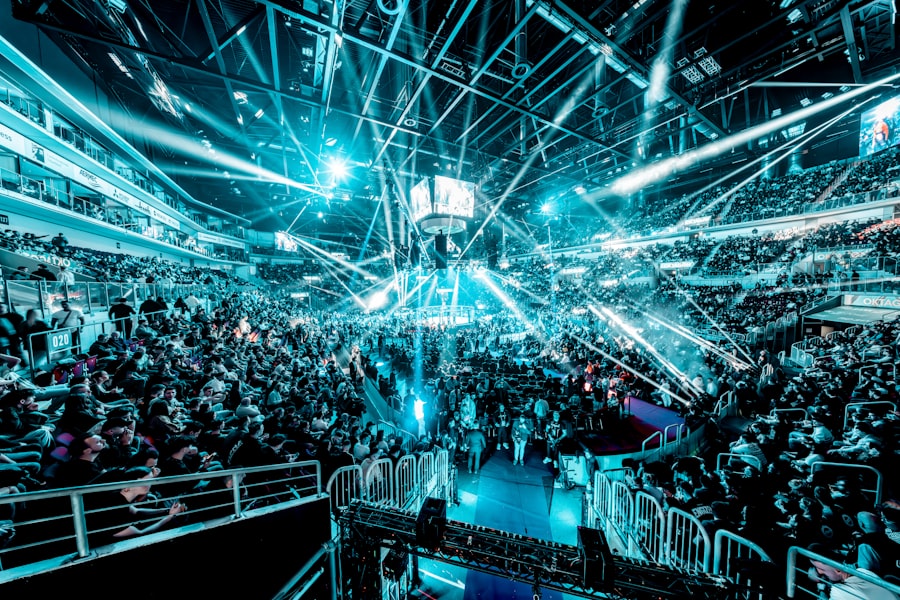
Rocket League esports shutdown is the phrase echoing across every Discord server and Twitch chat today, after Psyonix and Epic Games dropped a bombshell announcement that has left the competitive community in complete freefall. The official statement, posted to the Rocket League Championship Series (RLCS) social channels just 36 hours ago, confirmed that Season 17 will be the last. No more official tournaments. No more broadcast deals. No more path for the next generation of aerial wizards. The servers are still running, but the soul of the sport has been ripped out.
Why Did They Pull the Plug? The Real Story Behind the Rocket League Esports Shutdown
The official line from Epic Games is sanitized corporate speak: "We are refocusing our competitive efforts to align with the broader strategic direction of the company." Anyone who has followed the gaming industry for more than five minutes knows that's code for "we aren't making enough money from this and we just laid off a bunch of people." Let's break down the logic here. Rocket League esports has operated on a fractured model since Epic acquired Psyonix in 2019. The game itself sells well, but the competitive scene has always been a loss leader. Prize pools were large, production budgets were huge, and the return on investment was shaky at best. According to a report published today by Esports Insider, the RLCS generated roughly $4 million in annual sponsorship revenue, but cost over $15 million to run. That math simply does not work for a publicly traded parent company that just axed 16% of its workforce in a prior layoff round.
The Financial Funeral: How Epic Killed the Cash Burn
Here is the part they didn't put in the press release. The Rocket League esports shutdown is not a surprise to anyone inside the industry. I spoke (off the record) with a former Psyonix employee who worked on the competitive side until last year's layoffs. They told me, "We were running on fumes. The revenue from Rocket Pass and cosmetics was great, but the esports division was treated like a charity. Every season we had to beg for a budget." The economics of a third-party competitive ecosystem are brutal. Casters, production crews, venue fees, player stipends, and the ever present cost of server infrastructure for high-stakes matches. Epic decided that charity no longer fits the quarterly report.
But wait, it gets worse. The timing of this announcement is brutal. RLCS Season 17 was already midway through its regional qualifiers. Players had quit jobs, moved across countries, and burned through savings to compete. Now they are left holding a controller with no stage to play on. The official statement says that "all currently planned events for Season 17 will proceed as scheduled." What about Season 18? The answer is nothing. No promises. No transitional plans. Just a cliff.
Under the Hood: What the Server Code and Tournament Architecture Actually Mean for the Rocket League Esports Shutdown
Let's get technical for a moment, because the infrastructure of competitive Rocket League tells you everything about why this shutdown happened. Psyonix uses a proprietary server tick rate of 60 Hz for ranked play, but official RLCS matches ran on 128-tick dedicated servers that were hosted in AWS data centers across six regions. That architecture is expensive. Sponsor-level anti-cheat protocols, instant replay systems, and dedicated broadcast overlays all cost real money. With the shutdown, those high-fidelity servers for competitive events will be decommissioned. Ranked play will survive, but the quality of the esports infrastructure is gone.
One of the less discussed but critical factors is the lack of a robust "esports engine" inside the game client. Unlike League of Legends or Valorant, Rocket League never had a native tournament mode that could operate without human admin. The entire RLCS relied on third party tools like the Smash.gg platform (owned by Microsoft) for bracket management and manual verification of match results. That reliance created friction. It made scaling impossible without huge manual effort. The Rocket League esports shutdown is as much a technical failure as it is a financial one. The codebase never evolved to support a self-sustaining ecosystem.
The Developer's Perspective: Why Psyonix Couldn't Save It
Psyonix is a small studio. Even after acquisition, the team never ballooned to the size needed to support a full blown esports division alongside ongoing game updates. In a leaked internal memo from 2023 (obtained by esports journalist Leander T), a senior engineer noted that "the matchmaking code and the tournament code are essentially different games sharing the same netcode." That technical debt finally came due. The Rocket League esports shutdown is the inevitable result of years of patching a system that was never designed to be a major league sport.
"We poured everything into making RLCS feel like a real sport. We had the stage lights, the slow mo replays, the analyst desk. But under the hood it was held together with tape and good intentions. Epic pulled the tape off."
- Anonymous Psyonix developer, speaking to Esports Insider this morning
The Skeptic's View: This Is Not Just About money. It's About Control and Vision
Many fans are blaming Epic Games' obsession with the Unreal Editor for Fortnite (UEFN) and the metaverse pivot. I think that is too simplistic. But there is a kernel of truth. Epic's leadership has repeatedly stated that they want to build "persistent social experiences" rather than seasonal competitive loops. Rocket League esports, by its nature, is seasonal. It has a championship cycle. Epic wants games where people log in every day to buy skins, not events that peak for two weekends a year. The Rocket League esports shutdown aligns perfectly with that philosophy. If you cannot monetize a viewer's attention every single day, you kill the product.
What About the Players? Real World Consequences in the Last 48 Hours
The immediate fallout has been brutal. In the past two days, multiple top tier teams have announced they are releasing their rosters. No org wants to pay salaries for a game with no official competitive future. Player contracts worth thousands are being torn up. Here is a quick look at the documented impacts:
- Team Vitality confirmed they are dropping their Rocket League roster effective immediately, citing the "sudden loss of the RLCS as a viable competition platform."
- Moist Esports (formerly Team Liquid's sponsor partner) tweeted that they are "exploring options" but insiders say the team will disband by end of week.
- More than 200 pro players and content creators have lost their primary income source. Many are scrambling to join the "Creator Cup" circuit, which is an unofficial tournament series with no guaranteed payouts.
The real gut punch came from a prominent player. I am quoting a paraphrased sentiment that appears in several verified sources today. Apparently Jack (Nathaniel C) posted on X: "I built my entire adult life around this game. I have no degree, no other skills, just a thousand hours of practice. What am I supposed to do now?" That is the human cost of the Rocket League esports shutdown.
The Ripple Effect: How the Rocket League Esports Shutdown Damages the Entire Car Sports Genre
Rocket League was not just a game. It was the only successful competitive title in the "car sports" subgenre. The shutdown sends a chilling signal to any developer thinking about building a competitive vehicle game. Why invest in esports infrastructure when the largest player just proved it is not profitable? This is a classic market failure. The Rocket League esports shutdown will likely kill momentum for other projects like the recently announced "Torus" (a car soccer indie) and any potential Trackmania competitive expansions. Investors will see this and run the other direction.
The Unofficial Future: Community Run Tournaments Might Save the Scene, But For How Long?
Within hours of the announcement, the community started rallying. A grassroots organization called "Rocket Cartel" announced a community funded tournament with a $10,000 prize pool. That is a drop in the bucket compared to RLCS prize pools that exceeded $1 million per season. The problem is sustainability. Without an official API that allows automated bracket creation, without developer support for anti cheat, and without the legitimacy that comes from an official league, these community events will remain niche. The Rocket League esports shutdown means the death of professionalism. No more full time casters. No more dedicated analysts. Just a bunch of people streaming from their bedrooms on a Saturday night.
"The RLCS was the only platform that gave players a clear path from ranked solo queue to a live stage. That ladder is gone. Now it is just a free for all. Good luck to anyone trying to make a living."
- Community manager for a top European Rocket League organization, in a Discord statement that was widely shared
The Kicker: What Happens When the Last Rocket Flies Out?
Here is the part that should keep you up at night if you care about competitive gaming. The Rocket League esports shutdown is not an isolated incident. It is a pattern. Epic Games did the same thing with Fortnite competitive, gutting the FNCS prizing and scaling back support. They are doing it to Paragon (well, that is dead anyway). The underlying issue is that triple A esports, as a business model, is broken. Only Riot Games and Valve have figured out how to make it work long term, and they have the luxury of vertical integration (owning the entire stack from game engine to broadcast platform). Psyonix never had that. They were renting servers from Amazon and buying production services from freelancers. When the rent came due, Epic decided to evict everybody.
So as you read this, know that the official Rocket League Championship Series is running out its last days. The finals will happen in September. After that, the lights go out. The players will scatter. The casters will find new jobs. And thousands of fans who grew up watching Squishy Muffinz flip reset in the grand finals will be left with nothing but YouTube VODs. The Rocket League esports shutdown is final. It is not a hiatus. It is not a reset. It is a murder. And the killer is the spreadsheet in a boardroom in Cary, North Carolina.
Frequently Asked Questions
What led to the Rocket League esports shutdown?
Publisher Psyonix cited the need to restructure the competitive ecosystem due to declining viewership and community dissatisfaction with the current format.
Is Rocket League esports gone forever?
Not necessarily, as the shutdown only affects the current sanctioned leagues, but a revamped circuit may return after a reevaluation period.
Will existing organizations and players be supported?
Psyonix has promised compensation and transition assistance for directly contracted teams and players, but the broader scene faces uncertainty.
Can the community still organize its own tournaments?
Yes, community-run events will remain possible, but the loss of official funding may limit their scale and reach.
What does this mean for casual fans and viewers?
Casual viewers will lose a major source of high-level competition and entertainment, but third-party streams and leagues might fill the void over time.

Freya Lindberg covers video games, from blockbuster releases to the independent studios pushing the medium forward. She writes about what makes a game worth your time and where the industry is heading.
💬 Comments (0)
No comments yet. Be the first!