Nvidia AI
Nvidia AI is at the center of explosive copyright lawsuits alleging systematic use of pirated creative works to train its artificial intelligence models.
The Legal Cannon Fired at Silicon Valley's Heart
Nvidia AI copyright positions have just detonated a legal and cultural bomb that is still echoing across courtrooms from San Francisco to New York. In the last 48 hours, a coordinated wave of major lawsuits has slammed into the trillion-dollar chipmaker, not for its hardware, but for the very soul of the artificial intelligence it powers. The allegation is stark and monumental, that Nvidia built its empire by systematically pirating the creative work of millions of people. This isn't a skirmish, it's a full-scale war over the future of creation, and the company that gave AI its engine is now directly in the crosshairs.
From Chipmaker to Copyright Target: The Lawsuits Pile Up
Here is the part they didn't put in the press release. While Nvidia has long presented itself as the neutral engine-maker for the AI race, a series of explosive legal filings now paint the company as a central architect of alleged mass copyright infringement. The most significant blow landed just yesterday. According to a detailed report from Reuters, authors Brian Keene, Abdi Nazemian, and Stewart O'Nan filed a proposed class-action lawsuit in San Francisco federal court. Their claim is that Nvidia used their copyrighted books, without permission or payment, to train its flagship NeMo AI platform.
But wait, it gets worse. This isn't an isolated case. It's part of a precise, targeted legal offensive. The authors' suit explicitly cites a previous copyright infringement case against Microsoft and OpenAI, noting that the dataset used to train NeMo, called "The Pile," was found to contain their works. Their lawyers are arguing that Nvidia "knowingly" used this pirated material. This creates a direct chain of liability, tying Nvidia to the already contentious legal battles surrounding AI training data. The lawsuit states plainly, "They were built by copying massive amounts of copyrighted data," a damning indictment of the foundational process behind the Nvidia AI copyright paradigm.
"They were built by copying massive amounts of copyrighted data," the lawsuit alleges, targeting the core of Nvidia's AI development process.
The "Pile" of Evidence: A Dataset Under the Microscope
Let's break down the cultural math here. "The Pile" is not some obscure file, it's a massive 825GB dataset compiled by EleutherAI, a non-profit research group. It was intended for open-source research and includes everything from academic papers to online forums, and crucially, copyrighted books. The authors' suit points out that a late 2023 transparency report from EleutherAI itself revealed their books were in the dataset and were subsequently removed due to "reported copyright infringement." This isn't speculative, it's documented. For Nvidia, which touts its meticulous engineering, the claim is that it turned a blind eye to the provenance of the fuel it used, making the entire Nvidia AI copyright stance one of willful ignorance at best.
Under the Hood: How Training Data Became the New Oil Field
To understand why this Nvidia AI battle is so explosive, you have to look at what's running on those $40,000 H100 GPUs. The raw material for modern generative AI is data, scraped at a scale that defies human comprehension. Every AI model, from the one that writes your emails to the one generating photorealistic images, was trained on a dataset composed of millions of books, articles, images, and videos pulled from the internet. The entire multi-billion dollar industry rests on a legal gamble, the "fair use" doctrine. Companies like Nvidia, OpenAI, and Meta have bet that ingesting copyrighted material to create a new, transformative system is legally permissible. Creators across the globe are calling it industrial-scale theft.
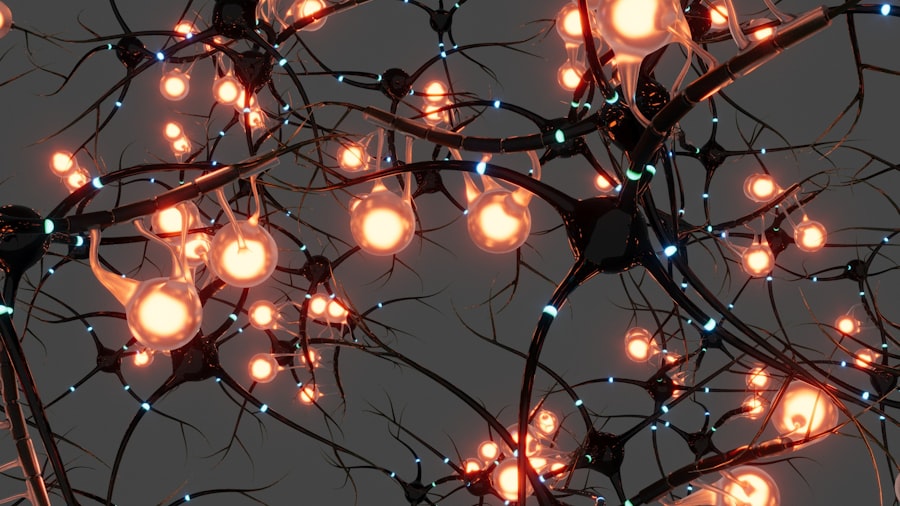
The mechanics are coldly simple. A dataset like "The Pile" is assembled. It's fed into a neural network running on thousands of Nvidia GPUs. The system identifies patterns, relationships, and structures within that data. The output is a model that can generate new text, but its entire worldview, its linguistic DNA, is built from the ingested works. The core of the Nvidia AI copyright conflict is this, does the process of ingestion and transformation erase the debt to the original sources? The lawsuits say a resounding no. Every sentence generated by a NeMo model, they argue, is a derivative work, a ghost built from the bones of copyrighted material.
The Creators' Revolt: Why Artists and Writers Are Furious
The anger isn't abstract. It's financial, existential, and deeply personal. For a working author, seeing their life's work, a novel that took years to write, used as anonymous fuel for a system that could eventually replace them is not just unsettling, it's an existential threat. The Nvidia AI strategy, as perceived by creators, is a classic tech land grab, enclose the common resource of human creativity, privatize the outputs, and leave the original producers with nothing.
"Intellectual property is the foundation of the United States' creative industry. You can't just take it without permission," said author Brian Keene in a statement to the press, capturing the visceral frustration of the creative class.
The risks are documented and real:
- Market Displacement: AI tools trained on their style can flood the market with cheaper, faster content, diluting their brand and income.
- Attribution Erosion: Their influence becomes ghostly, woven into an AI's output with no credit, royalty, or recognition.
- Loss of Control: Their copyrighted characters, narratives, and stylistic signatures can be used to generate content they never authorized, potentially damaging their legacy.
The skepticism towards the Nvidia AI copyright framework is rooted in a simple power imbalance. Nvidia, now one of the most valuable companies in the world, profited immensely by selling the shovels for the AI gold rush. The creators whose work provided the gold are now asking for their cut, and they're asking in federal court.
The Legal Precedents: A House Built on Shifting Sand?
Tech giants have largely relied on the broad, flexible concept of "fair use" as a shield. But that shield is cracking. The lawsuit against Nvidia is strategically linked to the ongoing case against OpenAI, creating a unified front. Legal experts are watching closely. As noted in the official court filing by the authors, the removal of their books from "The Pile" is itself an admission that their copyright was violated. This isn't a philosophical debate about inspiration, it's a technical audit of a dataset, and the audit is turning up massive amounts of unlicensed material. The legal foundation of the entire Nvidia AI copyright position is now subject to discovery, subpoenas, and judicial scrutiny.
The Stakes: More Than Money, It's the Future of AI Itself
This goes beyond royalty checks. The outcome of this Nvidia AI legal storm will dictate the fundamental architecture of artificial intelligence for decades. If the courts rule strongly in favor of the creators, the entire industry faces a reckoning.
- The "Licensed-Only" Model: AI development could become the domain of only the wealthiest corporations who can afford to license billions of data points, crushing open-source and academic research.
- The Data Scrub: Companies like Nvidia may be forced to attempt the near-impossible, retroactively "unlearn" copyrighted material from existing models, a process whose technical feasibility is hotly debated.
- The Innovation Chill: A stringent ruling could massively slow down AI development, as every new model requires a legally vetted, clean dataset.
Nvidia finds itself in a paradox of its own making. Its hardware accelerated an AI revolution built on a legally ambiguous data free-for-all. Now, as the primary beneficiary and a key platform provider, its Nvidia AI copyright posture makes it the perfect deep-pocketed defendant to test the limits of that ambiguity. The company is no longer just selling tools, it's being held accountable for what was built with them.
The Silicon Silence and the Road Ahead
Nvidia's public response so far has been the typical corporate silence, likely crafted by a small army of lawyers. They will argue fair use. They will argue transformation. They will argue that holding them liable is like holding a printer manufacturer liable for a plagiarized book. But the plaintiffs have a potent counter, Nvidia didn't just make the printer, it curated the paper mill, selected the stolen text to print on it, and then sold the resulting book as its own product. This nuanced but critical distinction is where the Nvidia AI copyright battle will be won or lost.
A Cultural Inflection Point
This moment transcends legal briefs. It represents a massive cultural correction. For years, the narrative was one of inevitability, that AI progress demanded a certain ethical and legal flexibility. Creators were told they were being "old-fashioned" for resisting. These lawsuits, particularly the direct, aggressive targeting of a titan like Nvidia, signal that the era of passive acceptance is over. The debate over Nvidia AI is the debate over whether the digital future will have a royalty system or will operate as a perpetual motion machine consuming its own fuel for free.
The final thought is this, the most advanced computational machinery ever devised by humans is currently being bench-tested in a venue built with wood and governed by parchment, a federal courtroom. The verdict won't just be about compensation, it will be a judgment on what we value, what we own, and who gets to profit from the digital mirror of human creativity. Nvidia built the engine, but it forgot that someone else owns the road.

Julian Beaumont reports on entertainment and the arts, tracking the releases, festivals and figures defining popular culture. He enjoys finding the bigger story behind a film, an album or a viral moment.
💬 Comments (0)
No comments yet. Be the first!