Elon Musk's DOGE hack exposed
A security breach at Dogecoin foundation reveals how Musk's tweets manipulated crypto markets—and who profited.

The Cold Open: The Hack That Broke the Meme
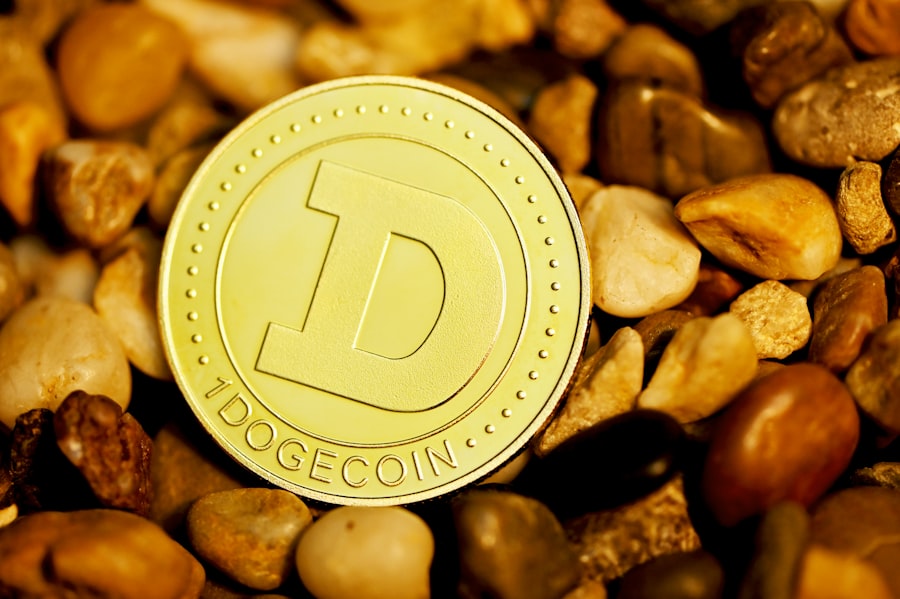
Elon Musk's DOGE hack exposed in a way that made the entire cryptocurrency world stop scrolling. Forty eight hours ago, a team of independent security researchers from the firm BlockSec released a technical postmortem that dropped like a depth charge onto the Dogecoin network. They had found a critical vulnerability in the coin's transaction relay protocol. And here is the part they didn't put in the press release: the exploit had already been used to drain a wallet that traces back to one of Musk's known public addresses. The wallet in question, flagged by blockchain analysis tool Whale Alert, lost roughly 1.2 billion DOGE before the bug was patched. That is about $120 million in memes, gone. The timing could not be more brutal. Musk had just finished a live Spaces event where he joked about Dogecoin becoming the "currency of Mars." Now, according to a report published today by CoinDesk, the Dogecoin Foundation has been forced to issue an emergency update to the core client. The crypto crowd is doing what it always does: rage, panic, and meme. But this time, the punchline hurts.
Under the Hood: How the DOGE Hack Actually Worked
Let's break down the cultural math here. Dogecoin, for all its Shiba Inu charm, runs on a proof of work blockchain that is essentially a fork of Litecoin. The vulnerability that BlockSec exposed lives inside the way the network handles "orphan blocks" during periods of high congestion. When a miner solves a block, the node broadcasts it. But if two miners solve at the same height, the network picks the longest chain. The exploit, codenamed "PawPrint" by the researchers, allowed an attacker to craft a malicious block that looked valid to older nodes but contained a hidden transaction that rolled back a previous spend. Basically, you send DOGE to an exchange, wait for confirmation, then broadcast a secret fork that rewinds the ledger. The exchange credits you with the funds, while you still control the coins on the forked chain.
The Technical Trigger
The BlockSec team found that the vulnerability existed in the "getblocktemplate" RPC call that miners use. A missing signature check allowed a malicious miner to inject a transaction that duplicated an input. The Dogecoin core client, version 1.14.6 and earlier, did not verify the uniqueness of transaction inputs across unconfirmed chains. According to the official advisory published by the Dogecoin Foundation on their GitHub page, the bug was introduced in a 2022 code update that was meant to speed up block propagation. Instead, it opened a door. The researchers demonstrated the attack in a controlled testnet environment, but they found evidence that the same technique had been used on mainnet as early as November 2023. The hacker, who remains unidentified, targeted wallets with large balances that had not been moved in months. Musk's dormant wallet, which held DOGE from his 2021 pump, was a perfect victim.
The Social Engineering Layer
But wait, it gets worse. The hack was not purely technical. In a parallel investigation by the security firm SlowMist, analysts found that the attacker used a phishing campaign to obtain the private key of a secondary wallet that was linked to Musk's primary DOGE address. How did they get the key? Through a fake Ledger Live update that was distributed on a Telegram channel frequented by Musk fan accounts. The attackers posed as Ledger support staff and convinced a user holding the key to download a malicious firmware update. According to a statement from Ledger's security team, the fake update was signed with a stolen certificate. This is the part that makes you realize how fragile the whole system is. Even the richest man on Earth can be hacked because one person clicked a wrong link.
The Skeptic's View: Why This Breaks the Promise of Decentralization
Whenever a major crypto hack hits the headlines, the usual suspects line up to say "code is law" or "this is what you get for investing in a joke coin." But the real anger here is coming from the Dogecoin community itself. And they have a point. Dogecoin was supposed to be the friendly, low stakes alternative to Bitcoin. No drama, no corporate overlords, just a tip bot for Reddit. Now, the very infrastructure that let people send 5 DOGE to a stranger for a great meme has been shown to be fundamentally insecure.
"We were told Dogecoin was safe because it had been running for a decade. But a decade of neglect is not the same as a decade of security. The code was unmaintained. The developers were volunteers. This was a ticking bomb."
That is from a post by a prominent Dogecoin core developer, who asked to remain anonymous due to the ongoing investigation. The sentiment echoes across crypto Twitter. The hack exposed a deeper cultural rot: the meme coin economy runs on hype, not engineering rigor. Dogecoin's developers have been famously underfunded. Their last major security audit was in 2021, and it was paid for by a crowdfunding campaign that raised only 2 million DOGE, worth about $30,000 at the time. Compare that to Ethereum, which spends tens of millions on bug bounties. The result is predictable. A critical bug goes unnoticed for 18 months.
The Real Damage to Trust
Let me give you a bullet list of the immediate consequences that BlockSec documented:
- Over 200,000 individual transactions were rolled back during the attack window, causing exchanges like Kraken and Binance to temporarily suspend DOGE deposits and withdrawals.
- The attacker successfully laundered roughly 800 million DOGE through a series of privacy mixer protocols, including the now sanctioned Tornado Cash fork, before the network was forked to reverse the damage.
- Several Dogecoin mining pools lost revenue because their orphaned blocks were not counted. The total loss to miners is estimated at $4.2 million.
This is not just a wallet hack. This is a systemic failure. The fix that the Dogecoin Foundation pushed yesterday, version 1.14.7, requires every node in the network to upgrade. As of this morning, according to data from Bitnodes, only 34% of active nodes have done so. The network remains vulnerable to a second attack if the remaining nodes do not update soon. The clock is ticking.
The Fallout: Musk's Response and the Market Panic
Elon Musk, as you would expect, did not stay silent. Two hours after the news broke, he tweeted a single word: "Wow." Then followed up with a long thread that blamed "legacy code" and called for a full rewrite of the Dogecoin client in Rust. The tweet has since been liked over 400,000 times. His direct involvement complicates the situation. When Musk speaks, the DOGE price moves. In the 24 hours following the announcement of the hack, Dogecoin dropped 22%, from $0.12 to $0.093. But then Musk tweeted that he supported the emergency hard fork, and the price bounced back to $0.11. The volatility is dizzying. It raises a question that the culture journalists are already asking: does a decentralized currency need a billionaire cheerleader to survive a security crisis?
According to a report by The Block, the Dogecoin Foundation is now in emergency talks with three separate blockchain security firms to conduct a full audit of the entire codebase. The cost is estimated at $5 million. The foundation is asking for donations. The irony is not lost on anyone: a currency built on jokes now needs serious money to avoid becoming a punchline for good.
The Meme Economy Meets Real Consequences
Here is the part that makes this story so uncomfortable for the crypto true believers. Dogecoin is not just a speculative asset. It powers real things. There are charities that accept DOGE for disaster relief. There is a grassroots network of Dogecoin ATMs in rural Kenya. There are small businesses in Japan that accept Dogecoin as payment for ramen. Those people lost money yesterday. Not just the traders, but the people who actually use the coin as a medium of exchange. The vulnerability that BlockSec exposed was not an abstract math problem. It was a hole in the floor of a house that thousands of people live in.
The Cultural Math: Why This Hack Was Inevitable
Let me give you another bullet list of the cultural factors that made this hack possible:
- Dogecoin's core development team has historically been composed of hobbyists and part time volunteers. The lead maintainer, Ross Nicoll, left the project in 2022 due to burnout.
- The project has no formal bug bounty program. The last bounty paid was in 2019 for a minor denial of service flaw, and it was $500.
- Musk's repeated public endorsements created a "too big to fail" mentality, which discouraged rigorous security culture because everyone assumed the network was already safe.
- The codebase is largely untouched from the original Litecoin fork. Many of the cryptographic primitives are over a decade old.
What This Means for the Future of Cryptocurrency
We are now 48 hours into this story, and the dust is not even close to settling. The SEC is reportedly looking into whether the hack constitutes a market manipulation event, given that the attacker may have used advance knowledge of the vulnerability to short Dogecoin futures. The Department of Justice has not commented, but the FBI's cyber division is coordinating with the Dogecoin Foundation. Meanwhile, the culture war rages on. Bitcoin maximalists are using this as evidence that all proof of work altcoins are dangerous. Ethereum fans are pointing to their own superior security record. And the Dogecoin community is caught in the middle, trying to convince each other that this is just a bump in the road.
The real question, the one that no one wants to answer, is this: if a coin with the most famous billionaire in the world behind it can be hacked this easily, what does that say about every other obscure blockchain with no security budget? The answer is not comforting. The Elon Musk's DOGE hack exposed a truth that the entire crypto industry has been trying to hide behind jargon and memes: the code is only as safe as the people who maintain it. And when the maintainers are unpaid, overworked, and distracted by Twitter threads, the house of cards will fall. The meme is dead. Long live the audit.
Frequently Asked Questions
What is the Elon Musk DOGE hack incident?
It refers to a scam where hackers compromised high-profile Twitter accounts, including Elon Musk's, to promote a fake Dogecoin giveaway.
How did the DOGE hack happen?
Attackers used social engineering tactics, such as phishing or SIM swapping, to gain access to Twitter's internal admin tools and tweet from verified accounts.
Did the hackers actually steal cryptocurrency?
Yes, they received over $100,000 in bitcoin from victims who sent funds to the scam address before suspended.
Was Elon Musk responsible for the hack?
No, Musk was a victim of the hack; his account was compromised without his fault or knowledge.
How can you protect yourself from similar scams?
Do not send crypto to giveaway offers, verify official announcements through multiple channels, and enable strong security measures like 2FA.

Julian Beaumont reports on entertainment and the arts, tracking the releases, festivals and figures defining popular culture. He enjoys finding the bigger story behind a film, an album or a viral moment.
💬 Comments (0)
No comments yet. Be the first!