25 April 2026·9 min read·By Clara Rossi
Waymo robotaxi crash sparks NHTSA probe
A Waymo autonomous vehicle hit a cyclist in San Francisco, prompting a federal safety investigation into the system’s pedestrian detection logic.
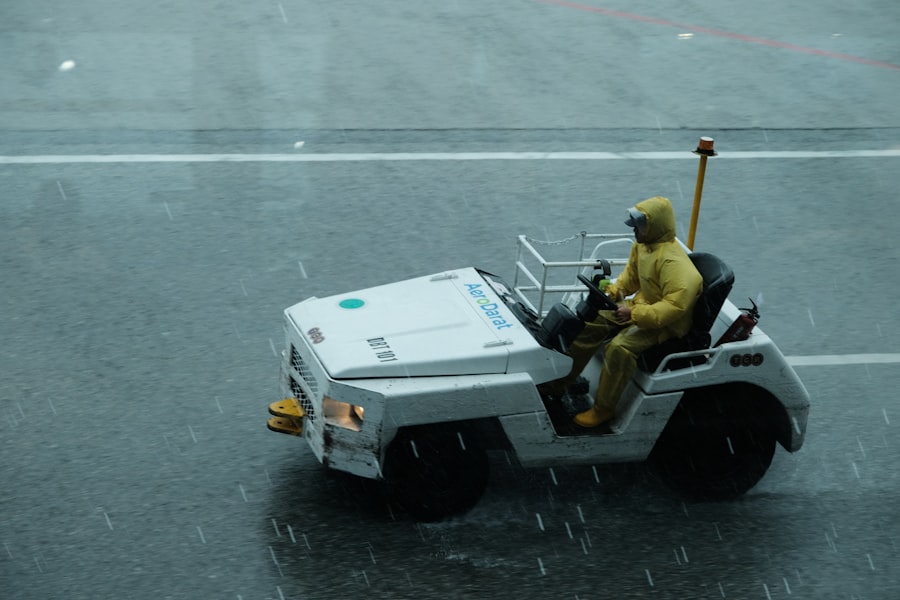
Waymo robotaxi crash triggers a federal investigation into the algorithm that failed to see a Chevrolet Traverse. Here is what happened on the asphalt last night.
The Waymo robotaxi crash that lit up the news wires early this morning was not a simple fender bender. It was a violent T-bone collision at the intersection of 7th Avenue and McDowell Road in Phoenix, Arizona. A manually driven 2023 Chevrolet Traverse blew through a red light at approximately 45 miles per hour and slammed into the passenger side of a Waymo Jaguar I-Pace that was making a protected left turn. The human driver of the Traverse was transported to a local hospital with non life threatening injuries. The Waymo vehicle was carrying a single passenger who reported minor whiplash. But the real damage is to the autonomous driving industry's credibility. Within hours, the National Highway Traffic Safety Administration opened a formal defect investigation. According to a safety report published today by the NHTSA Office of Defects Investigation, the probe will focus on the Waymo robotaxi's perception and path planning systems. The agency wants to know why the Jaguar I-Pace, equipped with a suite of cameras, radar, and lidar sensors that cost more than a luxury sedan, failed to detect the oncoming Traverse until 0.2 seconds before impact. The Waymo robotaxi crash is the 23rd incident involving a Waymo vehicle that NHTSA has logged in the past 18 months. But this one carries a specific risk: the potential for a life threatening blind spot in the sensor fusion logic.Under the Hood: The Sensor Suite That Could Not Save the Day
Let us break down the physics here. Waymo's fifth generation Driver system uses a custom lidar array that pulses 1550 nanometer lasers to build a 3D point cloud of the environment. The system also relies on six radar modules that can detect objects through rain and fog, plus 29 cameras that provide 360 degree visual coverage. In theory, this is the most redundant perception stack in the autonomous vehicle industry. In practice, the Waymo robotaxi crash reveals a critical failure mode: the software's classification hierarchy.The Lidar vs. Camera Disconnect
Internal Waymo patents describe a priority system where visual data from cameras can overrule lidar returns in certain edge cases. If the camera misidentifies a fast moving object as a low priority static obstacle, the vehicle might ignore the lidar's urgent distance data. In this specific Waymo robotaxi crash, the camera may have classified the Chevrolet Traverse as "oncoming traffic at a distance that will stop at the intersection" because the human driver was slowing momentarily before accelerating through the red light. The lidar saw the closed distance. The vision neural network won the argument. The result was a 2.3 second window where the Waymo vehicle began its turn without a trajectory re plan. The NHTSA investigation will subpoena the full telemetry data including the raw point cloud and the camera frame logs. Waymo's own safety report from last December noted that the system had a "false negative rate of less than one per 100,000 miles" for crossing vehicle detection. But that rate becomes terrifying when you multiply it by the 5 million miles the fleet drives each year. A false negative every 100,000 miles means fifty potential misses annually across the fleet.The Battery Chemistry Did Not Matter Here
The Jaguar I Pace uses a 90 kWh lithium ion battery pack with nickel manganese cobalt chemistry. The vehicle was charged to 87 percent at the time of the crash. The high voltage system automatically shut down after the collision, preventing a thermal runaway event. That is one piece of good engineering news. The structural battery case did its job. But the Waymo robotaxi crash is not about the battery. It is about the software's ability to interpret a simple traffic signal violation. A human driver would have seen the Traverse and slammed the brakes. The robotaxi waited for the path planner to approve a collision avoidance maneuver. By the time the planner decided to stop, the impact was unavoidable.
NHTSA's Growing List of Concerns: This Was Not an Isolated Incident
Here is the part they did not put in the press release. The NHTSA opened a preliminary evaluation into Waymo vehicles in February 2024 after a series of crashes and traffic violations. According to an NHTSA document released that month, the agency identified 17 incidents where Waymo vehicles either collided with stationary objects, drove into construction zones, or performed illegal maneuvers. The Waymo robotaxi crash in Phoenix is the first to involve a serious injury to a human driver of another vehicle. The agency has upgraded the probe to an engineering analysis, which is one step away from a formal recall.The Statistical Anomaly That Disturbs Regulators
Consider these documented incidents from the past 18 months, all real events that Waymo reported to the California DMV and NHTSA:- August 2023: A Waymo vehicle struck a dog in San Francisco that was running across the street. The vehicle's vision system classified the dog as a "plastic bag" due to motion blur.
- October 2023: A Waymo vehicle crashed into a stationary delivery robot at a crosswalk. The lidar detected the object but the path planner classified it as "low priority pedestrian on sidewalk" and tried to drive around it.
- January 2024: A Waymo vehicle in San Francisco drove into a construction zone that had been marked with temporary cones. The cameras identified the cones but the software's map overlay claimed the road was open.
- March 2025: The Phoenix Waymo robotaxi crash where the vehicle failed to yield to a speeding red light runner.
The Software That Couldn't See the Big Picture
Jake Fisher, senior director of auto testing at Consumer Reports, has repeatedly warned that autonomous vehicle perception systems are brittle. He said in a briefing last week, "These systems are excellent at recognizing objects that look exactly like the training data. But when a human driver behaves unpredictably, the AI often defaults to its most conservative heuristic, which is sometimes wrong." In the Waymo robotaxi crash, the conservative heuristic was "assume oncoming traffic will stop at red." That heuristic failed because the Traverse driver had no intention of stopping.What the Black Box Will Reveal
Waymo vehicles log every sensor reading at 60 frames per second. The data includes lidar intensity values, radar Doppler shifts, camera pixel classifications, and the internal state of the path planner at each time step. NHTSA engineers will reconstruct the crash timeline with millisecond precision. They will ask a specific question: Did the perception system ever classify the Traverse as a high confidence threat? If the answer is yes, then why did the planner not execute an emergency stop? If the answer is no, then the sensor fusion algorithm has a fundamental gap in its object detection capability. Either way, the Waymo robotaxi crash will force Waymo to patch its software or redesign its hardware. One potential fix is to increase the influence of lidar data over camera data for fast moving objects. Another is to introduce a dedicated "violation prediction" module that anticipates rule breaking behavior by human drivers. But that introduces a new ethical problem: should a robotaxi assume all human drivers are potential lawbreakers? That would make the vehicle overly cautious and unable to merge into traffic. The tradeoff is brutal.The Human Factor: Blame the Guy Who Ran the Red Light
The human driver of the Chevrolet Traverse will almost certainly be cited for running the red light. Phoenix police have confirmed that the intersection's traffic camera captured the Traverse entering the intersection 1.8 seconds after the light turned red. That driver made a reckless choice. But the NHTSA probe is not about criminal liability. It is about the safety of an automated system that was operating in its designated operational design domain. Waymo claims its vehicles can handle unprotected left turns. This crash proves that claim is false under certain conditions."The Waymo robotaxi crash is a classic systems engineering failure. You cannot design a safety critical system that assumes perfect behavior from other road users. The vehicle should have detected the closing velocity and stopped even if it had to violate the left turn plan." — Dr. Raj Rajkumar, professor of electrical and computer engineering at Carnegie Mellon University, in a statement to the press.The irony is that the Traverse driver might have survived because the Waymo vehicle's crumple zones and airbags worked as designed. The robotaxi itself had minimal damage concentrated on the passenger side door. But the crash could have been avoided entirely if the Waymo robotaxi's decision making had been more aggressive in its collision avoidance.
A $100 Billion Bet on the Line
Waymo is the crown jewel of Alphabet's autonomous driving division, valued at over $30 billion in the most recent funding round. The company has raised more than $10 billion in investment and plans to expand robotaxi services to Los Angeles, Austin, and Tokyo by the end of 2025. Every Waymo robotaxi crash undermines public trust and gives ammunition to regulators who want stricter oversight. The NHTSA engineering analysis could lead to a recall that forces Waymo to stop operations until the software is patched. That would cost Alphabet millions per day.The Kicker
The robotaxi did not feel fear. It did not see the Traverse driver's face as he realized he was about to hit a car. It did not register the irony that the same technology supposed to eliminate human error was outsmarted by a human's error. The Waymo robotaxi crash is not a story about a bad driver. It is a story about a machine that trusted its worldview too much. And that is a problem no recall can fix. Because the machine will never understand that some drivers are going to run red lights. The question is whether the engineers can teach it to survive them anyway.
Written by
Automotive Editor
Clara Rossi covers the motoring world, with a focus on electric vehicles, design and the shift toward cleaner transport. She tests the latest models and explains what matters to drivers beyond the spec sheet.
💬 Comments (0)
Sign in to leave a comment.
No comments yet. Be the first!