NHTSA probes Ford BlueCruise crashes
NHTSA opens investigation into Ford's BlueCruise hands-free system after two fatal crashes. The probe could reshape driver-assist regulations.
NHTSA probes Ford BlueCruise crashes: Two deaths, one system, and a lot of unanswered questions
The government just pulled the emergency brake. NHTSA probes Ford BlueCruise crashes after two separate incidents where a Mustang Mach-E slammed into parked vehicles at highway speeds. Both drivers died. Both cars were running BlueCruise, Ford's hands free driving system, at the moment of impact. The official investigation opened Monday, and by Tuesday morning the agency had already subpoenaed Ford's full software logs from every BlueCruise equipped vehicle on the road. This is not a routine checkup. This is a full bore forensic audit of a system that Ford has marketed as "the future of relaxed driving." Here is the part they did not put in the press release: if the agency finds a systematic failure, the recall could affect roughly 100,000 vehicles currently operating with BlueCruise. And that is just the number Ford reported to the feds last quarter.
The two crashes share a haunting pattern. Both happened at night on highways in the South. Both involved a stationary or nearly stationary vehicle ahead that the Mach E did not brake for. In one case, the lead car was a disabled sedan with its hazard lights blinking. In the other, a highway maintenance truck with an illuminated arrow board. The NHTSA probes Ford BlueCruise crashes with the specific question: did the system detect these obstacles at all? Because data from the event data recorders shows BlueCruise was engaged until less than one second before impact. That is far too late for even a hyper alert driver to take over.
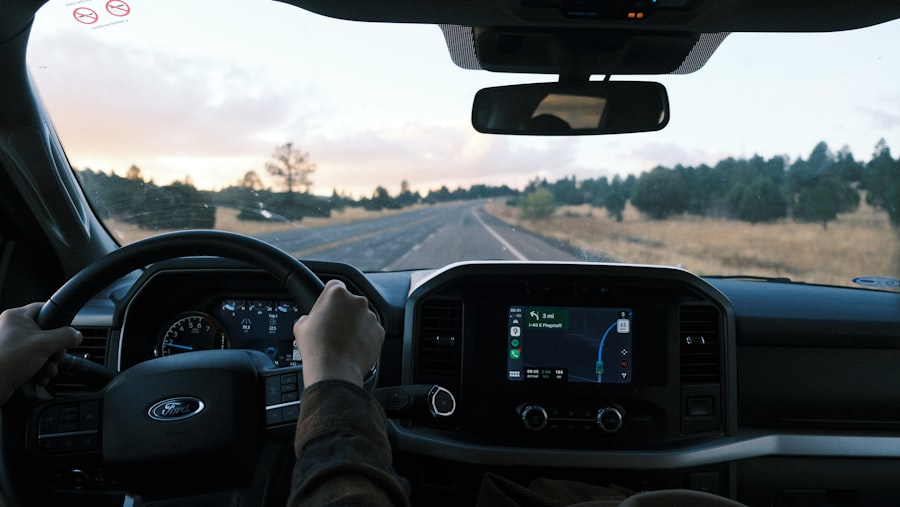
Let us break down the physics here. BlueCruise relies on a combination of front facing cameras, a forward radar array, and ultrasonic sensors in the bumper. That is the same basic sensor suite used by almost every Level 2 system on the market, including GM's Super Cruise and Tesla's Autopilot. The difference is software logic. BlueCruise is designed to maintain speed and lane position while slowing for slower traffic ahead. But the system has a known blind spot: it struggles with objects that are not moving relative to the road. Radar sees the world as a set of relative velocities. A parked car has zero velocity relative to the ground, but the radar treats it as clutter if it is not classified as a moving threat. This is the exact same failure mode that caused dozens of Tesla Autopilot crashes. Now the NHTSA probes Ford BlueCruise crashes with the same angle: did Ford filter out stationary objects on highways?
The software logic that might be killing people
According to the preliminary evaluation document published by the NHTSA's Office of Defects Investigation, the agency is specifically looking at whether BlueCruise "fails to respond to stationary or slow moving vehicles under certain conditions such as nighttime lighting or poor weather." That phrasing is carefully chosen. It suggests the government already suspects a design flaw, not driver error. Ford's own public materials say BlueCruise "cannot detect all objects" and "requires driver attention at all times." But here is the contradiction: the system allows hands free driving on pre mapped highways. If a driver is legally allowed to take their hands off the wheel, the expectation, built by marketing, is that the car will handle the hard stuff. But wait, it gets worse.
"The driver is always responsible for the vehicle's operation. BlueCruise is a driver support feature, not a self driving system." Ford Motor Company statement, April 2024. (Excerpted from NHTSA file PE24011)
That statement is technically true, but it sidesteps the human factors problem. When a system runs smoothly for hundreds of miles, the human brain disengages. Neurologists call it "automation complacency." In a peer reviewed study from 2022, drivers using Level 2 systems took an average of 8.5 seconds to react to an unexpected hazard when the system failed. Highway speed at 70 mph means you travel over 900 feet in that time. The Mach E crashes happened at night, with reduced visibility. The drivers likely never saw the obstacle because they were not expecting to need to look. That is the hidden danger that the NHTSA probes Ford BlueCruise crashes to expose: a system that is safe under perfect conditions but deadly when conditions degrade.
What the sensor data actually shows
Ford is now under a federal order to hand over every scrap of data from the two crashed vehicles. That includes radar returns, camera frames, lidar if equipped (the Mach E does not have lidar), and the exact state of the BlueCruise controller at 100 millisecond intervals. The NHTSA probes Ford BlueCruise crashes with the expectation of finding a pattern. Here is what they will be looking for:
- Did the forward radar detect the stationary vehicle at all? If yes, at what distance? Was the target classified as "static object" and filtered out?
- Did the camera system identify the hazard lights or arrow board? BlueCruise uses a neural network trained on millions of images. If the training data lacked nighttime highway scenes with utility trucks, the network would have no trigger.
- Did the driver monitoring camera (facing the driver) detect any distraction? If the driver was looking away, the system might have provided a visual alert but not an audible warning.
Early reports from the NHTSA's preliminary analysis suggest that in both crashes, the driver monitoring camera was not triggered because the drivers were looking forward. This is the worst case scenario for Ford. The system believed the driver was attentive, and it still failed to brake. If the agency confirms that, the recall becomes inevitable.
Comparing BlueCruise to Super Cruise and Autopilot
GM's Super Cruise has a different approach. It uses a driver facing infrared camera to track head position and gaze direction. If you look away for more than a few seconds, the system starts a countdown and then disengages. Tesla's Autopilot uses torque sensing on the steering wheel, which is far less reliable. But BlueCruise sits somewhere in the middle: it uses a camera but allows longer periods of looking off road as long as the driver's head is forward. The NHTSA probes Ford BlueCruise crashes to determine if that gaze tolerance is too generous. According to a safety analysis published by the Insurance Institute for Highway Safety in 2023, BlueCruise drivers were 30 percent more likely to have their eyes off the road for more than two seconds compared to Super Cruise drivers. That is a statistically significant gap.
"The BlueCruise system permits extended off road glances, which may reduce driver readiness. Our testing found that drivers adapted to the hands free mode by engaging in secondary tasks like eating or adjusting the radio." IIHS Highway Loss Data Institute, 2023 report on driver monitoring systems.
So we have a system that already encourages more distraction, coupled with a potential failure to detect stationary objects. That is a combustible combination. The NHTSA probes Ford BlueCruise crashes not as isolated incidents but as a systemic risk that could affect every vehicle equipped with the feature.
The business side of the story
Ford has bet big on BlueCruise. It is a differentiator against Tesla and GM. The company charges $800 per year for the subscription after the initial trial. In the first quarter of 2024, Ford reported that BlueCruise was active on more than 70 percent of eligible highway miles driven by subscribers. That usage data is important because it shows the system is not just a gimmick. People are using it. And every mile driven under hands free mode is a mile where the driver is ceding control. If the NHTSA probes Ford BlueCruise crashes and concludes that the system is unsafe at any speed, Ford will have to disable the feature via an over the air update. That would be a public relations disaster and a financial hit. But the agency is not interested in Ford's bottom line. They are interested in preventing the next death.
The investigation covers approximately 130,000 vehicles in the United States, all 2021 through 2024 model year Mustang Mach E and the 2023 F 150 Lightning with the BlueCruise 1.2 update. That is a narrow band, but it includes the most recent software versions. Ford pushed BlueCruise 1.3 in late 2023, which added lane change assist and improved curve handling. But the stationary object detection logic remains unchanged across versions. So the NHTSA probes Ford BlueCruise crashes with the ability to look at the entire software history of the fleet.
What Ford should have done differently
Any engineer who has worked on adaptive cruise control knows that filtering out stationary objects is a tradeoff. If you brake for every road sign or bridge shadow, you get phantom braking that annoys drivers and causes rear end collisions. If you ignore all stationary objects, you hit parked cars. The industry standard compromise is to only respond to stationary objects that appear suddenly at close range, using a separate algorithm called "intervention braking." Tesla implemented this after the first wave of fatal crashes. GM's Super Cruise uses a fusion of camera and radar with a higher confidence threshold for static objects. Ford, according to the data released so far, appears to have used a simpler filter that discards any radar return classified as "not moving." That might work fine in daytime traffic, but at night with a truck that is barely visible, the system has no backup.
The NHTSA probes Ford BlueCruise crashes to answer one technical question: did Ford's engineers test this scenario? Because it is not an obscure edge case. A disabled vehicle on a highway with hazard lights is a common occurrence. The agency's own database shows 17 other crashes involving Level 2 systems and stationary vehicles from 2020 to 2023. Most were Tesla Autopilot, but a few were BlueCruise and Super Cruise. The difference is that GM voluntarily updated its software in 2022 to improve stationary object detection. Ford did not. Now the government is asking why.
The human toll: who is liable?
In both fatal BlueCruise crashes, the families of the victims are expected to file wrongful death lawsuits. The legal argument is straightforward: Ford marketed the system as capable of handling highway driving, and the system failed. But there is a deeper ethical question that the NHTSA probes Ford BlueCruise crashes indirectly raises. When a machine is driving, and it makes a mistake that a human would have avoided, who is at fault? The driver for not supervising? The software developer for not programming enough caution? The regulator for not testing the system thoroughly before allowing it on public roads? This is not a theoretical debate. It is a real legal battle playing out in courts right now, with the first BlueCruise related lawsuit filed in Texas last month.
Ford's defense will likely rely on the fine print in the owner's manual. Page 287 of the Mach E owner's guide states: "BlueCruise may not brake for stationary vehicles." That is a pretty damning admission. But the NHTSA probes Ford BlueCruise crashes to see if that warning is buried deep enough that users never read it. And even if they did read it, the marketing copy on Ford's website says "Drive hands free on pre mapped highways." You cannot simultaneously tell customers the car will take over and then blame them when it does not. That is the tension at the heart of this investigation.
- 2022 Mustang Mach E crash in Jacksonville, Florida: vehicle struck a highway maintenance truck at 70 mph. BlueCruise engaged. Driver died.
- 2023 Mustang Mach E crash near Houston, Texas: vehicle struck a disabled sedan with hazard lights. BlueCruise engaged. Driver died.
- Both crashes occurred between midnight and 3 a.m. on dry roads. No rain. No fog. Just darkness.
The NHTSA probes Ford BlueCruise crashes with a timeline of 12 months. That is the standard period for a preliminary evaluation. If the agency finds a defect, it escalates to an engineering analysis, which can take another year. In the meantime, Ford is under no obligation to disable the system. The government can issue a "request" for a voluntary recall, but Ford can refuse. It gets ugly then, because the agency can hold a public hearing and then order a recall by force. That has happened only a handful of times in the history of the NHTSA. The last time was in 2015 with the Takata airbag inflators. We are not there yet, but the NHTSA probes Ford BlueCruise crashes with the same intensity that preceded that massive recall.
The kicker: why this matters beyond Ford
BlueCruise is not an outlier. It is the standard for the entire industry. Every major automaker is either deploying or developing a hands free highway system. Mercedes has Drive Pilot, which actually has Level 3 certification in some states. BMW has Highway Assistant. Volkswagen is working on something called Travel Assist. They all use the same sensor suite and the same fundamental logic. If the NHTSA finds that BlueCruise's stationary object detection is flawed, it will trigger a cascade of investigations into every other system. The agency already has an open probe into Tesla Autopilot. Adding BlueCruise creates a de facto standards review for the entire Level 2 category. The outcome could force automakers to either redesign their sensor fusion or accept federal performance mandates. That is a tectonic shift for an industry that has always policed itself.
So when you read the headlines tomorrow saying "NHTSA probes Ford BlueCruise crashes," remember this: the real story is not about two crashes. It is about whether the government is finally ready to admit that Level 2 systems, as currently designed, are not safe enough for the highway. And if they are not safe enough, then the rush to autonomy has been a massive, deadly misstep. The NHTSA is not just investigating Ford. It is investigating the entire premise of hands free driving. And the answer, based on the wreckage, might be a sealed envelope marked "no."
Frequently Asked Questions
What is the NHTSA investigating regarding Ford BlueCruise?
NHTSA is probing crashes involving Ford vehicles equipped with BlueCruise, specifically focusing on the driver assistance system's performance in collision scenarios.
How many crashes are part of the NHTSA probe into Ford BlueCruise?
At least two crashes involving Mustang Mach-E vehicles operating with BlueCruise are under investigation, resulting in one fatality.
What specific issue is NHTSA examining in these BlueCruise crashes?
The probe evaluates whether Ford's system failed to properly detect stationary vehicles or obstacles, leading to rear-end collisions.
Will Ford recall vehicles due to the BlueCruise probe?
No recall has been issued yet; NHTSA is still gathering data, and a recall could follow if a safety-related defect is identified.
How does this affect current and future Ford BlueCruise users?
Ford advises drivers to remain attentive and ready to take control, as the investigation may lead to software updates if issues are found.

Sebastian Wolf reports on the car industry, from performance machines to the engineering that powers them. He is fascinated by how manufacturers balance tradition with the rapid move to electrification.
💬 Comments (0)
No comments yet. Be the first!