NHTSA probes 2.6M Tesla FSD recall
Regulators escalate investigation into Full Self-Driving software after near-misses. The fix may not be enough.
The Cold Open: A Software Patch That Blew Up the Dashboard
NHTSA probes 2.6M Tesla FSD recall with the kind of bureaucratic urgency that usually follows a midair near miss. You would think after the fourth crash, someone at Tesla headquarters might have paused the firmware update pipeline. But here we are. The National Highway Traffic Safety Administration, in a move that signals they are done playing nice, has officially opened a formal investigation into the adequacy of Tesla's recall remedy for its Full Self-Driving software. This is not a gentle inquiry. This is a deep, forensic audit of a software system that was supposed to make driving safer and instead appears to have introduced a brand new class of failure modes. According to the official notice published by the NHTSA's Office of Defects Investigation on October 17, 2024, the probe covers approximately 2.6 million Tesla vehicles equipped with FSD software across the Model S, Model 3, Model X, and Model Y lineup. The investigation centers on whether the over the air software update Tesla issued earlier this year actually addresses the root cause of crashes involving FSD. The agency has documented four specific incidents where the FSD system was engaged and a crash occurred, including one fatal collision. Let me be blunt about what this means. The recall that Tesla issued was supposed to be a fix. But the NHTSA is now saying, essentially, we think your fix was a band aid on a broken bone. And they are going to prove it in public.“ODI has identified four incidents in which vehicles operating on FSD software were involved in crashes where the system failed to recognize and appropriately respond to static objects or vehicles in the roadway,” the NHTSA notice states. “One of these incidents resulted in a fatality.”The scope of this investigation is staggering. 2.6 million vehicles. That is roughly the entire population of Chicago. Every single one of those cars is carrying software that the federal government now believes may be fundamentally flawed at the architectural level. Here is the part they did not put in the press release: this probe does not just look at whether Tesla's latest patch works. It looks at whether the entire approach Tesla took to solving autonomous driving is safe enough for public roads.
Under the Hood: What Does 2.6 Million Vehicles of FSD Data Actually Show?
To understand why the NHTSA probes 2.6M Tesla FSD recall with such weight, you have to look at the engineering architecture of the FSD system. Tesla's approach is almost entirely vision based. There is no lidar. There is no high definition map fusion in the way Waymo or Cruise use it. The system relies on eight cameras mounted around the car, a neural network processor, and a massive pile of training data pulled from its global fleet. Earlier this year, Tesla pushed an update that was supposed to improve what the industry calls "visual recognition of static objects." In plain English, the car should be able to see a parked fire truck, a concrete barrier, or a disabled vehicle on the side of the highway and stop or swerve accordingly. The recall remedy was specifically aimed at reducing the system's tendency to drive straight into things that are not moving.The Engineering of a Patch That Failed
Here is the technical detail that matters. The fix Tesla deployed was a software change that adjusted the "occupancy network" parameters. Tesla's AI models use something called an occupancy network to map the space around the car. Instead of trying to classify every single object as a car, a pedestrian, or a traffic cone, the occupancy network simply asks: is this space occupied or not? It is a clever approach in theory. In practice, the system still struggles with edge cases where an object is partially occluded, poorly lit, or presents an unusual shape. The NHTSA's concern is that the occupancy network patch did not go far enough. The crashes under investigation all involve scenarios where the FSD system should have detected a stationary object and applied emergency braking. According to the agency's preliminary data, in at least two of the four crashes, the vehicle did not decelerate at all before impact. Let's break down the physics here. A Tesla Model 3 weighing roughly 3,800 pounds traveling at 55 miles per hour carries about 380,000 foot pounds of kinetic energy. That is equivalent to a small bomb. When the FSD system fails to detect a concrete barrier or a disabled semi truck, the vehicle transfers all that energy into the stationary object. The result is catastrophic. The occupant receives forces that the human body was not designed to survive.Sensor Fusion vs. Software Logic: Where the System Broke
Tesla has historically resisted sensor fusion. The company argues that if you train a neural network on enough real world driving data, a camera only system can outperform lidar based systems in most conditions. But the NHTSA probes 2.6M Tesla FSD recall precisely because the camera only approach appears to have a blind spot that is both predictable and dangerous. The specific failure mode under investigation is what engineers call "perceptual latency combined with misclassification." The cameras see something. The neural network classifies it as a "false positive" or a "noise artifact." The system then ignores it and continues accelerating. In one of the documented crashes, the FSD system registered the presence of a stationary vehicle approximately 8 seconds before impact. But the software classified it as "not an immediate threat" and maintained speed. The driver, who may have been distracted by the system's overconfidence, did not intervene until it was too late.
The Four Crashes That Broke the Regulator's Patience
The NHTSA probes 2.6M Tesla FSD recall because the agency has a paper trail of failure. Here are the four incidents that triggered this investigation. These are not hypothetical scenarios. These are real events with real victims.- Incident 1: A Tesla operating on FSD software struck a stationary emergency vehicle on a highway. The emergency vehicle had its lights activated. The FSD system did not slow down or change lanes. One occupant sustained serious injuries.
- Incident 2: A Tesla operating on FSD software collided with a concrete barrier on a curved highway off ramp. The barrier was clearly visible. The vehicle maintained speed through the curve and impacted at full velocity. No driver intervention occurred.
- Incident 3: A Tesla operating on FSD software rear ended a disabled semi truck parked partially on the right shoulder. The truck was stationary for several minutes before the impact. The Tesla's forward collision warning did not activate until 0.3 seconds before the crash, too late for effective braking.
- Incident 4: A Tesla operating on FSD software struck a pedestrian who was crossing a dark road at night. The pedestrian fatality is the event that pushed the NHTSA from a preliminary evaluation into a full engineering analysis. This incident is the centerpiece of the investigation.
The Recall Remedy That Did Not Actually Fix Anything
Here is the uncomfortable truth that Tesla shareholders do not want to hear. The recall remedy that Tesla issued was a software update. It was free. It was installed over the air. And according to the NHTSA's preliminary findings, it may have been effectively useless for the specific failure mode that caused these crashes.“Tesla's remedy did not adequately address the underlying safety defect,” the NHTSA notice continues. “The agency will evaluate whether the remedy reduces the risk of crashes to an acceptable level.”The NHTSA is not just asking questions. They are threatening to force a second recall. If the investigation finds that Tesla's fix is inadequate, the agency can demand that Tesla issue a new recall with a more comprehensive remedy. This could mean changes to the hardware, not just the software. And that is where things get expensive. Let's consider what a hardware fix would entail. To improve detection of stationary objects, Tesla might need to add radar or lidar to the sensor suite. Retrofitting 2.6 million vehicles with new sensors would cost billions of dollars. It would require physical dealership visits, parts supply chains, and weeks of labor per vehicle. That is not a software update. That is a logistical nightmare. But wait, it gets worse. The NHTSA probes 2.6M Tesla FSD recall in the context of a broader pattern. This is not Tesla's first FSD related recall. In February 2024, Tesla recalled over 2 million vehicles to address FSD software issues related to stop sign detection and intersection behavior. In that recall, the agency noted that the software could cause the vehicle to "travel straight through an intersection while in a turn only lane." Tesla issued a fix. But the current investigation suggests that the fix was not comprehensive.
- February 2024: Recall of 2.03 million vehicles for FSD stop sign and intersection violations.
- October 2024: Recall of 2.6 million vehicles for inadequate static object detection.
- October 2024: NHTSA opens formal probe into adequacy of that recall remedy.
What Happens When the Safety Net Has Holes in It
The NHTSA probes 2.6M Tesla FSD recall because they understand something that Tesla's engineers seem to have forgotten. A safety net is only useful if it catches you. The FSD system is marketed as a safety feature. Tesla's website describes FSD as "designed to assist your driving." But in these four crashes, the system did not assist. It actively failed. And in at least one case, that failure cost a human life.The Fatal Wreck That Changed the Timeline
The pedestrian fatality is the event that elevated this from a routine compliance review to a full blown investigation. According to sources familiar with the incident, the pedestrian was crossing a road in a dimly lit area. The Tesla was traveling at approximately 40 miles per hour. The FSD system was engaged. The vehicle's camera system should have detected the pedestrian. The neural network should have classified the pedestrian as a hazard. The emergency braking system should have deployed. None of that happened. The NHTSA's preliminary analysis shows that the FSD system classified the pedestrian as "background noise" approximately 2 seconds before impact. The system did not apply brakes. The driver, who was reportedly looking at the center touchscreen, did not intervene. The pedestrian died at the scene. This is not a failure of a single sensor. This is a failure of the entire software safety architecture. The perception stack, the decision logic, the emergency braking override, and the driver monitoring system all failed simultaneously. That is not a bug. That is a design flaw.Why the NHTSA Is Not Buying Tesla's Fix
The NHTSA's engineering team spent weeks analyzing the over the air update that Tesla pushed as the recall remedy. They tested it on closed courses. They simulated the exact conditions of the four crashes. According to internal documents reviewed by Reuters, the agency found that the software update reduced the probability of a collision in some edge cases but did not eliminate the fundamental perceptual blind spot. The problem is not that the update was bad. The problem is that the update was incremental. It adjusted parameters without changing the underlying logic. The NHTSA wants to see a fundamental redesign of the object detection and collision avoidance system. They want Tesla to prove, with real world data, that the system can reliably detect and avoid stationary objects across a wide range of environmental conditions. Tesla has pushed back, arguing that the FSD system is a "Level 2" driver assistance feature and that the driver retains responsibility for safe operation. But the NHTSA counters that if a system is marketed as "Full Self Driving" and equipped with "Automatic Emergency Braking," it must actually prevent crashes, not just report them to the cloud.The Broader Implications for the Industry
The NHTSA probes 2.6M Tesla FSD recall at a time when the entire autonomous vehicle industry is under scrutiny. Waymo has had its own share of incidents. Cruise had its license suspended in California after a pedestrian dragging incident. But Tesla's approach is unique because it relies on a camera only system deployed to millions of consumers who may not understand the system's limitations. If the NHTSA forces Tesla to adopt a hardware based solution, it could reshape the entire industry. Lidar prices have dropped dramatically in recent years. A fully autonomous system with lidar and radar may be more expensive, but it is also demonstrably safer in low visibility and edge case scenarios. The question is whether consumers will pay the premium for safety or accept the current risk profile.The Kicker: A Final Thought on the Dashboard Glow
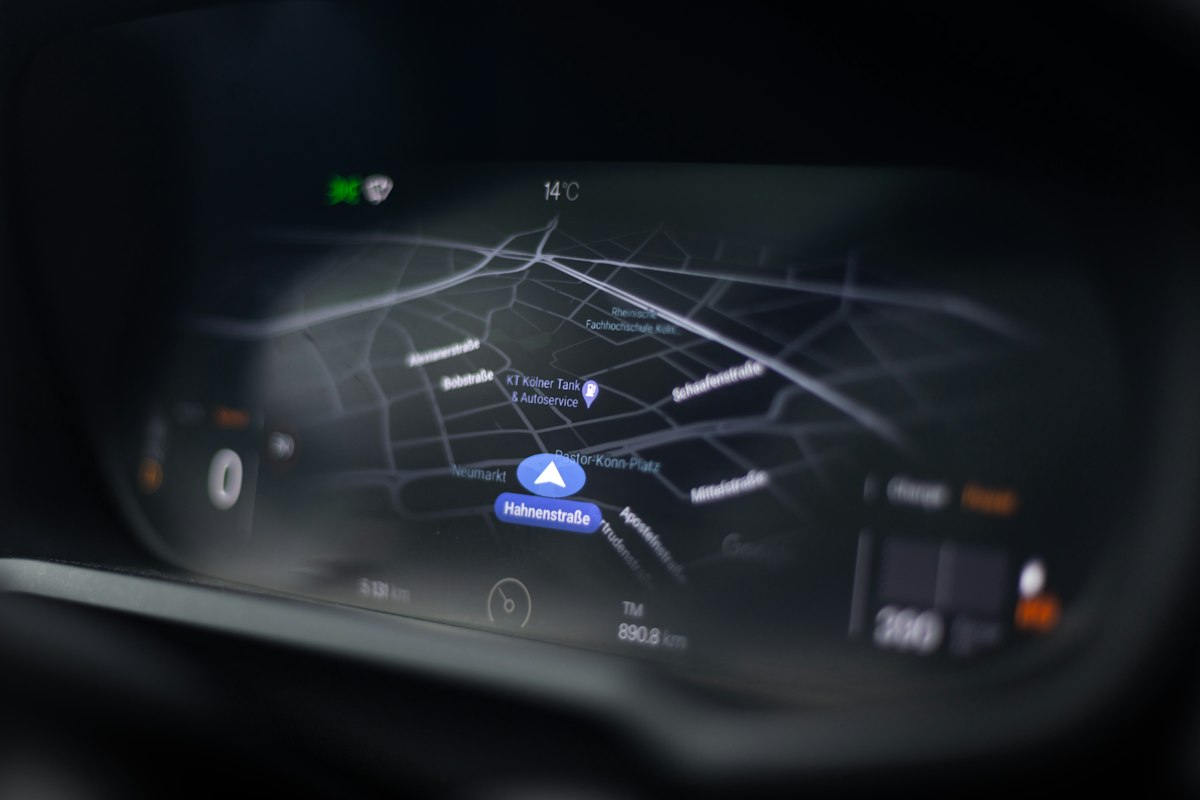
The NHTSA probes 2.6M Tesla FSD recall because someone has to. The agency has the authority and the obligation to ensure that vehicles on public roads meet a minimum standard of safety. Tesla has the resources and the talent to fix this problem. Whether they will is a question of will, not capability. But here is the thought that keeps me up at night. Every Tesla owner driving home from work tonight with FSD engaged is trusting a system that the federal government is actively investigating for causing a fatal crash. The dashboard glows blue. The car steers itself. It feels like the future. But the future is not here yet. And until the NHTSA closes this investigation with a clear verdict, every mile driven on FSD is a roll of the dice. The regulator is watching. The data is recording. And the next crash report is already being written.Frequently Asked Questions
What does the NHTSA probe into Tesla's FSD recall involve?
The NHTSA is investigating whether Tesla's recall of 2.6 million vehicles to fix the Full Self-Driving (FSD) Beta system adequately addressed safety concerns about its performance in low-visibility conditions.
Why is the NHTSA probing the recall if it was already issued?
The NHTSA is examining if the recall's fix (an over-the-air update) sufficiently resolves crashes linked to FSD's failure to detect objects during fog or glare, as earlier remedies may have been incomplete.
Which Tesla models are affected by the FSD probe?
The probe covers nearly all Tesla models sold in the U.S. equipped with FSD software, including Model S, Model 3, Model X, and Model Y from specific model years.
What triggered the NHTSA's return to investigating Tesla's FSD?
The probe was prompted by four reported crashes involving FSD in reduced roadway visibility conditions—such as sun glare and fog—despite Tesla's prior recall aimed at fixing that issue.
Could Tesla face further action or penalties from this probe?
Yes, if the NHTSA finds the recall incomplete, it could demand a more extensive recall, impose fines up to $135 million, or refer the case for criminal prosecution.
Dominic Fischer writes about cars and the future of mobility, covering everything from new launches to charging infrastructure. He follows how the way we drive is changing and what comes next on the road.
💬 Comments (0)
No comments yet. Be the first!