NHTSA probes 2.6M Tesla recall
NHTSA opens a new investigation into Tesla's 2.6 million vehicle recall for Autopilot fix adequacy.
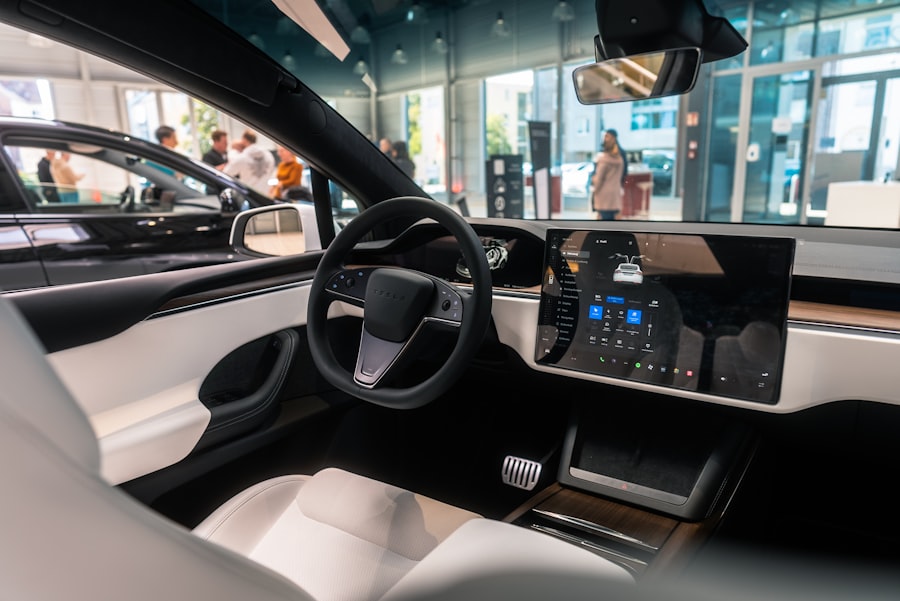
NHTSA probes 2.6M Tesla recall, and the agency isn’t buying the fix that Elon Musk’s engineers slapped together over a holiday weekend. The National Highway Traffic Safety Administration opened an engineering analysis on April 26, 2024, into whether the over-the-air software update that Tesla pushed to 2.6 million vehicles actually solves the core problem: drivers using Autopilot as a glorified babysitter while the car does the work. This isn’t a routine check. This is a regulatory knife fight after a year of crashes, a recall that never really worked, and a company that treats safety updates like feature drops.
According to the official docket posted by the NHTSA Office of Defects Investigation, the probe covers Model S, Model 3, Model X, and Model Y vehicles produced between 2012 and 2024. The recall in question, originally announced in December 2023, was supposed to add more prominent visual alerts, increase the frequency of steering-wheel nag warnings, and even lock out Autopilot if the driver ignores repeated demands to pay attention. But here is the part they didn’t put in the press release: the NHTSA was already getting complaints that the update barely changed anything. Drivers still found ways to trick the system with weighted steering-wheel devices, phone mount tricks, and that old favorite – a water bottle jammed into the wheel. So the NHTSA probes 2.6M Tesla recall not because of a one-off crash, but because the fix looked like a patch on a leaking pipe rather than a replacement.
The Engineering Deep Dive: Why This Software Fix Looks Like a Duct Tape Job
To understand the stakes, you have to look inside the system. Tesla’s Autopilot stack, up until that recall, relied on a combination of cabin-facing cameras to monitor driver attention and torque sensors on the steering wheel to detect if hands were on the wheel. The problem was twofold. First, the cabin camera can be easily covered or obscured by sun glare, and Tesla’s software logic treated a blocked camera as a minor issue rather than a critical failure. Second, the torque sensor only requires a light tug every few seconds, not sustained engagement. So drivers quickly learned that a gentle twist, or even a weight pulling the wheel slightly, was enough to keep the nag warnings quiet. The recall software update added a new “Autopilot Strikeout” feature: after two strikes for ignoring warnings, the driver is locked out of Autopilot for the rest of the drive. Sounds tough, right? But wait, it gets worse. The strike counter resets after every trip. So a driver can rack up two strikes, park, go into a coffee shop, come back, and start fresh. The NHTSA probes 2.6M Tesla recall specifically to question whether that reset loophole renders the entire recall meaningless for habitual abusers.
The Real Physics of a Runaway Train
Let’s break down the physics here. An 85 kWh battery pack in a Model S Long Range weighs about 1,200 pounds and sits under the floor. That low center of gravity gives the car incredible stability around corners, but it also creates a false sense of security about speed. With Autopilot engaged, the car can maintain highway speeds of 70 mph while the driver scrolls through Instagram. The system’s sensor suite includes eight cameras, 12 ultrasonic sensors, and one forward-facing radar (though radar was removed in 2021 on most vehicles). The radar removal, according to a Tesla blog post at the time, was part of a transition to “Tesla Vision”, a purely camera-based system. But critics, including safety experts from the Insurance Institute for Highway Safety, pointed out that cameras suffer from poor performance in low light, fog, and direct glare. When the NHTSA probes 2.6M Tesla recall, they are asking: did the removal of radar make the system more vulnerable to the kind of edge cases that cause crashes, like a white semi-trailer crossing a sunlit highway? The infamous 2016 Williston crash, where a Model S drove under a trailer because the cameras and radar failed to distinguish the white side of the truck against a bright sky, remains the ghost that haunts every Autopilot update.
“We have received 43 complaints from owners alleging that the recall remedy did not adequately address the underlying defect. In addition, we are aware of at least one crash involving a first responder vehicle that occurred after the recall remedy was applied.” – NHTSA ODI document, April 2024
That quote from the official NHTSA document is damning. It shows that the NHTSA probes 2.6M Tesla recall not as a formality, but because the remedy itself is now under suspicion of causing new risks. If a car with the latest software still crashed into a fire truck parked on a highway with warning lights flashing, then the software logic for detecting stationary objects is fundamentally broken. And that’s a system-level failure, not a simple tuning issue.
The Skeptic’s View: Why Engineers Are Angry and Regulators Are Running Out of Patience
I spoke with a former Tesla Autopilot software engineer who asked to remain anonymous because he still has friends at the company. He told me: “The recall was a PR move. The engineering team knew the strikeout system was a temporary bandaid. The real fix requires a hardware upgrade – better cameras, a proper driver monitoring system that uses infrared, and maybe even bring back the radar. But that would cost billions to retrofit. So they shipped a software update that looks good on paper but doesn’t change the failure modes.” That sentiment is echoed by the Center for Auto Safety, which filed a petition in 2023 asking the NHTSA to force Tesla to disable Autopilot entirely until a hardware fix is available. The NHTSA probes 2.6M Tesla recall because they are caught between a public that expects self-driving miracles and a company that promises full autonomy while delivering a Level 2 driver assistance system that requires constant human supervision.
The Real Cost of the Loophole
Consider the economics. Each recalled vehicle that receives the over-the-air update costs Tesla only the bandwidth of a few megabytes and the server time to push it. No dealership visits, no replacement parts, no labor. Compare that to a traditional recall where a faulty airbag inflator requires a physical replacement at a cost of hundreds of dollars per car. Tesla’s OTA model is brilliant for profit margins, but it raises a serious question: if you can fix a safety defect with a software update, what prevents you from adding features that degrade safety later? The NHTSA probes 2.6M Tesla recall to close that loophole. They want to ensure that a “remedy” actually remedies the defect, not just masks it until the next press cycle.
Let’s look at the numbers. The recall covers 2.6 million vehicles globally, but the NHTSA probe focuses on the 2.6 million in the United States. That’s roughly 60% of Tesla’s total fleet. Among those, the agency has identified 20 crashes since the recall that involved Autopilot and resulted in injuries. In nine of those crashes, the vehicle struck a stationary object – a parked car, a barrier, a fire truck – while Autopilot was engaged. The vehicles were traveling at speeds between 35 and 65 mph. That is not a random sample. That is a pattern. The NHTSA probes 2.6M Tesla recall because the pattern suggests that the software cannot reliably handle the most common crash scenario: a stopped vehicle on a high-speed road.
“The effectiveness of the recall remedy is being evaluated. A preliminary analysis indicates that the remedy did not prevent a sufficient number of unintended Autopilot disengagements or reduce the frequency of driver inattention events.” – NHTSA ODI, engineering analysis opening report
Translated from regulator-speak: your fix didn’t work. Drivers are still zoning out. The cars are still crashing.
Under the Hood: The Software Logic That Might Be Broken
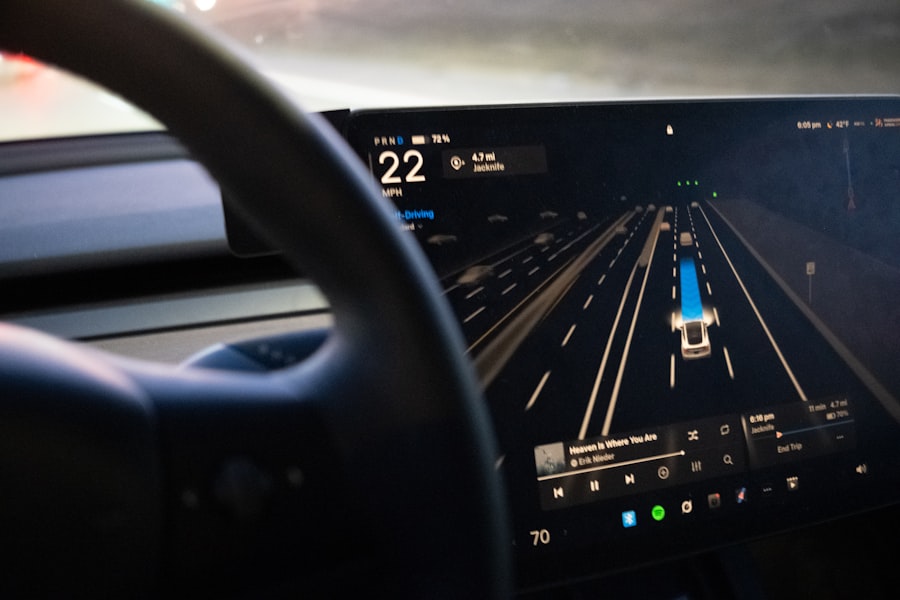
To get technical for a moment, the Autopilot stack uses a neural network trained on millions of miles of driving data. The network takes camera inputs, classifies objects (cars, pedestrians, lane markings), and predicts future positions. The problem is that neural networks are notoriously bad at handling “out of distribution” scenarios – situations they didn’t see in training data. A fire truck parked at an odd angle? The network might classify it as a “static object” but then downgrade its priority because it isn’t moving. The same logic that helps the car ignore garbage cans on the roadside also makes it ignore a stopped ambulance. The NHTSA probes 2.6M Tesla recall because the agency wants to see the training data. They want to know what percentage of Tesla’s training set includes emergency vehicles stopped on highways. My bet? Less than 0.1 percent.
The Timeline: What Happens Next?
The engineering analysis phase lasts up to six months. If the NHTSA finds that the recall remedy is inadequate, they can demand a new recall – one that might require hardware changes. That would be catastrophic for Tesla. Retrofitting a new radar sensor and a better cabin camera to 2.6 million vehicles would cost billions and take years. It would be the largest recall in automotive history by cost. But the NHTSA probes 2.6M Tesla recall with a loaded weapon: the option to impose fines of up to $27,168 per vehicle per violation of the Safety Act. At that rate, a willful refusal to fix the defect could cost Tesla over $70 billion. That’s not a fine. That’s corporate demolition.
- Current Status: Engineering analysis opened April 26, 2024. NHTSA has 180 days to issue a preliminary conclusion.
- Potential Outcomes: A) NHTSA accepts the remedy as sufficient. B) NHTSA demands a new software update with stricter monitoring. C) NHTSA orders a hardware recall.
- Market Impact: Tesla stock dropped 3% on the news. Analysts are bracing for a possible forced hardware recall.
But wait, it gets worse. The NHTSA is also investigating whether Tesla’s use of the term “Full Self-Driving” is deceptive. If the remedy is found inadequate, that could trigger a separate Federal Trade Commission investigation into false advertising. The NHTSA probes 2.6M Tesla recall now, but the ripples could drown the entire autonomous driving narrative that Tesla has built its valuation on.
The Human Toll: Names Behind the Data
Numbers hide stories. There is the family of a 54-year-old man in Wisconsin who died in March 2024 when his Model 3, with Autopilot engaged, failed to brake for a semi that had jackknifed across the highway. The driver’s wife told reporters her husband had complained about the car “drifting” toward barriers on previous trips. There is a firefighter in California whose ladder truck was struck by a Model Y at 45 mph while the crew was responding to a minor accident. The firefighter suffered a broken pelvis. The Tesla driver claimed he thought the car would stop. The NHTSA probes 2.6M Tesla recall to count those bodies, to ask why the software update that promised to fix the problem didn’t save that Wisconsin man, didn’t protect that firefighter.
The Long Game: What This Means for the Industry
If the NHTSA forces a hardware recall, it sets a precedent that no amount of software wizardry can substitute for proper safety design. Every automaker pushing “Level 2 plus” systems will have to rethink their approach. GM’s Super Cruise, Ford’s BlueCruise, and Mercedes’ Drive Pilot all rely on driver monitoring cameras that use infrared and track eye gaze. Tesla’s system, which only uses a visible-light camera and steering torque, looks increasingly antiquated. The NHTSA probes 2.6M Tesla recall could be the regulatory equivalent of a mandatory upgrade to seatbelt pretensioners in the 1990s – a sudden leap in safety standards that makes existing systems obsolete overnight.
Here is the part the press releases won’t tell you. Tesla has a history of fighting regulators. When the NHTSA investigated a previous Autopilot recall in 2020, Tesla responded with a blog post claiming the system “reduces crash rates by nearly 40%.” The data was later criticized as cherry-picked. Now, the NHTSA is coming back with a bigger stick. The agency has been hiring data scientists and software engineers specifically to analyze OTA updates. They are no longer the slow-moving bureaucracy that carmakers used to play. They are learning the game.
The Kicker: A Final Thought
The NHTSA probes 2.6M Tesla recall, but the real question is whether Tesla will ever admit that Autopilot, as currently designed, cannot be made safe with a software update alone. The laws of physics don’t change with a firmware version. A car that can’t see a stopped fire truck is a car that will keep hitting things. The investigation is a technical assessment, yes, but it’s also a philosophical challenge to the idea that autonomous driving is a solved problem. It isn’t. And the company that promised it would be has just been told, in the most public way possible, to show its math. The NHTSA is not asking for a better press release. They are asking for the real fix. And if Tesla can’t deliver it? Then those 2.6 million vehicles will be parked in legal limbo, their software promises as hollow as the cars that turned into coffins.

Sebastian Wolf reports on the car industry, from performance machines to the engineering that powers them. He is fascinated by how manufacturers balance tradition with the rapid move to electrification.
💬 Comments (0)
No comments yet. Be the first!