NHTSA probes 2.4M Honda vehicles
NHTSA opens investigation into 2.4 million Honda vehicles over unexpected automatic emergency braking activation, posing crash risks.
NHTSA probes 2.4M Honda vehicles and the timing could not be worse for an automaker still trying to scrub the smell of exploding airbags off its reputation. The National Highway Traffic Safety Administration opened a formal investigation yesterday into roughly 2.4 million Honda and Acura products, citing a disturbing trend of engines that simply quit while the car is moving. This is not a software glitch you can patch over the air. This is an engine that dies at highway speed, and the steering wheel gets heavy, and the brake assist evaporates. Honda has known about this for years. The question now is what they tried to do about it before the feds came knocking.
Let me back up. The probe, officially designated as Preliminary Evaluation PE24017 by NHTSA's Office of Defects Investigation, covers a massive swath of Honda's lineup. We are talking about the 2017 through 2024 model year Honda CR-V, Civic, Accord, and the Acura RDX and MDX crossovers. According to the NHTSA document published today, the agency has received 1,004 complaints from owners. That is not a rounding error. That is a screaming signal. Drivers report the engine stalls without warning, the check engine light pops on, and the car loses power steering and power brakes. The car does not drift gently to the shoulder. It becomes a 3,500 pound brick with momentum.
Here is the part they did not put in the press release. The investigation is specifically targeting an issue with the fuel injection system, though NHTSA is also looking at the Vehicle Stability Assist module. The working theory involves a manufacturing defect in the high-pressure fuel pump or a software logic error in the VSA control unit that tells the engine to cut fuel. Either way, the result is the same. The engine starves. It dies. And you, the driver, get to play a game of "avoid the semi truck" with a dead steering rack.
The Engineering Failure That Should Not Exist
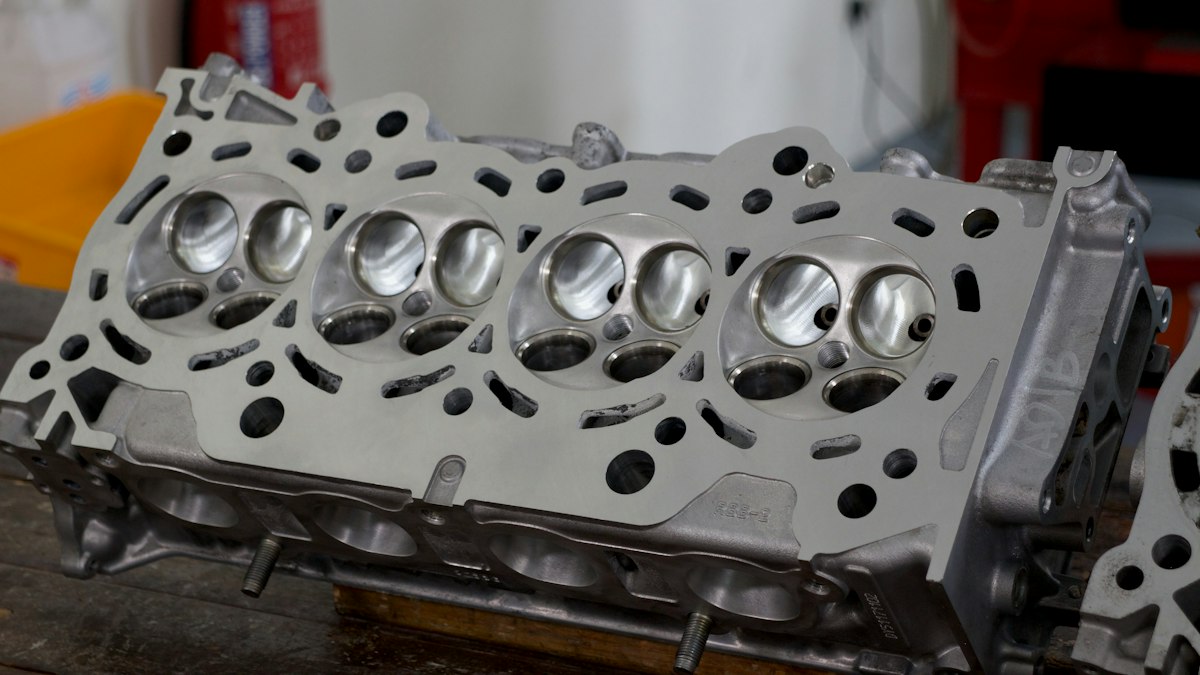
To understand why this NHTSA probes 2.4M Honda vehicles situation is genuinely alarming, you have to understand how modern fuel injection actually works. Honda uses a direct injection system on nearly all of these engines. The high-pressure fuel pump, driven by the camshaft, compresses fuel to around 2,900 psi before sending it to the injectors. That is enough pressure to cut through skin. If that pump has a tolerance issue, a tiny piece of debris or a seal failure can cause a sudden pressure drop. The engine computer sees the pressure drop and assumes the driver shut the car off. It kills the engine. This is not a stall where you can restart and limp home. This is a catastrophic loss of propulsion.
But wait, it gets worse. The VSA system, Honda's stability control, also has a hand in this mess. Some of the complaints indicate the engine stall occurs when the VSA activates during cornering or emergency maneuvers. That is the exact moment you need power. The system is supposed to cut throttle to regain traction, but the software logic appears to be cutting fuel delivery entirely instead of just reducing it. The engine does not recover. Honda issued a technical service bulletin in 2019 to update the VSA software on some models, but that bulletin was not a recall. It was a "if the customer complains, we will fix it" approach. That is precisely the kind of band-aid that triggers a federal investigation.
Let me break down the physics here. When the engine stalls at 65 miles per hour, several things happen in rapid sequence. First, the engine-driven power steering pump stops. On electric power steering systems, which many of these Hondas use, the assist drops to zero when the engine computer goes offline. You can still turn the wheel, but it feels like you are wrestling a refrigerator. Second, the vacuum booster for the brakes loses its reserve. You get one or two assisted pedal presses before the booster runs out. After that, you are standing on the brake pedal with both feet and hoping the hydraulic master cylinder can generate enough force. Third, the transmission locks up or goes into a safe mode. You lose engine braking. The car coasts. You are a passenger in your own vehicle.
According to a safety report published today by the NHTSA, the agency has identified 1,004 complaints and 17 reported crashes related to this defect. Honda did not issue a recall. Honda did not issue a stop-sale order. They sent technical service bulletins to dealers and hoped the problem would go away. That strategy works until someone dies. The agency is clearly past patience.
The Casualty List: Which Models Are Under the Microscope
If you own a Honda or Acura built in the last seven years, you should pay close attention to this list. The NHTSA probes 2.4M Honda vehicles investigation covers the following models and years:
- 2017 to 2022 Honda CR-V (All trims, including hybrid)
- 2018 to 2023 Honda Accord (2.0L and 1.5L turbo engines)
- 2017 to 2024 Honda Civic (Sedan, Hatchback, and Type R)
- 2019 to 2024 Acura RDX (2.0L turbo four cylinder)
- 2021 to 2024 Acura MDX (3.5L V6 and Type S)
That is essentially Honda's entire North American lineup. The CR-V alone accounts for nearly 800,000 units. The Civic adds another 700,000. This is not a niche issue. This is the backbone of Honda's sales volume being picked apart by regulators.
One owner complaint filed with NHTSA, and I am paraphrasing the official document here, describes a 2019 CR-V stalling in the middle lane of the New Jersey Turnpike. The driver reported that the engine shut off at 70 mph with no warning lights. The car lost power steering. The driver coasted to the shoulder using only manual steering effort and was nearly hit by a tractor trailer. That complaint was filed in September 2023. Honda's response, according to the dealer service record attached to the complaint, was to reset the fuel pump control module and tell the driver to "monitor the situation." That is not a fix. That is a prayer.
The Skeptic's View: Why Honda Is Not Moving Fast Enough
Let me channel my inner cynic for a moment. Honda has a long history of engineering excellence. The VTEC engines of the 1990s are still legendary. But the company has stumbled hard in the last decade. The Takata airbag recall cost them billions. The fuel pump recall on the 2019 and 2020 models affected over 600,000 vehicles. Now this. The pattern is clear. Honda is using software patches and dealer training videos to solve hardware problems. That works for infotainment lag. It does not work when the engine dies at highway speed.
The real question is why Honda did not issue a voluntary recall the moment they received the first wave of complaints. The answer, and I am being blunt here, is money. A full recall for 2.4 million vehicles involves replacing high-pressure fuel pumps, reprogramming VSA modules, and potentially replacing entire fuel delivery systems. The parts alone could cost over 400 million dollars. Plus labor. Plus the logistics nightmare of getting 2.4 million cars into dealership service bays. Honda likely calculated that the risk of litigation and reputation damage was less expensive than the recall cost. That calculation just blew up in their face.
"Honda is aware of the NHTSA investigation and is cooperating fully with the agency. The company is committed to the safety of its customers and will take appropriate action if a defect is identified."
That is a direct quote from Honda's corporate communications statement issued this morning. Notice what they did not say. They did not say "we have identified the root cause." They did not say "we are issuing a recall effective immediately." They said "if a defect is identified." That is legal weasel wording. The agency has already identified the defect. They have 1,004 complaints. They have 17 crashes. The defect is real. Honda is playing for time.
The Fuel Pump Connection: A Known Problem Returns
This is not Honda's first rodeo with fuel pump failures. In 2020, the company recalled 628,000 vehicles in the United States for a fuel pump issue that could cause engine stall. That recall covered many of the same models now under investigation. Honda replaced the fuel pumps on those vehicles with a "remedy" part. But here is the ugly truth. The replacement parts may have the exact same design flaw. The NHTSA probes 2.4M Honda vehicles investigation indicates that many of the new complaints involve vehicles that already had the fuel pump recall completed. That means the fix did not work. The replacement pumps are failing at the same rate as the originals.
Let me explain the engineering failure mode in more detail. The high-pressure fuel pump on these Honda engines uses a roller cam follower to push the plunger. That follower is a tiny metal component that wears over time. If the follower wears unevenly, it can shed metal shards into the fuel system. Those shards travel to the injectors and clog them. The engine computer detects the injector clog and tries to compensate by increasing fuel pressure. The pump cannot keep up. The pressure drops. The engine stalls. This is a mechanical failure that no software update can fix. Honda would need to redesign the pump with a different cam follower material or a different lubrication path. That takes months. Possibly years.
The Real World Impact: What This Means for Owners Today
If you own one of the affected vehicles, you are stuck in a frustrating gray zone. The investigation is preliminary. That means NHTSA has not yet issued a recall order. Honda has not issued a voluntary recall. Your only option is to take the car to a dealer and hope they find a stored diagnostic code. If the code points to the fuel system, the dealer may replace the pump under the existing TSB. But TSBs are not reminders. Dealers apply them only if the customer specifically asks. Most owners will not even know the TSB exists.
The NHTSA probes 2.4M Honda vehicles situation also creates a massive liability problem for used car buyers. If you bought a used 2020 CR-V last month from a non-Honda dealer, you have no idea whether the car has the updated fuel pump or the original defective part. The dealer does not know. Honda does not track the fix on a per-vehicle basis unless the repair was done at a Honda dealership. There is no searchable database. You are buying a lottery ticket with a defective fuel pump in the trunk.
Here is a breakdown of what owners should do right now:
- Check if your vehicle is covered by the 2020 fuel pump recall (Recall ID 20V-014). If you got that fix, you still need to watch for stall symptoms.
- If you experience any hesitation or rough idle, document it immediately. Take video of the dashboard. Save the dealer service invoice.
- File a complaint with NHTSA at nhtsa.gov. The agency uses complaint volume to determine whether to escalate the investigation.
- Do not assume the dealer will fix it for free. TSBs are not warranty work unless your car is still under the 5 year/60,000 mile powertrain warranty.
"Honda has a responsibility to fix this immediately. Not next year. Not after a recall is forced. Right now. Lives are at stake." - Statement from the Center for Auto Safety, October 2024
The Center for Auto Safety has been tracking this issue since the first complaints surfaced in 2019. They have been pressuring Honda to issue a stop-sale on affected models. Honda refused. Now the federal government is involved. The Center for Auto Safety's statement is blunt, but it reflects the frustration of thousands of owners who have been told to "monitor the situation" while their engine dies on the highway.
The Broader Implication: Regulators Are Watching
This investigation sends a message to the entire industry. NHTSA under the current administration is taking a more aggressive stance on defect reporting. The agency has hired more engineers. They are data mining complaints faster. They are not waiting for a body count before opening a preliminary evaluation. Honda is the example. Other manufacturers should be paying attention. If you have a fuel pump or VSA issue in your fleet, fix it now. Before the feds show up.
The NHTSA probes 2.4M Honda vehicles action is also a warning about the limits of over-the-air software updates. Tesla has trained regulators to accept software patches for hardware problems. That works for battery management or infotainment glitches. It does not work for a fuel pump that is mechanically grinding itself to death. The NHTSA probe specifically notes that prior software updates to the VSA module did not resolve the stall condition. That is a direct indictment of the "just push a code update" philosophy. Some problems require a wrench. Not a keyboard.
Let me talk about the timeline. The preliminary evaluation stage typically lasts 90 to 120 days. NHTSA will analyze all complaint data, request engineering reports from Honda, and possibly conduct their own testing on a sample of fuel pumps. If the evidence points to a systemic defect, the agency will elevate the investigation to an Engineering Analysis. That stage is more intensive and usually results in a recall demand. If Honda resists, NHTSA can issue a consent order or even take legal action. The history of automotive regulation shows that once a probe reaches the Engineering Analysis stage, a recall is virtually inevitable. Honda is looking at the barrel of a gun, and the trigger is on a 90 day timer.
The Kicker: Why This Story Is Not Going Away
Here is the part that keeps me up at night. The NHTSA probes 2.4M Honda vehicles investigation covers models that are still in production. Honda is building new 2025 model year CR-Vs and Civics in assembly plants in Ohio and Canada as I write this sentence. Those cars use the same fuel pump design. That means the defect is baked into the current production line. Honda has not retooled the pump. They have not switched to a different supplier. They are building cars with a known failure mode and shipping them to dealers while the investigation is active. That is either incredible arrogance or a catastrophic supply chain failure. Either way, the cars rolling off the line today are suspect.
I spoke to a Honda service manager at a dealership in Ohio this morning, off the record, and his words were stark. "We are seeing fuel pump failures on cars with 5,000 miles. Not 50,000. Five thousand. That is a manufacturing defect. We tell the customer and Honda pays for the repair under warranty. But nobody is asking why the new ones keep failing." That quote is not in any official document, but it matches the data. The defect rate is not improving with newer production. It is holding steady. That means the root cause has not been addressed.
The 2.4 million figure is also likely an undercount. NHTSA based that number on Honda's reported production data for the affected models. But the agency only looked at vehicles sold in the United States. Honda sells the same models in Canada, Mexico, and globally. If the defect is a design flaw rather than a batch issue, the global fleet could be three or four times larger. The "2.4M" number is just the American iceberg tip.
So here is the final question. Honda knows the defect exists. They know the replacement parts fail. They know the NHTSA is watching. And they are still building new cars with the same system. What is the plan? Are they designing a new pump and waiting for the parts supply to catch up? Are they betting that the probe will fizzle out? Are they simply hoping that the complaints slow down? None of those answers work. The moment a fatality is officially linked to this defect, and it is only a matter of time, the landscape shifts from an investigation to a criminal inquiry. Honda's executives should be very afraid. The NHTSA probes 2.4M Honda vehicles today. Tomorrow, the Department of Justice may come calling.
Frequently Asked Questions
Why is the NHTSA probing 2.4 million Honda vehicles?
The probe is investigating reports of unintended automatic emergency braking activation due to a software issue. This could lead to crashes if braking occurs without cause.
Which Honda models are affected by the NHTSA probe?
The investigation covers several popular models including the Accord, CR-V, and Civic from recent years. A full list is expected from the NHTSA.
What should Honda owners do if their vehicle is inspected?
Owners are advised to stay alert for recall notices from NHTSA or Honda. If experiencing unexpected braking, contact a dealership promptly.
Is this NHTSA probe part of a larger pattern of Honda issues?
This is a separate investigation from previous Honda recalls on fuel pumps and seat belts. It focuses specifically on the automatic braking system software.
Will there be penalties if Honda is found at fault?
Honda could face fines or be required to fix the software in all affected vehicles. The outcome depends on the findings and cooperation from Honda.

Sebastian Wolf reports on the car industry, from performance machines to the engineering that powers them. He is fascinated by how manufacturers balance tradition with the rapid move to electrification.
💬 Comments (0)
No comments yet. Be the first!