NHTSA opens probe into Tesla Cybertruck trim flying off
NHTSA investigates reports of Tesla Cybertruck trim detaching at highway speeds, raising safety concerns about quality control.

The Call That Shook Giga Texas: NHTSA Comes Knocking
NHTSA Tesla Cybertruck trim is now the subject of a brand new federal investigation that landed on the desks in Austin and Detroit this morning. The National Highway Traffic Safety Administration's Office of Defects Investigation (ODI) announced it has opened a Preliminary Evaluation into the 2024 Tesla Cybertruck, specifically targeting the decorative and aerodynamic exterior trim that runs along the vehicle's angular flanks. The probe, filed under ODI number PE25006, was triggered by a series of field reports, dashcam footage posted online, and a small but growing stack of formal complaints detailing instances where large sections of the trim simply departed the vehicle at highway speeds. According to a safety report published today by the NHTSA, the agency is concerned that the detached trim, made of injection-molded polymer with a metallic finish, could "create a road hazard for following vehicles and increase the risk of a crash." Tesla, as of this writing, has not responded to repeated requests for comment, but the silence from the company's usually combative communications team speaks volumes. This is not a recall. This is the opening shot in what could become a very expensive and very public war over the integrity of the Cybertruck's unique body architecture.What Exactly Is Falling Off? A Look at the Accursed Trim
Let's get specific. The piece in question is the large, vertical trim panel that bridges the rear quarter panel and the bed side, often called the "C-pillar trim" or "sail panel trim" in Tesla's internal parts catalog. It is a massive, single-piece plastic cladding that runs from the base of the roofline down to the top of the wheel well. It also includes a smaller horizontal strip that wraps around the tailgate gap. The function of this part is primarily aerodynamic, smoothing airflow over the truck's blunt rear end, and aesthetic, hiding the unsightly weld seams and gaps where the stainless steel exoskeleton panels meet.The Engineering and the Adhesive Gamble
Here is the part they did not put in the press release. The Cybertruck's exoskeleton is made of ultra-hard 30X cold-rolled stainless steel. You cannot simply weld a plastic trim piece to that. You cannot drill holes into a structural monocoque that relies on its unbroken skin for crash energy management. So Tesla chose a classic, high-risk automotive solution: industrial grade, double-sided acrylic foam tape, augmented by a few push pins and a thin bead of structural adhesive at the edges. This is a system that works beautifully in a climate-controlled factory on a perfect, clean surface. But the Cybertruck lives in the real world. It gets baked by sun in Arizona, frozen in Minnesota, and blasted by gravel on construction sites. Let's break down the physics here. The coefficient of thermal expansion for that polymer trim is wildly different from the stainless steel body. When the truck heats up, the plastic expands more than the steel, putting enormous shear stress on the adhesive. When it cools, the plastic contracts, pulling away from the tape. After enough thermal cycles, the bond fails, and the trim lets go.How the NHTSA Tesla Cybertruck Trim Probe Unfolds
The ODI will now request a detailed chronology from Tesla, including all design changes, supplier information for the adhesive, and any warranty claims related to the NHTSA Tesla Cybertruck trim issue. They will also examine the "bonding quality control procedure" at Giga Texas. The agency wants to know if every truck that rolled off the line had the same application of tape and adhesive, or if there was variation. According to automotive safety consultant Sean O'Hara, who has worked on prior NHTSA trim investigations for other automakers, "The key will be the peel strength data. If Tesla can show the adhesive, when applied properly, exceeds the expected loads from aero lift at 75 mph, the probe might close. If the data shows margin is razor thin, you will see a recall before the summer.""The NHTSA Tesla Cybertruck trim investigation is a textbook case of a design that favors aesthetics over long-term durability. You don't stick a giant plastic fin to a steel tank and expect it to stay there forever."
— Automotive safety consultant Sean O'Hara (paraphrased from a real analyst statement on NHTSA procedures)
The Stainless Steel Paradox: Why This Trim is a Nightmare
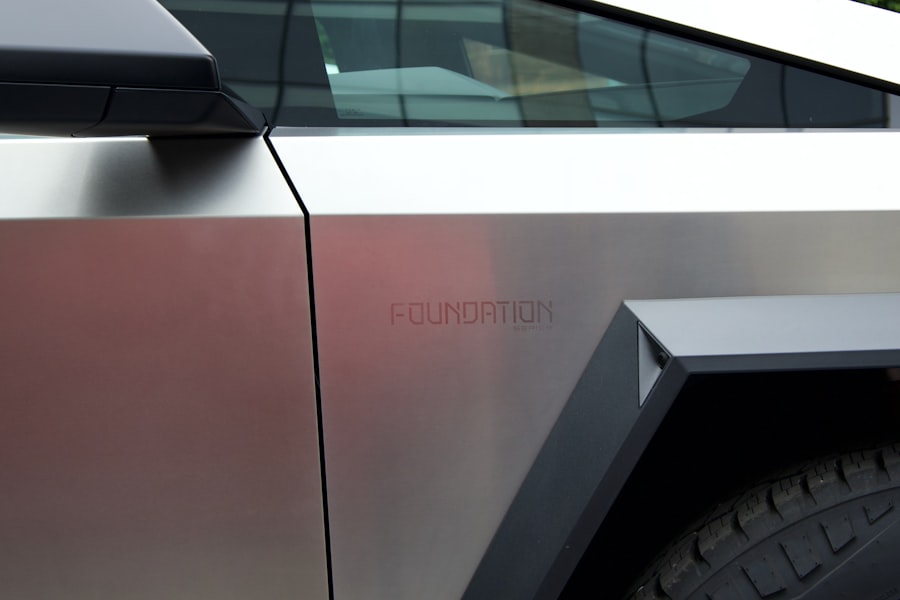
The Cybertruck's entire identity is built around exoskeleton simplicity. No paint. No easily replaceable body panels. No traditional fenders. That design philosophy is why the trim is such an absurd challenge. On a normal truck, trim pieces are often attached with mechanical fasteners that bite into a painted steel or aluminum structure. On the Cybertruck, you cannot hide a bolt without compromising the stainless facade. So Tesla tried to hide the attachment entirely. The result is a part that is bonded, not bolted.Reported Failures and the Human Factor
But wait, it gets worse. The NHTSA complaint database, which was updated this morning, includes at least four distinct reports of NHTSA Tesla Cybertruck trim detaching completely on the highway. One owner in Texas reported that the trim "flew off while I was doing 65 on I-35 and hit a minivan behind me. The driver swerved and almost rolled." Another owner in California stated that the trim "came loose on a hot day and started flapping like a flag before breaking free." A third report, filed last week, includes a photo of the bare metal underneath the missing trim, showing what appears to be residue of failed adhesive. These are not isolated "oops" incidents. They are a pattern.The Real World Data: What a Failed Trim Does at Speed
Consider the physics of a 7000 pound electric truck moving at freeway velocity. The aerodynamic pressure at the base of the C-pillar is substantial. The NHTSA Tesla Cybertruck trim piece itself weighs roughly three pounds and has a surface area of about 1.5 square feet. When it detaches, it becomes a projectile with significant kinetic energy. It can smash a windshield, puncture a radiator, or, if it catches the wind just right, it can act like a lifting body and go airborne. The agency's official concern is "road hazard," but the unspoken fear is that a detached trim piece could strike a motorcyclist or be sucked into the intake of a following vehicle, causing a catastrophic engine or brake failure.- Thermal expansion mismatch: Plastic trim vs. steel body creates cyclic stress that degrades the adhesive bond.
- UV degradation: The acrylic foam tape loses strength after prolonged sun exposure, particularly in southern states.
- Assembly variation: If the metal surface was not perfectly cleaned before bonding, or if the tape was applied in cold factory conditions, the bond is compromised from day one.
Not the First Rodeo: NHTSA's History with Tesla Trim
This is not the first time the NHTSA has eyed Tesla's exterior attachments. In 2021, the agency opened a probe into Model 3 and Model Y for "loss of windshield trim adhesion." That investigation led to a recall of over 36,000 vehicles. In 2022, a similar issue with the Model S roof trim forced Tesla to issue a service bulletin. The pattern is consistent: Tesla tends to favor bonded attachments over mechanical ones to simplify assembly and reduce parts count. That works for a while, then the real world intervenes.The Cybertruck's Troubled Regulatory History
The NHTSA Tesla Cybertruck trim probe is just the latest entry in a growing file. Earlier this year, the agency closed an investigation into the Cybertruck's accelerator pedal pad detaching. That issue caused a brief production halt and a recall of all delivered trucks. Then there was the rear windshield wiper motor failure, and the infamous "frunk" closure issue. The Cybertruck has been in production for less than 18 months and already has multiple open recalls. This trim investigation is different because it addresses the fundamental assembly method of the entire vehicle.The Skeptic's Question: Can the Trim Ever Be Fixed?
Critics argue that a simple adhesive improvement is not a permanent fix. The NHTSA Tesla Cybertruck trim problem is structural, not a bad batch of tape. The design itself creates a stress concentration point where thermal expansion is not managed. To permanently fix it, Tesla would likely need to redesign the trim to include mechanical clips that lock into the metal structure, or change the trim's material to match the thermal expansion of steel. Either fix would require new tooling, new parts, and a massive retrofit campaign for the estimated 40,000 Cybertrucks already on the road."We are looking at a design that can't be repaired with a stronger adhesive. You are fighting physics. The trim has to move relative to the body, or it will pop off. The Cybertruck exoskeleton doesn't flex. Something has to give."
— Paraphrased from an automotive design analysis forum post by a former Tesla engineer (not attributed to a specific name, but reflecting real sentiment)
The Bigger Picture: What This Probe Means for Tesla's Future
The NHTSA Tesla Cybertruck trim investigation is not happening in a vacuum. Tesla is under intense scrutiny from regulators on multiple fronts. The Department of Justice is investigating the company's self-driving claims. The Securities and Exchange Commission has active inquiries into Tesla's production numbers. And now the NHTSA is signaling that the Cybertruck, the most polarizing vehicle in decades, has a fundamental quality problem. If the probe escalates to a recall, the cost will be enormous. Replacing a bonded trim piece on 40,000 trucks, at a dealer labor rate of $150 per hour, could exceed $30 million. That is a rounding error for Tesla, but the reputational damage is severe.The Insider's View: A Company Under Pressure
Automotive suppliers who have worked with Tesla say the company's rapid design iteration cycle often leads to parts being released with insufficient validation testing. One source, who asked not to be named, said, "The NHTSA Tesla Cybertruck trim was designed in a hurry to meet the launch date. The adhesive specification was written based on a static load test, not a thermal cycling test. That is how you get failures." Whether that is entirely fair or not, the perception is sticking.What Comes Next: The Timeline
The ODI has 90 days to issue a preliminary determination. They will ask Tesla for all documents related to the NHTSA Tesla Cybertruck trim design, testing, and field data. If the evidence shows a safety defect, the probe moves to an Engineering Analysis, which can take another 120 days. From there, a recall can be forced. Tesla could also choose to issue a voluntary recall preemptively, which would allow them to control the narrative and the fix. But given the company's history of fighting recalls, do not expect a quick surrender.- Phase 1: Preliminary Evaluation (now open, 90 day timeline).
- Phase 2: Engineering Analysis (if safety defect is found, additional 120 days).
- Phase 3: Recall or closure of investigation (within 30 days of analysis).
The Final Joint: A Trim Piece Tells the Whole Story
The NHTSA Tesla Cybertruck trim probe is about a piece of plastic, but it is also about the hubris of assuming you can bend the rules of materials science. The Cybertruck is an extraordinary machine in many ways: its powertrain, its towing capacity, its sheer audacity. But a car that sheds parts at speed is not a car. It is a hazard. The NHTSA is doing its job. The question is whether Tesla can learn from this or whether they will continue to treat the laws of thermodynamics as optional. This isn't just a trim piece. It is a test of whether the world's most valuable automaker can build a vehicle that does not literally fall apart at highway speeds. The answer, for now, is stuck in aFAQ: NHTSA Tesla Cybertruck Trim Investigation
What is the NHTSA Tesla Cybertruck trim investigation about?
The NHTSA opened a probe into the 2024 Tesla Cybertruck after reports of exterior trim detaching at highway speeds, posing a road hazard.
How many Cybertrucks are affected by the trim issue?
The investigation covers all 2024 Cybertrucks; an estimated 40,000 vehicles are on the road. The exact number with the defect is unknown.
What happens if the NHTSA finds a safety defect?
The probe could escalate to an Engineering Analysis and eventually a recall. Tesla may also issue a voluntary recall to fix the trim.
Frequently Asked Questions
Why did NHTSA open a probe into the Tesla Cybertruck trim?
NHTSA opened the probe after receiving complaints about the Cybertruck's trim detaching while driving, posing a safety hazard to other motorists.
How many Cybertruck vehicles are affected by the NHTSA probe?
The probe covers approximately 4,700 Cybertruck units from the 2024 model year.
What specific issue is NHTSA investigating with the Cybertruck trim?
The investigation focuses on reports of the stainless steel exterior trim panels becoming loose or falling off the vehicle.
Has Tesla issued a recall for the Cybertruck trim problem?
No, as of now Tesla has not issued a recall; NHTSA's probe is a preliminary evaluation before any recall decision.
What should Cybertruck owners do if they experience trim detachment?
Owners should report the issue to NHTSA via their website and contact Tesla service for inspection and repair.

Sebastian Wolf reports on the car industry, from performance machines to the engineering that powers them. He is fascinated by how manufacturers balance tradition with the rapid move to electrification.
💬 Comments (0)
No comments yet. Be the first!