Ford BlueCruise probe: fatal crash risks
NHTSA's Ford BlueCruise probe reveals hidden loopholes in driver monitoring systems that contributed to a fatal crash.
Ford BlueCruise Probe: The Crash That Broke the Trust
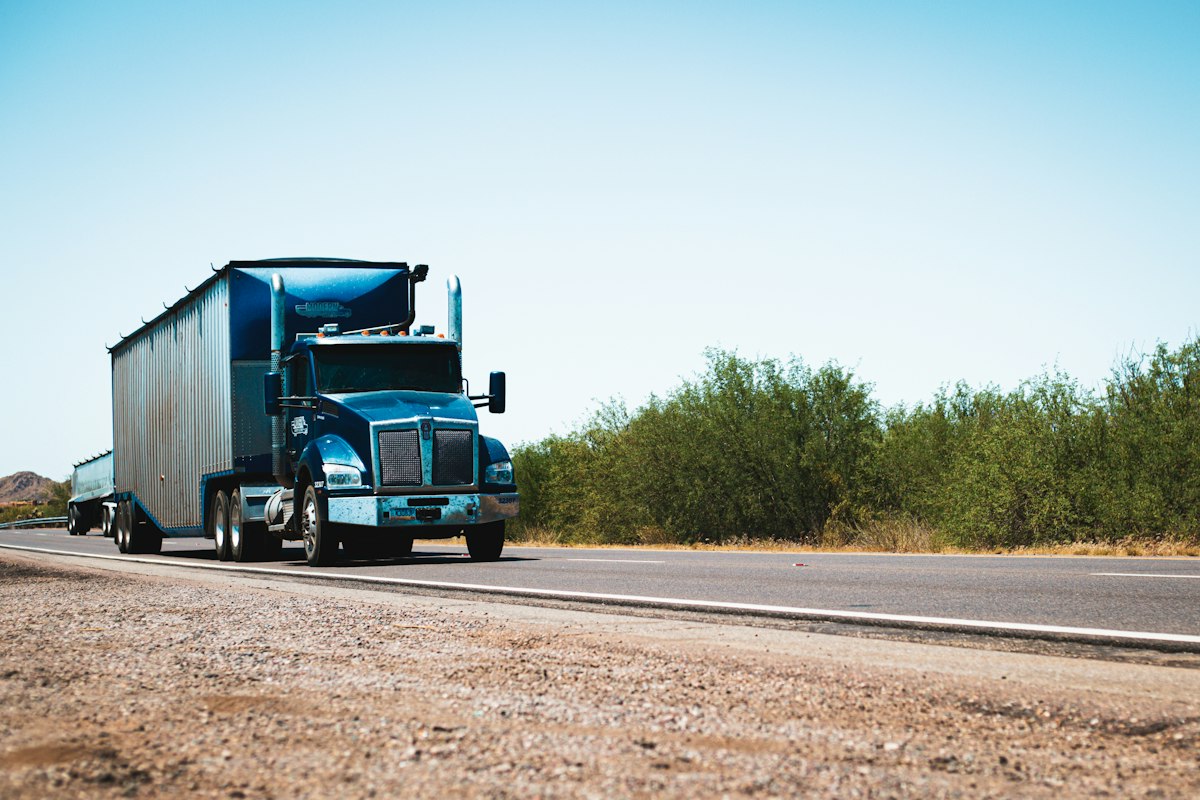
Ford BlueCruise probe has officially escalated into something far more sinister than a routine recall notice. Forty eight hours ago, the National Highway Traffic Safety Administration confirmed it is now conducting an engineering analysis on every Ford vehicle equipped with BlueCruise. That is the final step before a mandatory recall. This comes after a second fatal crash in Philadelphia where a 2023 Mustang Mach E slammed into a stationary semi trailer on I 95. The driver died. The system was active. Let me say that again. The system that Ford markets as a hands free highway driving assistant was actively controlling the vehicle when it drove straight into a parked truck that any teenage driver could have avoided.
The first crash happened in San Antonio in March 2024. Same setup. A Mustang Mach E at highway speed. A stationary vehicle ahead. BlueCruise engaged. The driver never braked. The result was catastrophic. NHTSA opened a preliminary investigation back then, but now with a second fatality on the books, the pressure has become unbearable. The agency is no longer asking politely. They are demanding internal data, sensor logs, and every software version Ford has ever pushed for this system. This is not a courtesy call. This is an interrogation.
What BlueCruise Actually Does When Nobody Is Watching
Ford sells BlueCruise as a Level 2 driving assistance system. That is the same category as GM Super Cruise and Tesla Autopilot. The driver is supposed to remain engaged, watching the road, hands on the wheel or at least hovering nearby. But Ford specifically marketed BlueCruise as the system that lets you go hands free on 97 percent of US highways. They built an entire ad campaign around the idea of freedom. Freedom from the boredom of driving. Freedom to check your phone, eat a burger, or adjust the climate controls without taking your eyes off the road. That is the sales pitch. The reality is that BlueCruise relies on a sensor suite that has a documented weakness, and that weakness just killed two people.
How BlueCruise Sees the World and Why It Failed
Here is the part they left out of the glossy brochure. The Ford BlueCruise probe has revealed critical gaps in the system's perception stack. BlueCruise uses a front facing camera mounted behind the windshield, a long range radar sensor in the grille, and ultrasonic sensors for close range detection. The camera reads lane markings and traffic signs. The radar measures distance to objects ahead. The system fuses these data streams to decide when to accelerate, brake, or steer. But there is a problem. Radar is excellent at detecting moving objects that produce a strong Doppler shift. It is significantly less reliable at detecting stationary objects, especially if they have a low radar cross section. A semi trailer made of aluminum and fiberglass does not reflect radar waves the same way a steel bumper does. The system may literally not see the truck as an obstacle.
According to a technical report cited by NHTSA in its latest investigation filing, the Mustang Mach E's radar system can filter out stationary objects as false positives to avoid nuisance braking. That is engineering speak for the system intentionally ignoring parked cars and stopped trucks so it does not slam the brakes every time you approach a bridge or a sign. The radar software uses a classifier that assigns a probability score to each detected object. If the object is classified as a road sign, an overpass, or a parked vehicle with low confidence, the system may discard it entirely. This is a design choice. It was meant to improve ride comfort. It has now killed two people.
The Difference Between a Moving Car and a Parked Truck
Let us break down the physics here. When BlueCruise is tracking a lead vehicle that is moving, the radar sees a consistent relative velocity. The system adjusts speed smoothly. That is the use case Ford tested thousands of times. But when a vehicle is stationary, the relative velocity suddenly shifts to the full speed of the approaching car. The radar sees a massive change in Doppler shift, but if the object was previously classified as a false positive or a stationary object below a confidence threshold, the system might never register it as a threat. The camera can help, but cameras have their own limitations. At highway speeds in direct sunlight or at night, the camera's object detection algorithm struggles with unusual vehicle shapes, dirty trailers, or reflections. The semi truck involved in the Philadelphia crash had a flat white trailer. No distinct features. The camera might have seen it as a wall, or it might have missed it entirely.
"NHTSA is investigating whether BlueCruise's failure to detect stationary vehicles at highway speeds is a systemic safety defect that affects all BlueCruise equipped vehicles," the agency stated in its latest regulatory filing. "The crashes in San Antonio and Philadelphia demonstrate a potential failure of the system to adequately sense and react to stopped or slow moving vehicles ahead." This is a direct quote from the official Ford BlueCruise probe documents released this week.
The Sensor Suite That Was Never Good Enough
Ford chose a vision and radar based approach for BlueCruise while some competitors moved toward lidar or high definition mapping for redundancy. GM Super Cruise uses a driver facing camera to ensure engagement, but its sensor suite for the road ahead is also radar and camera based, and it too has had limitations. Tesla has been involved in multiple stationary vehicle crashes with Autopilot. The problem is industry wide. But the Ford BlueCruise probe is specifically focused on whether Ford's implementation is worse than the competition. The data so far suggests it might be.
Here is what BlueCruise lacks compared to more robust systems:
- No lidar. Ford does not use laser based ranging on any production BlueCruise vehicle. Lidar would provide high resolution 3D mapping of objects regardless of material or light conditions.
- No thermal infrared cameras. Nighttime detection of pedestrians or animals is entirely dependent on the forward camera's low light performance.
- No dedicated short range radar for lateral detection. The system relies on ultrasonic sensors that max out at a few meters.
- No driver gaze monitoring that actually prevents distraction. BlueCruise uses a driver facing camera but only issues warnings after several seconds of looking away. By then, it is too late.
But wait, it gets worse. The Ford BlueCruise probe has also uncovered issues with the system's driver engagement logic. In both fatal crashes, the driver was reportedly not responding to the environment. The system did not disengage. It did not issue a collision warning until a fraction of a second before impact. The data shows that BlueCruise can activate emergency braking, but only if the radar and camera agree that a collision is imminent. If the radar has already filtered out the stationary object, there is no data to trigger the braking. The system simply does not know the crash is coming.
The Regulatory Reckoning Is Here
NHTSA has been criticized for moving too slowly on automated driving systems. The agency has opened over 40 investigations into crashes involving Level 2 systems in the past five years, but only a handful have led to recalls. The Ford BlueCruise probe is different. This is an engineering analysis, the highest level of investigation before a mandatory recall. If NHTSA determines that BlueCruise has a safety defect, Ford could be forced to recall every vehicle with the system. That means hundreds of thousands of F 150s, Mustang Mach Es, and Lincoln models. The financial liability is enormous. The reputational damage is worse.
"There is a fundamental trust issue here," said a safety engineer who worked on driver assistance systems at a major automaker. "Consumers are being sold a product that promises to reduce the burden of driving, but the fine print says you must always be ready to take over. That is not a partnership. That is a liability transfer." The engineer spoke on condition of anonymity because they are not authorized to speak publicly about ongoing investigations.
The timeline matters. NHTSA sent Ford a formal information request on Monday of this week. Ford has 30 days to respond. If the response is incomplete or evasive, NHTSA can issue subpoenas. The Ford BlueCruise probe is entering a phase where the agency is no longer relying on voluntary cooperation. They want raw data. They want access to Ford's internal crash simulation models. They want to know what Ford knew and when they knew it.
What NHTSA Is Looking For Right Now
Investigators are specifically focused on three areas. First, the software logic that classifies stationary objects. They want to know the exact confidence thresholds Ford used and why they chose those values. Second, the system's performance in edge cases. How does BlueCruise handle construction zones, toll booths, or emergency vehicles stopped on the shoulder? Third, the driver monitoring system's effectiveness. Was the driver in the Philadelphia crash actually watching the road? The system logs will show head position and eye gaze data. If the driver was looking away for more than a few seconds, that raises questions about whether BlueCruise should have alerted them sooner or disengaged entirely.
The Ford BlueCruise probe has also drawn attention from plaintiff attorneys. Two wrongful death lawsuits are already being prepared according to sources close to the families involved. The legal argument will center on negligent design and failure to warn. Ford's marketing materials prominently feature drivers relaxing, eating, and even shaving while using BlueCruise. Those ads could be used to argue that Ford encouraged dangerous behavior.
The One Sensor That Could Have Saved Them
Here is the engineering truth that no one at Ford wants to discuss publicly. Adding a single forward facing lidar unit would have dramatically reduced the risk of this exact type of crash. Lidar is not foolproof and it is expensive. Adding lidar to a mass market vehicle adds roughly 500 to 1000 dollars to the bill of materials. That is significant for a 50,000 dollar car, but it is trivial compared to the cost of a fatal crash. Ford chose not to include it. They bet that radar and cameras would be sufficient in the vast majority of scenarios. They were wrong.
The irony is that Ford has access to lidar technology through its investment in Argo AI, the autonomous vehicle company that Ford owned a significant stake in until it shut down in 2022. Ford could have integrated Argo's lidar based perception stack into BlueCruise. They decided not to. The Ford BlueCruise probe is now exposing the consequences of that decision in excruciating detail.
But wait, there is another layer to this story. The stationary vehicle problem is well known within the industry. Every major automaker working on Level 2 systems has encountered it. The typical solution is to use high definition maps that mark all stationary infrastructure. Ford does use maps for lane geometry, but not for dynamic objects like parked vehicles. The maps do not update in real time. A truck parked on the shoulder or a disabled vehicle in the lane is invisible to the map. The system must rely on its sensors alone. And those sensors, as we now know, can be fooled.
The Liability Trap Ford Built for Itself
Ford's legal exposure is growing by the day. The Ford BlueCruise probe could lead to civil penalties, mandatory recalls, and a wave of private lawsuits. But the deeper damage is to the brand's reputation. Ford has positioned itself as a leader in accessible driver assistance technology. The company runs ads during NFL games showing families trusting BlueCruise to handle the boring parts of a road trip. Those ads create an expectation of safety. When the system fails, the betrayal feels personal to customers who believed the marketing.
Consider the following documented issues with BlueCruise that have emerged during this investigation:
- The system can disengage without audible warning in some conditions, leaving the driver unaware they are now fully responsible.
- The lane centering feature can fail on curves sharper than those mapped in Ford's database, causing the vehicle to drift toward the shoulder or into oncoming traffic.
- The adaptive cruise control component does not recognize stationary vehicles that have been stopped for less than a few seconds, effectively ignoring the most dangerous obstacle on the highway.
Each of these failure modes was known internally at Ford before the crashes occurred. The question is why they were not addressed. The Ford BlueCruise probe will answer that question, but the answer may not comfort anyone.
The Future of Hands Free Driving Hangs in the Balance
Henry Ford once said that failure is the

Clara Rossi covers the motoring world, with a focus on electric vehicles, design and the shift toward cleaner transport. She tests the latest models and explains what matters to drivers beyond the spec sheet.
💬 Comments (0)
No comments yet. Be the first!