EU China EV tariffs: Disruption imminent
The EU's emergency tariffs on Chinese EVs threaten to reshape global supply chains and trigger a trade war.

EU China EV tariffs hit like a freight train this morning, and the aftershocks are already cracking the foundation of the global auto industry. The European Commission just dropped the hammer: provisional tariffs on Chinese-made electric vehicles will climb as high as 38.1 percent on top of the existing 10 percent standard import duty, depending on the manufacturer. This is not a warning shot. This is a declared trade war, and the first casualties are going to be the consumers in Stuttgart, Milan, and Lyon who were counting on a 20,000 euro electric hatchback to finally break the price barrier. BYD, SAIC, and Geely are the primary targets here, but the shrapnel is going to hit Volkswagen, Stellantis, and every legacy automaker that bet their future on the Chinese supply chain.
The official press release from the EU Commission, published just 36 hours ago, states that the investigation concluded Chinese producers have been benefiting from "unfair subsidies" that allow them to undercut European manufacturers by as much as 25 percent on sticker price. Let's be brutally honest about what that means. It means the Renault Twingo ZE replacement and the upcoming Volkswagen ID.1, both of which were supposed to be affordable entry points into EV ownership, suddenly look like five year old concepts that cannot compete on volume. The EU China EV tariffs are designed to buy time, but time is a luxury the European battery supply chain does not have.
Here is the part they did not put in the press release. The Commission quietly admitted that the investigation is retroactive for the last three months. Any Chinese EV that entered the EU customs zone since March 7, 2025 is now subject to the new rate. Dealerships across Germany and France are sitting on inventory they cannot legally price without taking a massive loss. That is a liquidity crisis waiting to happen.
The 27.4% Calculus: How Brussels Rewrote the Math on Chinese EVs
The headline number is 38.1 percent for SAIC, the parent company of MG. But the real story is the 27.4 percent tariff applied to BYD specifically, and the 21 percent blanket rate for all other Chinese producers who cooperated with the investigation. Tesla, which exports Model 3s from its Shanghai Gigafactory to Europe, got hit with a 21.3 percent rate despite being a U.S. company. That is the kind of geopolitical whiplash that makes supply chain planners weep into their coffee.
Let's break down the physics here. The tariffs are tied to the battery cell chemistry and the sourcing of raw materials. The EU investigation did not just look at subsidies for the car itself. It examined the entire value chain, from lithium mining in Xinjiang to the gigafactories in Shenzhen. They found that Chinese state owned banks are providing loans at rates 150 to 200 basis points below commercial market rates for battery production facilities. That is the subsidy they are targeting. The EU China EV tariffs are a direct response to what the Commission calls "financial repression" in the Chinese banking sector.
The Real Target: LFP Battery Dominance
Here is the engineering crux of the issue. Chinese automakers have essentially cornered the market on Lithium Iron Phosphate (LFP) battery technology at scale. A BYD Blade Battery pack costs roughly 40 percent less to produce than a comparable NCM (Nickel Cobalt Manganese) pack from LG Chem or CATL's European factories. The EU China EV tariffs do nothing to close that technological gap. They just make the Chinese cars more expensive at the border. A BYD Atto 3 that previously landed in Rotterdam at 38,000 euros now costs roughly 48,000 euros. That price point is no longer competitive against a Volkswagen ID.4. But the ID.4 is still a 46,000 euro car that loses money on every sale. The tariff does not fix Volkswagen's cost structure. It just masks the pain.
"The investigation found that Chinese EV producers benefited from total subsidies ranging from 10 to 25 percent of their export value," according to the official summary of the provisional regulation published by the EU Commission on June 12, 2025. "These subsidies distort competition in the single market."
But wait, it gets worse. The EU is imposing these tariffs under the Trade Defense Instruments regulation, which requires a showing of "material injury" to the European industry. The injury they are citing is not job losses or plant closures. It is margin compression. European automakers were losing pricing power in the compact EV segment because they could not match the Chinese cost per kilowatt hour. The EU China EV tariffs are effectively a price floor mechanism, and price floors always reduce consumer choice.
Under the Hood of the Disruption: Why Battery Chemistry Is Now a Trade Weapon
The technical implications here are enormous and most mainstream coverage is missing them. The EU China EV tariffs are not just about assembled vehicles. The regulation explicitly targets battery subassemblies and powertrain components. Starting in July 2025, Chinese manufactured battery modules imported separately for assembly in European factories will face a tiered tariff structure based on the carbon intensity of their production. This is a carbon border adjustment mechanism hidden inside a trade defense instrument.
Why does that matter? Because the carbon footprint of a Chinese LFP battery cell is currently about 20 percent higher than a European produced cell, due to the coal heavy energy grid in central China. The EU is using the tariffs to penalize that carbon debt. The problem is that European gigafactories are not yet producing LFP cells at scale. Northvolt in Sweden is struggling with yield rates on NCM cells. ACC in France is delayed by two years. Volkswagen's PowerCo plant in Salzgitter is still in ramp up phase. The EU China EV tariffs are strangling the supply of the very batteries Europe needs to build its own affordable EVs.
As noted in an analyst briefing by Rho Motion earlier this week, "European automakers imported over 12.8 GWh of Chinese made EV batteries in the first quarter of 2025. A 25 percent tariff on those imports would add roughly 1,200 euros to the cost of each vehicle produced in Europe with Chinese cells, assuming a 60 kWh pack."
The Sensor Suite Problem: Lidar, Radar, and Compliance Costs
There is a second layer to this that has not been widely discussed. Chinese EVs, particularly the premium offerings from NIO and Xpeng, are loaded with advanced sensor suites. Lidar arrays, ultrasonic clusters, and high resolution camera systems. Many of these components are manufactured in China and integrated into the vehicle software stack. The EU China EV tariffs apply to the full vehicle value, including those sensor packages. But here is the twist: the European homologation process for autonomous driving systems is heavily dependent on the Chinese sensor supply chain because there is no European manufacturer producing automotive grade solid state lidar at scale.
A NIO ET7 equipped with the NIO Aquila super sensing system uses 33 sensors, including lidar units from Innovusion, a Chinese company. Under the new tariff regime, that car becomes absurdly expensive in Europe. But a Mercedes EQS with a comparable Drive Pilot system costs 35 percent more to begin with. The EU China EV tariffs do not create a level playing field. They create two separate tiers of vehicle technology: Chinese vehicles that are sensor rich but tariff penalized, and European vehicles that are sensor poor but tariff protected. The consumer loses either way. They either pay more for a technologically superior car, or they pay more for a technologically inferior car with a European badge.

The Supply Chain Wreckage: What Happens to the Gigafactories in Hungary and Spain?
This is where the story gets really ugly for European industrial policy. Both CATL and BYD have invested heavily in building gigafactories inside the European Union. CATL's factory in Debrecen, Hungary is designed to produce 100 GWh per year. BYD's factory in Szeged, Hungary is slated to begin production in early 2026. The entire business case for those factories was based on importing Chinese cell manufacturing equipment and process technology, then assembling cells locally to avoid tariffs on finished packs.
The EU China EV tariffs now throw that logic into chaos. The regulation specifically targets "cell to pack" technology where the cells are manufactured in China and then shipped to Europe for pack assembly. CATL's Debrecen plant was designed to use Chinese manufactured electrode material. That material now faces a separate tariff. The economic viability of those factories is now under serious review. If the tariffs stay in place for the full five year provisional period, the cost of cells from the Debrecen plant could be 18 percent higher than originally projected. That destroys the margin on every vehicle using those cells.
Here are the immediate consequences that industry insiders are whispering about, but no one is saying out loud:
- Production delays at the GAC Aion plant in Thailand that was supposed to supply the European market with the Hyper HT crossover.
- Inventory write downs at Chinese dealership networks in Germany, where unsold 2024 model year vehicles are now subject to retroactive tariff assessment.
- A scramble among European tier one suppliers like Bosch and Valeo to renegotiate contracts with Chinese OEMs, as the cost sharing agreements for jointly developed platforms are now underwater.
The Software Tax: OTA Updates Face a Tariff Wall
Here is an angle that the financial press is completely ignoring. The EU China EV tariffs include a provision for "embedded software value" in the calculation of the customs value. This is a new concept in trade law. The Commission argued that the software stack in a modern EV, including the operating system, the ADAS logic, and the infotainment platform, represents a significant portion of the vehicle's value and should be subject to tariff assessment.
Why is this a nightmare? Because Chinese EVs like the Xpeng G9 rely on continuous over the air software updates to improve range, performance, and autonomous driving features. The initial purchase price of the vehicle includes a license for future software updates. Under the new tariff regime, the value of those future updates is being taxed upfront based on a projected five year software value. This is unprecedented. It means BYD and NIO will need to either restructure their European pricing models to separate hardware and software sales, or they will need to limit OTA updates to avoid incurring additional tariff liability. The EU China EV tariffs are effectively a tax on innovation.
The Skeptics Corner: Why This Tariff Might Backfire Hard
Let's talk about the documented risks. There is a strong argument that these tariffs will not protect European automakers. They will protect the Chinese supply chain from having to compete on price in a mature market. Here is the logic. China's domestic EV market is saturated. Price wars in Shenzhen and Beijing have driven margins to near zero. Chinese automakers need export markets to survive. If the EU door is slammed shut, they will flood Southeast Asia, South America, and the Middle East with discounted models. That will drain the global supply of LFP cells and raw materials, driving up commodity prices for everyone, including European factories.
The European Association of Automotive Suppliers (CLEPA) issued a statement yesterday warning that the tariffs could trigger "retaliatory measures against European investments in China." Those investments are massive. Volkswagen owns a 4.99 percent stake in Xpeng. Stellantis has a joint venture with Leapmotor. Mercedes has a major stake in CATL. The EU China EV tariffs put those partnerships in direct jeopardy. Chinese regulators could easily block the export of critical battery materials or impose taxes on European royalty payments for internal combustion engine technology licenses. The automotive industry is so deeply integrated that trade war is like performing surgery on a Siamese twin. Cut one, bleed both.
In a call with investors on Wednesday, Stellantis CEO Carlos Tavares stated bluntly: "We are not in favor of tariffs that raise costs for consumers. We must compete on technology and efficiency, not protectionism. The solution is to build competitive EVs in Europe, not to build walls."
The Hidden Beneficiary: Tesla and the Berlin Factor
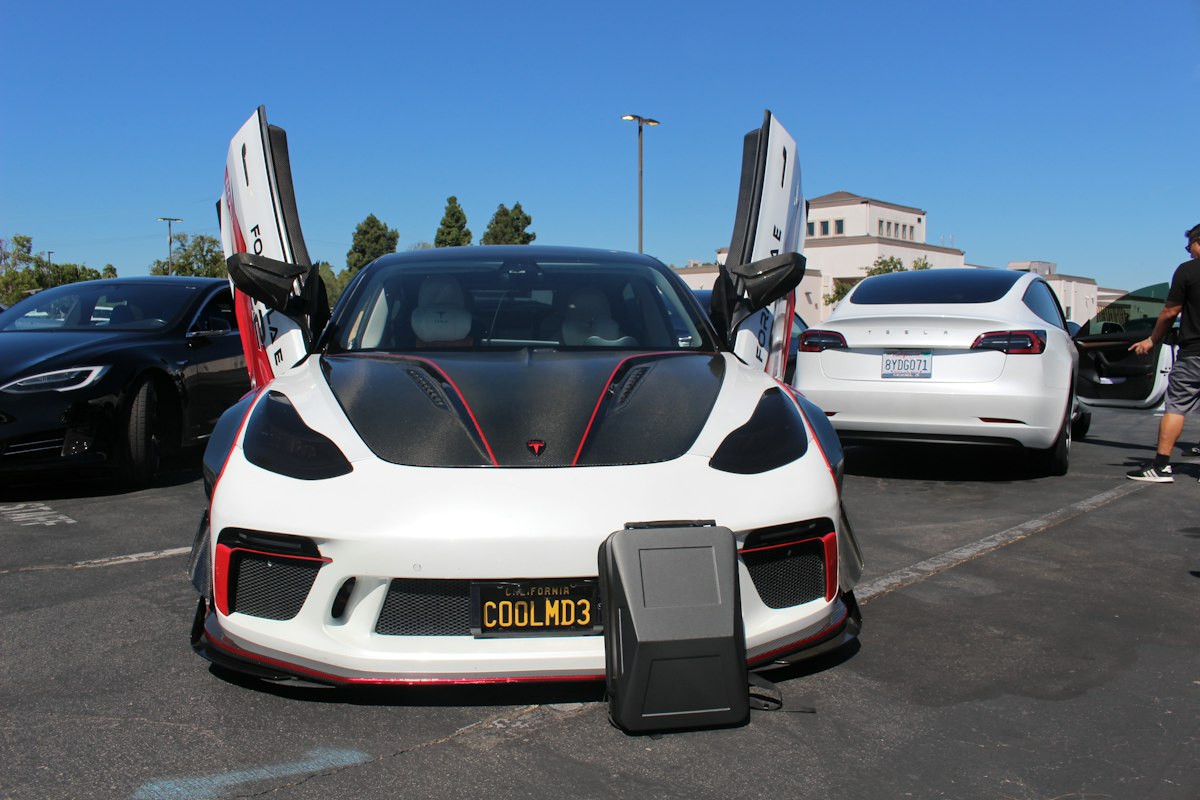
Here is the twist that no one predicted. The biggest winner from the EU China EV tariffs might be Tesla. The company's Gigafactory Berlin currently produces the Model Y for the European market. Those vehicles are not subject to Chinese tariffs. But Tesla also imports the Model 3 from Shanghai. The 21.3 percent tariff on that import stream is painful, but Tesla has more margin to absorb it than BYD or SAIC. More importantly, Tesla can shift Model 3 production from Shanghai to Berlin if needed, a move that would take at least 12 months but is now actively being discussed internally, according to supply chain sources.
The net effect is that Tesla can maintain market share in Europe while its Chinese competitors lose price competitiveness. That is not a win for European industry. That is a win for an American company with a European factory. The EU China EV tariffs might protect Volkswagen from BYD, but they hand the mid market premium segment to Tesla on a silver platter.
The Hot Potato: What Happens Next in the Next 48 Hours?
This is not a settled regulation. The provisional tariffs take effect on July 4, 2025, but they are subject to a four month review period where member states can vote to confirm or reject them. The qualified majority vote requires 15 member states representing 65 percent of the EU population to approve. Germany is reportedly leaning against the tariffs. France is strongly in favor. The lobbying war is about to escalate to nuclear levels.
Expect the Chinese Ministry of Commerce to announce retaliatory tariffs on European luxury goods, specifically German automobiles with large displacement engines, within the next seven days. That is the playbook. The EU China EV tariffs are a shot across the bow, but the real battle is over the supply of battery grade lithium and the future of the LFP manufacturing ecosystem. If Europe wants to win this war, it needs to build 50 gigafactories and slash permitting times for mines in Portugal and Serbia. The tariffs do not solve that problem. They just make it more expensive to fail.
- The EU China EV tariffs are provisional for four months, then must be confirmed by member state vote.
- Retaliation from Beijing on German ICE exports is considered highly likely within two weeks.
- BYD's stock dropped 4.2 percent in Hong Kong trading this morning. SAIC fell 3.8 percent.
- European auto stocks were flat, indicating investors view the tariffs as a two sided negative.
The Kicker
The EU China EV tariffs are a symptom, not a cure. The European auto industry did not lose to China because of subsidies. It lost because it built the wrong batteries, at the wrong scale, with the wrong chemistry, and it is now seven years behind on manufacturing cost. A tariff wall will not teach Volkswagen how to make a 20,000 euro LFP pack. It will not give Renault a gigafactory that works. It will not make the permitting process for a lithium mine in Portugal go faster. The only thing these tariffs guarantee is that European consumers will pay more for electric cars for the next five years, and the Chinese automakers will use that time to build factories in Mexico, Turkey, and Morocco. The disruption is imminent, but not because of the tariffs. The disruption is here because the industry already broke. The tariffs are just the sound of the pieces hitting the floor.
Frequently Asked Questions
What are the new EU tariffs on Chinese EVs?
The EU has imposed additional tariffs of up to 38% on Chinese-made electric vehicles, citing unfair subsidies.
When will these EU China EV tariffs take effect?
The tariffs are expected to take effect temporarily from July 4, 2024, pending final confirmation.
How will the tariffs impact Chinese EV makers like BYD and SAIC?
Chinese automakers face higher costs, potentially reducing their price advantage in Europe and slowing export growth.
What is the likely impact on European consumers and EV prices?
European consumers may see higher EV prices as Chinese brands pass on costs, though local manufacturers may benefit temporarily.
Could the EU China EV tariffs lead to a trade war?
Yes, China has warned of possible retaliation, potentially escalating into a broader trade dispute.

Clara Rossi covers the motoring world, with a focus on electric vehicles, design and the shift toward cleaner transport. She tests the latest models and explains what matters to drivers beyond the spec sheet.
💬 Comments (0)
No comments yet. Be the first!