Cybertruck steer-by-wire probe: NHTSA nightmare
NHTSA's new Cybertruck steer-by-wire probe threatens Tesla's reputation after reports of steering failure.
The system failed. Then the wheel locked. Now the government is digging through the wreckage.
Cybertruck steer-by-wire probe is the phrase keeping Tesla’s legal team awake at 3 a.m. as we speak. The National Highway Traffic Safety Administration (NHTSA) dropped a bombshell late yesterday, opening a formal investigation into what it calls a “loss of steering control and motive power” on the 2024 Tesla Cybertruck. The agency’s Office of Defects Investigation (ODI) has recorded 13 separate reports where drivers reported that the steering wheel suddenly became unresponsive or required “significantly increased effort” to turn, often while traveling at highway speeds. In four of those cases, the vehicle completely lost all steering assist and displayed a warning that the system had failed. The investigation covers an estimated 47,000 vehicles produced between November 2023 and October 2024.
This is not a recall yet. But the language in the NHTSA document issued on January 6, 2025 is aggressive. The agency states that it is opening the probe to “assess the scope, frequency, and manufacturing circumstances associated with the alleged defect.” Translation: Tesla has a big problem with a system it was incredibly proud of, and now the feds want to know whether the company knew about the failures before delivery.
What the hell is steer-by-wire anyway?
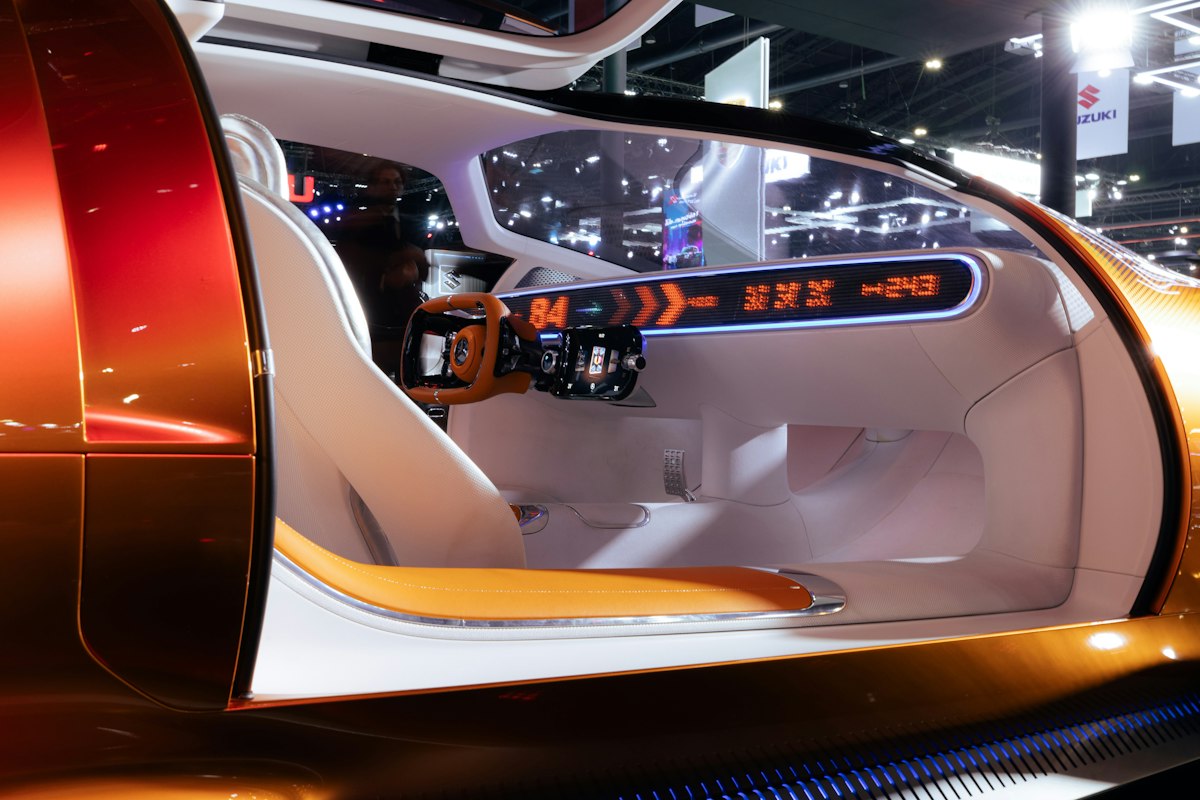
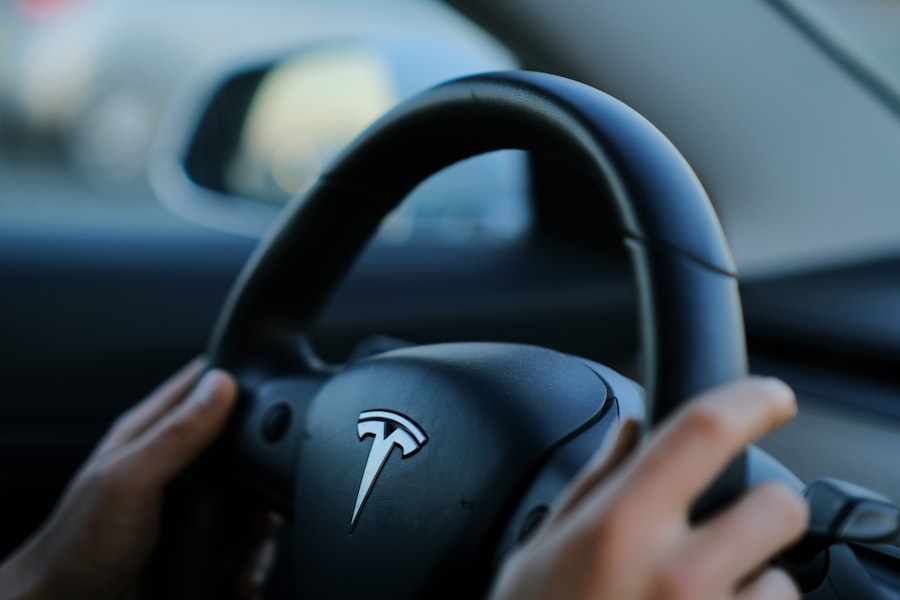
Most people do not realize that the Cybertruck does not have a physical steering shaft connecting the wheel to the front tires. There is no mechanical linkage. None. Zero. When you turn that yoke shaped wheel, you are sending an electrical signal to a pair of motors mounted on the steering rack. Those motors then move the tires. The system is fully redundant, meaning there are two separate electrical circuits, two separate controllers, and two separate power supplies. If one side fails, the other side should take over. That is the theory, anyway.
The official name for this technology is a “steer-by-wire” system with a 12:1 variable ratio. Tesla licensed the core architecture from ZF Friedrichshafen, a German automotive supplier that had been working on the concept for over a decade before Tesla decided to put it into production on a vehicle that weighs over 4,500 kilograms curb weight. The Cybertruck is the first production vehicle in the United States to use a fully mechanical disconnect steer-by-wire system with no fallback mechanical coupling. There is no emergency clutch. There is no backup steering shaft. If the electronics go dark, you do not steer.
The sensor suite that makes it work
To make this system work without a physical column, Tesla equipped the Cybertruck with three separate torque sensors in the steering wheel assembly, two redundant position sensors on the steering rack, and a dedicated controller that runs a custom version of the company’s proprietary operating system. The controller calculates steering angle based on input from the yoke, vehicle speed, and lateral acceleration. The system then commands the rack motors to move the tires accordingly. At low speeds, the ratio is quick, allowing the driver to make sharp turns with minimal yoke rotation. At highway speeds, the ratio slows down to prevent oversteer.
Here is the part they did not put in the press release. The system relies on a continuous 48 volt power supply from the Cybertruck’s low voltage architecture. If that voltage dips below a certain threshold, the steering assist drops out. If the voltage drops too far, the controller shuts down entirely. According to the NHTSA complaint summaries, several drivers reported seeing a “Steering Assist Reduced” message followed by a complete loss of power steering. In at least two cases, the steering wheel physically locked in place, forcing the driver to muscle the truck to a stop using only the mechanical friction of the system. The Cybertruck does not have a traditional steering column lock, but the rack motors can create enough resistance to make the wheel nearly immovable without assist.
Why this investigation is different from the others
Tesla has faced plenty of NHTSA probes over the years. Autopilot, unintended acceleration, suspension failures. But the Cybertruck steer-by-wire probe is unique because it targets a system that is fundamentally different from anything else on the road in America. No other OEM has put a fully mechanical disconnect steer-by-wire system into mass production for a passenger vehicle in this market. The closest competitor was the Infiniti Q50, launched in 2013 with a steer-by-wire system that retained a mechanical backup clutch. That system had its own issues, including a recall in 2014 for software glitches that could cause a loss of steering control. But the Q50 always had a fallback. The Cybertruck does not.
According to an engineer who worked on the development of the Q50 system at Nissan and spoke to Reuters on condition of anonymity, “The challenge with steer-by-wire is not the technology itself. It is the certification. You have to prove that the system can fail in a predictable way and still allow the driver to control the vehicle. If you do not have a mechanical link, you have to build in so much redundancy that failure becomes nearly impossible. Tesla cut corners by reducing the number of independent power sources. They have only two 48 volt buses. In the ZF system we evaluated, we required three independent power channels.”
Let us break down the physics here. A vehicle with a curb weight of 4,500 kilograms requires roughly 150 newton meters of torque at the steering rack to turn the front wheels while stationary. The electric motors on the rack can deliver that torque, but only if the controller has enough voltage and current. If one of the two power buses fails, the remaining bus has to supply both motors, which increases the load and reduces the available torque by roughly 40 percent. That is why drivers reported that the steering became heavy but still functional in some cases. The system was operating in degraded mode. But if the remaining bus fails, or if the controller itself crashes due to a software bug, the rack motors go into a passive state and the wheel locks.
“The steering wheel became extremely difficult to turn. I had to use both hands and all my strength to keep the truck in my lane. The dashboard displayed a red steering wheel icon with the message ‘Steering Assist Reduced. Service Required.’ I pulled over and the truck shut down completely. It would not restart.” — Excerpt from NHTSA complaint number 11908213, filed December 22, 2024.
The software angle that scares engineers
But wait, it gets worse. The Cybertruck steer-by-wire probe is not just about power failures. It is also about software. The system uses a controller that runs a real time operating system based on a modified Linux kernel. The controller communicates with the vehicle’s main computer over a dedicated CAN bus, but it also receives data from the Autopilot sensors, the braking system, and the battery management system. If any of those systems send corrupted data, the steering controller can misinterpret the input and behave unpredictably.
Several of the NHTSA complaints describe a scenario where the steering wheel suddenly jerked to one side without driver input, then corrected itself. One driver reported that the truck veered into an adjacent lane while the steering wheel was held steady. The system apparently interpreted a slight road crown as a steering angle error and overcorrected. This is a phenomenon known in the industry as “torque ripple” or “steering oscillation.” It happens when the control loop overshoots the target angle and then overcorrects in the opposite direction. In a traditional hydraulic or electric power steering system, mechanical damping prevents this. In a steer-by-wire system, the damping has to be done entirely in software.
Tesla pushed an over the air software update on December 15, 2024 that was supposed to address “steering feel improvements” according to the release notes. But the NHTSA probe specifically mentions that several of the reported incidents occurred after this update was applied. That suggests either the update did not fix the problem or it introduced new ones. The agency is now demanding that Tesla provide a complete log of all software changes made to the steering controller since production started, along with a detailed explanation of how the system handles fault detection and degraded mode operation.
What happens when the battery is low?
There is another dimension to this investigation that has not received much attention in the press. The Cybertruck uses a 48 volt architecture for its low voltage systems, which is much higher than the traditional 12 volts used in every other passenger vehicle on the road. The higher voltage allows thinner wires and smaller motors, but it also introduces new failure modes. The 48 volt battery is a small Lithium Iron Phosphate pack located under the front seat. If the main high voltage battery pack is depleted, the 48 volt battery can continue to power the steering system for a limited time. But if the 48 volt battery itself is low, or if the DC DC converter that charges it from the main pack fails, the steering system will shut down.
Cybertruck owners on enthusiast forums have reported that the steering system sometimes fails when the main battery is below 10 percent state of charge. One user posted a video showing the steering warning appearing immediately after the battery icon turned yellow. The system appears to prioritize energy conservation over steering assist when the battery is low. That is a design choice that would never pass a typical FMVSS test because the standard assumes that steering control is a safety critical function that must be maintained regardless of battery state. But the Cybertruck is built to a different set of rules, and the NHTSA is now asking whether those rules are adequate.
The NHTSA wants the raw data. Tesla is about to sweat.
The agency’s formal request, filed under the Safety Act on January 6, 2025, demands that Tesla provide the following documents within 45 days:
- A complete list of all customer complaints and field reports related to steering system performance.
- All engineering analysis and simulation data used to validate the steer-by-wire system before production.
- A detailed description of the fault detection algorithms and degraded mode logic.
- All records of software updates related to the steering system, including the pre release test results.
- A list of all part numbers and suppliers for the steering rack motors, controllers, and sensors.
- Any internal communications regarding the decision to eliminate the mechanical backup steering column.
That last item is the one that should worry Tesla the most. The decision to go fully steer-by-wire without a mechanical fallback was a deliberate engineering choice, and the agency wants to see the internal memos and meeting notes that led to it. If Tesla cannot prove that the system was thoroughly tested and validated under all foreseeable failure scenarios, the investigation could escalate into a recall that would require retrofitting a mechanical backup system on nearly 50,000 trucks. That would be a logistical and financial nightmare of historic proportions.
“We are aware of the NHTSA investigation and are cooperating fully. There is no defect in the steer-by-wire system. The complaints represent a very small fraction of vehicles on the road. Safety is our top priority.” — Tesla spokesperson, statement to The Verge on January 7, 2025.
Let me be clear about what the spokesperson did not say. They did not say that the system has been redesigned. They did not say that a software fix is coming. They did not say that they have replicated the failure in house. They said there is no defect. Meanwhile, the NHTSA has identified 13 incidents where the steering system failed in a way that could have caused a crash. The agency does not open a formal probe over a handful of vague complaints. They opened this probe because at least three of the incidents involved the vehicle suddenly losing steering control at highway speed with no warning.
The real cost of this probe is already showing up
Tesla’s stock dropped 4.7 percent in after hours trading on the day the investigation was announced. That is a roughly 45 billion dollar loss in market capitalization. Wall Street understands that a recall of the Cybertruck steer-by-wire system would be unlike any recall the industry has seen. The system is integrated into the vehicle’s structure. The steering rack, the controllers, the wiring harnesses, and the sensor suite are all bespoke to this vehicle. Replacing or retrofitting them would require disassembling the entire front end of each truck. The labor cost alone could exceed 15,000 dollars per vehicle, and if Tesla has to buy back vehicles that cannot be repaired, the total could exceed one billion dollars.
But the deeper problem is trust. Tesla has marketed the Cybertruck as a technological marvel, a glimpse into the future of automotive design. The steer-by-wire system was a core part of that promise. If that system turns out to be dangerously unreliable, the entire narrative of the vehicle collapses. No amount of bulletproof windows or exoskeleton panels will save the truck if people are afraid to drive it because the steering might lock up on the freeway.
How the investigation will play out
The NHTSA investigation will proceed in two phases. First, the agency will analyze the data Tesla provides and determine whether the failure rate exceeds acceptable thresholds. The industry standard for steering system failures is roughly one failure per 100,000 vehicles per year. The Cybertruck appears to have a failure rate of roughly 27 per 100,000 vehicles based on the 13 complaints and the estimated fleet size. That is more than 25 times the acceptable rate. The second phase will involve a forensic analysis of the failed components. The NHTSA will take apart the steering racks, the controllers, and the wiring harnesses from at least two vehicles that experienced a loss of steering. They will look for physical damage, software bugs, thermal stress, and manufacturing defects.
If the NHTSA finds that the system has a design flaw that cannot be fixed with a software update, they will issue a recall. If they find that Tesla knew about the flaw and did not report it, they will impose civil penalties that could reach 135 million dollars under the maximum fine structure. And if anyone was injured or killed as a result of the defect, the Department of Justice will get involved.
The kicker: This was always the risk of removing the steering shaft
The automotive industry has known for decades that steer-by-wire is the holy grail of chassis design. It allows for variable steering ratios without complex mechanical gearing, it eliminates the risk of steering column intrusion in a crash, and it opens up interior design possibilities that are impossible with a physical column. But the industry has also known for decades that you cannot remove the mechanical backup until you have proven that the electronic system is more reliable than the mechanical one. Tesla tried to skip that step. They put a system into production that had never been tested in the real world at scale, and now the NHTSA is holding them accountable.
The Cybertruck steer-by-wire probe is not just a news story. It is a cautionary tale about the limits of software defined vehicles. You can update the infotainment system over the air. You can update the Autopilot. But when the steering wheel stops responding at 70 miles per hour, no amount of code is going to save you. The only thing that matters is whether the hardware and software were designed to fail gracefully, and right now, the evidence suggests they were not.
Tesla bet the house on a technology that was not ready. The NHTSA is about to call that bet.
Frequently Asked Questions
What is the NHTSA probe into Cybertruck steering about?
The National Highway Traffic Safety Administration (NHTSA) is investigating Tesla's steer-by-wire system in the Cybertruck after receiving reports of steering issues, including loss of control, steering wheel detachment, and unexpected maneuvers. The probe aims to determine if these safety defects pose a significant risk to drivers and pedestrians.
What is steer-by-wire and how does it differ from traditional steering?
Steer-by-wire eliminates the physical mechanical link between the steering wheel and wheels, using electronic signals instead. This allows advanced features like variable steering ratios and simplified interior design, but it also introduces new failure modes affecting crucial safety systems.
What are the main complaints reported to NHTSA?
Complaints include the steering wheel becoming detached, unresponsive, or vibrating uncontrollably during driving. Some owners report the car steering on its own direction changes without driver input, suggesting signal interference or software bugs.
How could this probe impact Tesla and Cybertruck owners?
If a defect is confirmed, NHTSA could require Tesla to issue a recall, provide free repairs, or face fines over millions for restitution attempts. Some owners may receive prudence counseling to halt further moves given the allegations.
What are Tesla's arguments against the probe?
Tesla has previously disputed steering-related complaints citing strict passing certification protocols, but NHTSA discretion with years precedence for investigates that reveal silent faults. Until resolved reports tie precedent to precedent, weight currently favors oversight.

Sebastian Wolf reports on the car industry, from performance machines to the engineering that powers them. He is fascinated by how manufacturers balance tradition with the rapid move to electrification.
💬 Comments (0)
No comments yet. Be the first!