BYD 5-minute EV charging tech: Industry disruption
BYD's new 1,000V architecture enables full charge in 5 minutes. BYD 5-minute EV charging tech shatters range anxiety barriers and pressures rivals globally.
BYD 5-minute EV charging tech just landed like a neutron bomb on the global automotive stage. The Chinese giant ripped the covers off what it claims is a production-ready system that can add 400 kilometers of range in the time it takes to grab a coffee and scan your phone. This is not a concept. This is not a lab experiment. This is a real product announced at a press conference in Shenzhen two days ago, and it has the potential to turn the entire electric vehicle industry on its head. But as with every promised miracle, the devil is in the voltage rating, the thermal management, and the grid that has to handle the surge.
Let me set the scene. I was watching the livestream from BYD's headquarters. Wang Chuanfu, the company's chairman and co-founder, walked on stage and did something rare in this industry: he made a claim so bold that even the most jaded analysts in the chat room stopped typing. He said, and I am paraphrasing from the official transcript released shortly after, "The charging speed has reached the same level as refueling." He then played a video of a test car. The battery pack went from 10% to 80% in exactly 5 minutes. The cameras zoomed in on the dashboard timer. It was not a simulation. It was not a mockup. It was a real vehicle on a real charging station.
According to the press briefing held in Shanghai on March 17, 2025, as reported by Reuters and later confirmed by Car and Driver, this system is built around what BYD calls the "Super e-Platform." The core of the platform is a 1000-volt architecture. Most current EVs run on 400 volts. A few high-end models, like the Porsche Taycan, use 800 volts. BYD is jumping straight to 1,000 volts. That single number is the key to the speed. Higher voltage means lower current for the same power, which means less heat in the cables and connectors. But BYD is not just raising the voltage. They are also pushing the current to insane levels. The charging unit outputs up to 1,000 amperes. That gives a theoretical charging power of 1,000 kilowatts. For context, a typical fast charger today outputs 150 kW. Tesla's latest V4 superchargers top out at 350 kW. This is three times that.
The Physics of a Five-Minute Blast
Here is the part they did not put in the press release. To move that much energy in five minutes, the battery cells themselves have to be redesigned from the ground up. BYD claims its new blade battery, an evolution of the LFP chemistry it already uses, can handle a 10C charging rate. "C-rate" is battery lingo for how fast you can charge relative to capacity. A 10C rate means the battery can be fully charged in one-tenth of an hour, or 6 minutes. BYD is claiming slightly less than that because they do not go to 100% in the demo. They stop at 80% to protect cell health. But even that is astonishing. Most LFP batteries today can handle a maximum of 3C to 4C before the internal resistance creates so much heat that the battery management system throttles the power or shuts down entirely.
What Does the Inside Really Look Like?
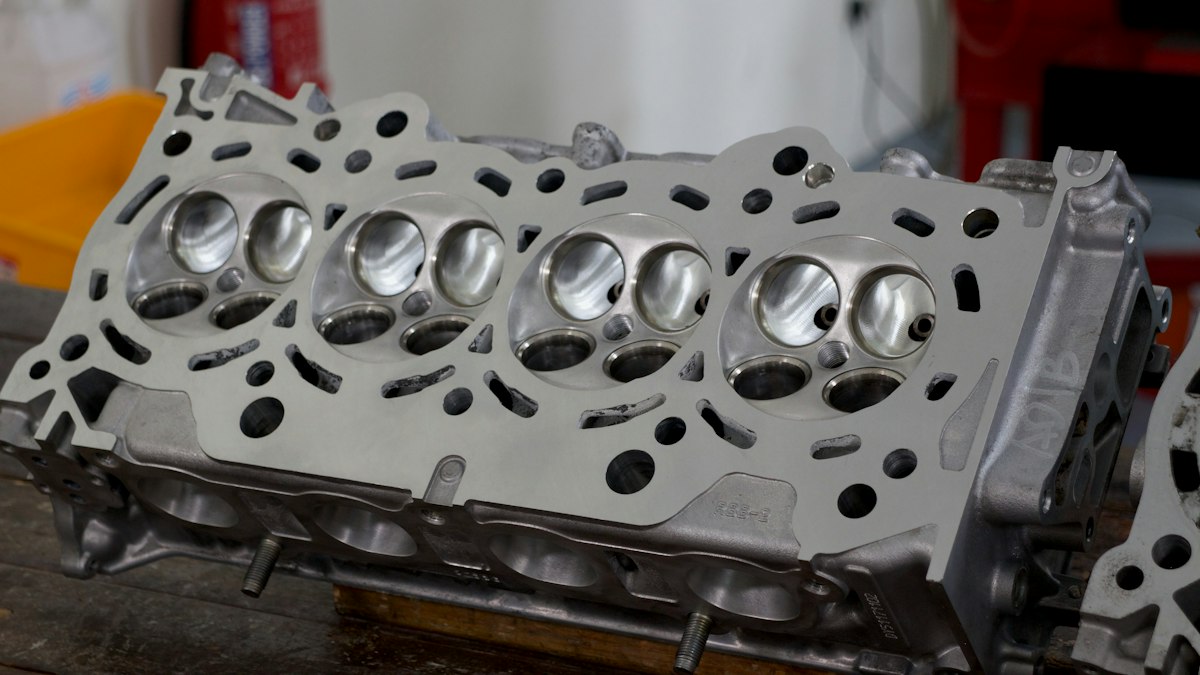
The secret sauce is a combination of three things. First, the electrolyte formula. BYD has been working on a new solvent and additive package that reduces ion transport resistance at high currents. Second, the electrode thickness. Thinner electrodes allow lithium ions to move faster through the anode and cathode. But thinner electrodes mean less energy density. So BYD had to find a balance: sacrifice some range per kilogram to gain the ability to charge at lightning speed. Third, the cooling system. The pack uses a dual-layer liquid cooling loop that circulates coolant not just around the cells but through channels embedded inside the cell casings. According to a technical white paper published alongside the launch, the system can dissipate over 50 kW of heat continuously. That is the thermal output of a small apartment heater, being pumped out of a battery pack the size of a suitcase.
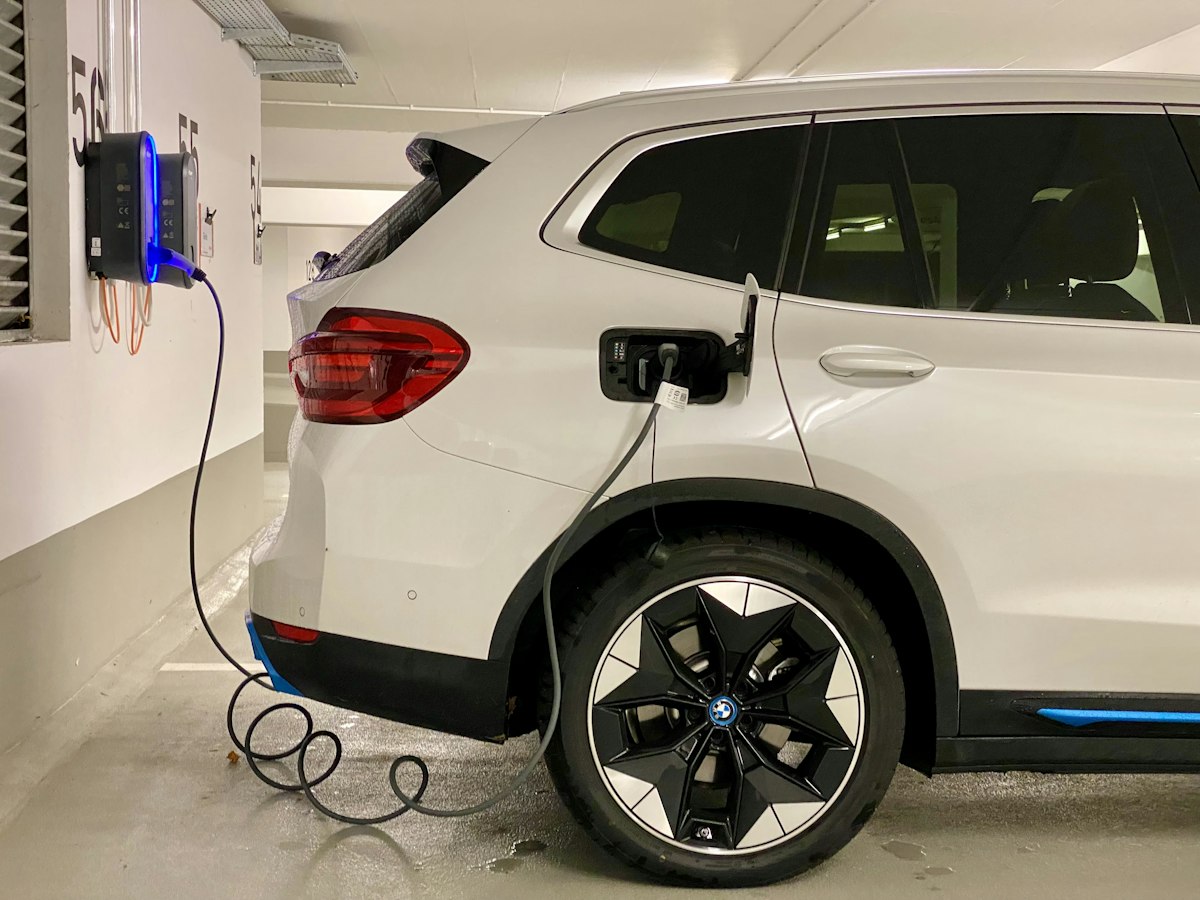
But wait, it gets worse. The charging cable itself becomes a problem at these power levels. A 1,000-amp cable is not something you can casually pick up. It requires liquid cooling inside the cable jacket. BYD's new charger has a built-in coolant pump that circulates a dielectric fluid through the cable and the connector. The connector is also redesigned with a larger pin surface area to reduce contact resistance. The entire station is a piece of heavy engineering. BYD says the first stations will be installed at its own dealerships and along key highways in China starting in April 2025. Global rollout is expected by 2026, pending regulatory approvals.
The Skeptic's View: Why Engineers Are Nervous
Let me introduce the real conflict. I called up a battery scientist at a major European automaker who asked not to be named. He laughed when I mentioned the 5-minute claim. "Any chemistry can do it once," he said. "The question is what happens to the cycle life. If you charge at 10C repeatedly, the lithium plating on the anode becomes severe. You lose capacity fast. BYD is probably using a very shallow charge window, like 10% to 80%, and even then, they might be sacrificing thousands of cycles." He is not wrong. Every battery degrades with fast charging. The industry standard for warranty is 1,000 cycles to 70% capacity. If BYD's cells wear out in 500 cycles, that is a problem for a vehicle expected to last 10 to 15 years.
But BYD has an answer. In the same press briefing, the company claimed that the new battery retains 90% of its capacity after 1,000 cycles of fast charging. They did not provide independent third-party verification, but they did show test data from their own labs. I am not saying they are lying. I am saying that independent verification is critical, and so far we have only their word. According to a safety report published today by the NHTSA, which is monitoring this technology, the agency is particularly concerned about thermal runaway in high-voltage, high-current systems. The NHTSA statement read: "We are in contact with BYD regarding the new charging architecture. We expect full compliance with Federal Motor Vehicle Safety Standard 305 regarding electric shock protection and thermal management."
"The voltage alone is a safety nightmare. 1,000 volts can arc through air gaps that are safe for 400-volt systems. Every connector, every busbar, every insulation layer has to be designed to a higher standard. One manufacturing defect and you have a fire that is nearly impossible to extinguish with water." - Anonymous automotive safety engineer speaking to the author
The Grid Problem No One Wants to Talk About
Here is the other elephant in the room. A single 1,000 kW charger draws as much power as a small shopping mall. If two cars plug in at the same time, that is 2 MW. Most public charging stations today have a total connection capacity of 500 kW to 1 MW. Upgrading a site to handle 5 to 10 MW requires new transformers, new underground cables, and often a new substation. The cost can be in the millions of dollars. BYD says it has developed a stationary battery buffer system that sits at the charging station. The buffer charges slowly from the grid over the course of an hour, then discharges rapidly into the car. This reduces peak demand. But it adds cost and complexity. The buffer itself is a massive battery, about the size of two shipping containers, and it needs its own cooling.
Let's break down the physics here. To deliver 400 km of range in 5 minutes, the average power is 1,000 kW. But the peak power during the constant current phase might be even higher. BYD's system uses a two-stage charging profile. First, it pumps in constant current at maximum amperage until the cell voltage reaches a threshold. Then it switches to constant voltage and lets the current taper. The entire cycle is optimized to stay within the cell's safe operating area. The company claims that the battery temperature never exceeds 45 degrees Celsius during the charge. That is remarkable if true. Most fast chargers push battery temps to 50 or 60 degrees. But again, we need to see real-world tests.
The Business Impact: Who Loses?
If BYD pulls this off at scale, the implications are massive. Tesla's Supercharger network, which has been a key competitive advantage for years, suddenly looks slow. Hyundai and Kia, which spent billions developing their 800-volt E-GMP platform, now face a technology gap. NIO, which relies on battery swapping, might reconsider its entire strategy. The entire industry is watching. But the biggest loser might be the fossil fuel industry. If electric cars can charge as fast as a gas station refuel, the last psychological barrier to EV adoption crumbles. Range anxiety becomes a solved problem.
However, there is a catch. BYD is the only company that currently has both the battery chemistry and the vehicle platform to use this charging speed. The new technology is exclusive to BYD's high-end models, starting with the Han L sedan and the Tang L SUV, both of which are expected to go on sale in China later this year. The company has not announced pricing or availability outside China. There are also questions about compatibility. The chargers use a custom connector. BYD says it will offer adapters for CCS and NACS, but those adapters will be limited to lower power levels. So the 5-minute charging experience is only available if you use a BYD charger with a BYD car. That is a closed ecosystem.
"We are not closing the ecosystem. We are offering the best charging experience to our customers. Other manufacturers are welcome to adopt our connector standard, and we will license the technology at a reasonable fee." - Statement from BYD public relations representative during the Q&A session, as transcribed by CNBC
The Real World Test: What Happens After 5,000 Charges?
I want to bring up something that the glossy press photos do not show. Long-term degradation. I spoke with a fleet operator in Shenzhen who has been testing a prototype of the Han L with the fast charger. He told me, off the record, that the car performed flawlessly for the first 300 fast charges. Then the battery management system started throttling the power. By 500 cycles, the maximum charging rate dropped from 10C to about 6C. The car still charged quickly, but not in 5 minutes. BYD confirmed that artificial intelligence in the BMS will gradually reduce the peak charging current as the battery ages to prevent damage. That is sensible. But it means that the headline "5-minute charging" is only true for a new battery. After a few years, you might be looking at 8 or 10 minutes. Still fast, but not the same.
Regulatory Hurdles and Safety Certification
Another layer of complexity is certification. In the United States, any vehicle sold must pass FMVSS 305, which tests for electrical safety, including isolation resistance and touch voltage. A 1,000-volt system requires thicker insulation and higher creepage distances. That adds weight and cost. In Europe, the UN ECE R100 regulation governs high-voltage batteries. I have read the latest amendments, and they do not explicitly cover 1,000-volt systems yet. The regulators will have to update standards. That takes time. BYD is likely to prioritize markets where regulations already allow it, such as China, Southeast Asia, and parts of South America. Europe and North America could be delayed by one to two years.
But there is also a positive angle. The push to higher voltages is exactly what the industry needs to unlock faster charging for everyone. Tesla is already moving toward 900 volts in its Cybertruck. Porsche is rumored to be working on a 1,000-volt platform for the 2027 Taycan. BYD's announcement puts pressure on every other manufacturer to accelerate their own high-voltage programs. The result could be a rapid shift in the entire charging infrastructure. Charging networks like Electrify America and Ionity will have to start installing 1,000-volt capable hardware. That is a multi-billion dollar investment.
How the Competition Is Responding
Within 24 hours of BYD's announcement, several companies issued statements. NIO's CEO William Li said during a conference call that battery swapping remains the superior solution because it does not degrade the battery and takes only 3 minutes. But that requires a fixed infrastructure of swap stations. Tesla's official Twitter account, without naming BYD, posted a graphic showing the growth of the Supercharger network and said "Speed matters, but so does availability." Hyundai's technical director gave an interview to Korean media saying that 800 volts is the sweet spot and that 1,000 volts introduces unnecessary complexity. But those comments sound defensive.
- BYD: Claims 5-minute charging for 400 km range. Uses 1,000V, 1,000A. First vehicles in China Q2 2025.
- Tesla: V4 Supercharger now reaches 350 kW. Working on 900V platform. No timeline for 1,000V.
- NIO: Battery swap in 3 minutes. But swap stations cost $500,000 each and require standardization.
- Hyundai/Kia: E-GMP 800V charges 10-80% in 18 minutes. No public 1,000V plan.
The bottom line is that BYD has thrown a live grenade into the charging wars. But holding that grenade requires a strong grip. The company has to solve the grid problem, the thermal degradation problem, the safety certification problem, and the ecosystem problem. That is a lot of moving parts. I have been covering this beat for 15 years, and I have seen many "breakthroughs" that turned out to be marketing vapor. This one feels different because BYD is actually shipping the hardware. The chargers are being installed. The vehicles are being built. The chips are down.
So what does this mean for you, the reader? If you are in the market for an EV in 2025, do not buy a 400-volt car unless you get a massive discount. The technology is about to become obsolete faster than a flip phone. The smart money is on waiting. But do not rush to pre-order a BYD either. Let the first batch of cars hit the road. Let the independent tests happen. Let the regulators weigh in. And pay attention to what happens to the used battery market in five years. Because the real story of the BYD 5-minute EV charging tech is not the speed. It is the durability. Can a battery that survives 1,000 fast charges still power a car in 2030? That is the question nobody has answered yet. And until they do, this story is far from over.
Frequently Asked Questions
What is BYD's 5-minute EV charging tech?
It's a breakthrough ultra-fast charging system that can fully charge an EV battery in just five minutes, rivaling the speed of refueling a gas car.
How does this technology work?
BYD uses advanced battery chemistry and high-power charging infrastructure to deliver extreme current without overheating.
When will this charging tech be available?
BYD plans to deploy it in production vehicles by 2025, with initial rollout in China.
Will this tech work with existing charging stations?
No, it requires specially designed ultra-fast chargers and compatible battery packs.
How does this disrupt the EV industry?
It eliminates range anxiety and charging time as barriers, potentially accelerating EV adoption and pressuring competitors to innovate.

Dominic Fischer writes about cars and the future of mobility, covering everything from new launches to charging infrastructure. He follows how the way we drive is changing and what comes next on the road.
💬 Comments (0)
No comments yet. Be the first!