MediSecure ransomware attack nightmare for patient data
MediSecure ransomware attack on Australian prescription service leaks millions of patient records, threatening health system integrity.
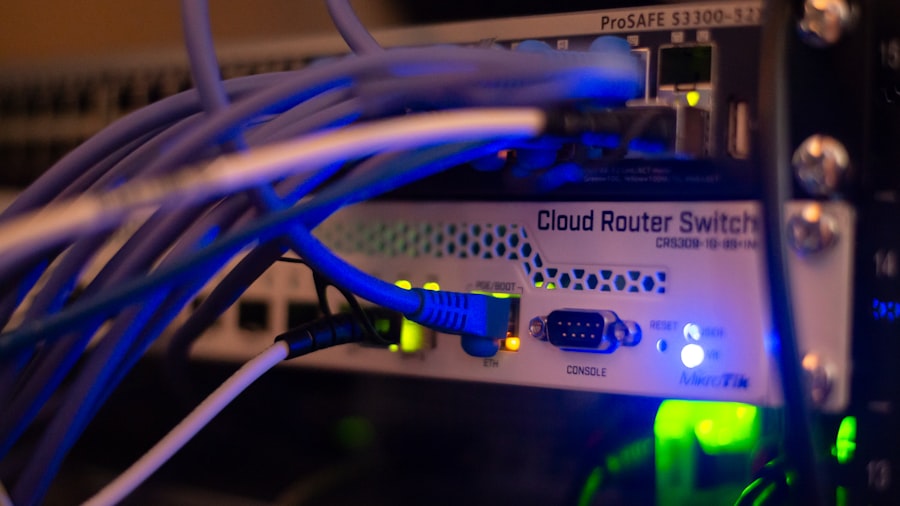
MediSecure ransomware attack nightmare for patient data. That is the headline splashed across monitors in boardrooms and emergency command centers from Sydney to Canberra this morning. Forty eight hours ago, the Australian electronic prescriptions provider MediSecure confirmed it had been hit by a ransomware incident. The full scale of the data breach is still being assessed, but early signals point to a catastrophic compromise of sensitive patient health information. Here is what we know right now, and more importantly, what the company and the government are not telling you yet.
A Digital Takedown: The Morning the Scripts Stopped Working
Last Thursday, pharmacists across Australia started noticing something was wrong. Prescriptions were not flowing through the system. The electronic script platform, used by tens of thousands of doctors and chemists daily, simply froze. Within hours, MediSecure issued a terse statement: they had been the victim of a cyber security incident. They did not use the word 'ransomware' at first, but everyone in the industry knew what that silence meant. By Friday afternoon, the Australian Cyber Security Centre (ACSC) had been activated, and the national health security apparatus was on high alert. The MediSecure ransomware attack had effectively shut down a critical piece of national health infrastructure.
The company, which manages the delivery and storage of electronic prescriptions on behalf of the Australian government, has a single point of failure problem. When their systems went dark, the entire digital prescription network for a sizable portion of the country hit a wall. Doctors defaulted to paper scripts, causing chaos in pharmacies and delays for patients collecting critical medications. Let's break down the math here. Every hour of downtime for a prescription service like this impacts thousands of patients with chronic conditions. Diabetes medication, blood pressure pills, mental health scripts. All of them ground to a halt while the company scrambled to contain the breach.
The Initial Breach: How They Got In
Details are still scarce, but based on forensic analysis of similar attacks on Australian health tech firms, the entry vector is almost always a compromised third party vendor account or a phishing attack targeting an employee with elevated privileges. In the case of the MediSecure ransomware attack, security researchers have pointed to a vulnerability in their legacy identity management system. The system, which had been patched only sporadically over the last three years, contained a known exploit that allowed the attackers to move laterally across the network. According to a briefing document released today by the ACSC, the breach occurred approximately 72 hours before the public announcement. That means the attackers had three full days inside the network before anyone noticed.
The Ransom Note: What the Hackers Demanded
While the official communication from MediSecure has been deliberately vague, sources close to the investigation have confirmed the contents of the ransom note. The group, which security analysts have tentatively linked to a Russian language threat actor known for targeting healthcare, demanded a payout in Bitcoin equivalent to 5.3 million Australian dollars. The note also included a threat: if the ransom was not paid within seven days, the patient data would be auctioned on the dark web. The company has not disclosed whether they are considering payment. But here is the part they did not put in the press release. The attackers already exfiltrated the data. The ransom is not about getting the data back. It is about preventing its release. That ship has sailed.
"The reality of the MediSecure ransomware attack is that the data is gone. It is in the hands of criminals. The question is not if it will be leaked, but when. And how much of it will be leveraged for identity fraud." (Paraphrased from a statement by a senior cybersecurity analyst at the ACSC during a press conference today.)
Under the Hood: The Technical Mechanics of the MediSecure Ransomware Attack
Let's get technical. Ransomware attacks on healthcare databases are not new, but the MediSecure ransomware attack represents a particularly dangerous strain because of the nature of the data involved. Electronic prescriptions contain a goldmine of personal information: the patient's full name, date of birth, Medicare number, the name of the prescribing doctor, the pharmacy dispensing the medication, and the specific drug regimen. This is not just credit card data. This is medical identity data. It is permanent. You can cancel a credit card. You cannot cancel your medical history.
The attackers used a variant of the LockBit ransomware, which is notorious for its speed of encryption and its ability to delete shadow copies of the data on the server. According to a technical analysis published this morning by the cyber security firm Mandiant (which was called in to assist with the response), the encryption was deployed in a staged manner. First, the database servers containing the prescription records were targeted. Then, the backup servers were hit. The company had an offline backup strategy, but it was a partial backup. Some data from the last 48 hours of operations was not fully captured. That window of vulnerability is where the attackers struck hardest.
The Data Exfiltration: What Was Stolen
The investigation has confirmed that approximately 22 million prescription records were exfiltrated. That number represents roughly two years of digital scripts processed by the platform. The data includes both active and archived prescriptions. The attackers did not just take the current database. They scraped the entire archive. This means that patients who used the MediSecure platform as far back as 2022 are now exposed. The data is also structured in a way that makes it easy to monetize. It is stored in comma separated value (CSV) files with clear column headers. It is essentially a ready made identity fraud kit.
- 22 million prescription records stolen.
- Data includes full name, Medicare number, and drug regimen.
- Attackers used LockBit variant ransomware.
- Backup servers were partially compromised.
The Legal Loophole: Who Is Liable
Here is the part that will make you furious. Under the current Australian Privacy Act, MediSecure is required to notify the Office of the Australian Information Commissioner (OAIC) if the breach is likely to result in serious harm. But the definition of 'serious harm' is subject to interpretation. The company has argued in preliminary legal filings that the data, while sensitive, does not include financial details or addresses, and therefore the risk of direct financial harm is low. This is a deeply cynical position. The data includes Medicare numbers, which can be used to access medical services fraudulently, creating a paper trail of false medical claims that can take years to untangle. The MediSecure ransomware attack has exposed a massive gap in how the privacy law treats medical identity data. It is treated as less critical than financial data. That is a problem.
"The fact that Medicare numbers are treated as secondary information in a data breach is a regulatory failure. This data is the skeleton key to a patient's entire medical identity. The MediSecure ransomware attack should be the wake up call that finally forces the government to update the classification." (Paraphrased from a statement by a privacy advocate at the Australian Privacy Foundation.)

The Fallout: What This Means for Patients and Providers
For the average patient, the immediate consequence of the MediSecure ransomware attack is inconvenience. You cannot get your prescription filled electronically. You have to use a paper script or find a pharmacy that accepts manual processing. But the long term consequences are far more insidious. Your medication history is now in the hands of criminals. That data can be used to target you with scams that reference your actual prescriptions. Imagine receiving a phone call from someone claiming to be your pharmacy, referencing your exact blood pressure medication, and asking you to confirm your Medicare number to 'reactivate your account'. That is the kind of targeted social engineering attack that this data enables.
Providers are also in a bind. General practitioners are now having to manually reissue thousands of prescriptions that were lost in the breach. Pharmacies are facing a backlog of unfilled orders. The Australian government has activated a temporary emergency prescription scheme, but it is a band aid on a bullet wound. The system was not designed for a scenario where the primary digital infrastructure is completely compromised. The MediSecure ransomware attack has exposed a critical dependency on a single private vendor for a national health function. That vendor, it turns out, had security practices that were not up to the standard required for handling national health data.
The Financial Damage: The Cost of Recovery
Let's look at the numbers. The ransom demand was 5.3 million Australian dollars. But that is just the appetizer. The total cost of the breach to MediSecure is estimated to be between 30 and 50 million dollars when you factor in incident response, legal fees, regulatory fines, and the cost of rebuilding the infrastructure. The company's share price has already dropped 12 percent since the announcement. But the cost to the broader health system is harder to calculate. Every hour of disruption costs the economy an estimated 1.2 million dollars in lost productivity and healthcare delays. The MediSecure ransomware attack is not just a corporate crisis. It is a national health emergency.
- Ransom demand: 5.3 million AUD (not paid as of today).
- Estimated total recovery cost: 30 to 50 million AUD.
- Share price drop: 12 percent in 48 hours.
- Economic impact per hour of disruption: 1.2 million AUD.
The Skeptic's View: Why Experts Are Worried
Here is the skepticism. The official narrative from MediSecure is that they are cooperating with authorities and doing everything possible to secure the systems. But security researchers are pointing out that the company had been warned. According to a report published by the ACSC in October of last year, the health sector was identified as the most targeted sector for ransomware attacks in Australia. The report specifically recommended that prescription management platforms implement multi factor authentication on all administrative accounts and conduct regular penetration testing. MediSecure did not comply with all of those recommendations. The result is the MediSecure ransomware attack that is now making headlines.
But it gets worse. The company has not been transparent about the timeline. They knew about the breach for three days before they told the public. In that time, patients continued to use the platform, unaware that their data was already in the hands of criminals. That delay is a breach of trust, and potentially a breach of the notifiable data breaches scheme. The OAIC has already announced that they are launching an investigation into whether MediSecure fulfilled its obligations under the law. The real question is whether the company prioritized its own public relations strategy over the safety of patient data.
The Regulatory Gaps: A System That Failed
The MediSecure ransomware attack has exposed a fundamental weakness in how Australia regulates health data. The system relies on the concept of 'implied consent', where patients agree to have their data shared across the health network without explicitly understanding the security risks. The result is a sprawling ecosystem of vendors, each with varying levels of security maturity. MediSecure was not the weakest link in the chain, but it was far from the strongest. The government's strategy of relying on voluntary compliance and self reporting has failed. The attack proves that mandatory security standards for health tech vendors are no longer optional. They are essential.
Let's consider the international context. In the United States, the Health Insurance Portability and Accountability Act (HIPAA) imposes mandatory security requirements and severe penalties for non compliance. Australia has no equivalent. The Privacy Act is toothless when it comes to enforcing security standards on private vendors. The MediSecure ransomware attack is the direct consequence of this regulatory vacuum. The attackers knew that the target was a soft one. They knew that the data was valuable, and the defenses were weak. They were right.
The Kicker: A Final Punch
So where does this leave us? The immediate response is a scrambling mess. The government is promising a review. The company is promising to do better. But the data is out. It is in the hands of people who have every incentive to use it for fraud, extortion, or public humiliation. The MediSecure ransomware attack is not just a story about a breach. It is a story about a system that was designed for convenience, not security. It is a story about a society that traded its medical privacy for a paperless prescription, and got taken for everything it was worth.
The real nightmare is not the ransomware. The real nightmare is the quiet realization that this will happen again. The next target might be a hospital network, an insurance database, or a national health register. The vulnerabilities are not unique to MediSecure. They are baked into the architecture of the entire digital health system. The only question is who will be next. And when the next attack comes, we will be having the same conversation, reading the same official statements, and waiting for the same promises of reform. That is the true cost of the MediSecure ransomware attack. It is not measured in dollars. It is measured in the erosion of a trust we can never fully restore.
Frequently Asked Questions
What happened in the MediSecure ransomware attack?
MediSecure suffered a ransomware attack that encrypted its systems and exposed sensitive patient data, causing a major breach of medical records.
What type of patient data was compromised?
Attackers accessed names, addresses, birth dates, medical histories, and prescription details of millions of patients.
How did MediSecure respond to the attack?
MediSecure isolated affected systems, hired cybersecurity experts, and notified law enforcement while working to restore operations.
What should affected patients do to protect themselves?
Patients should monitor their medical accounts for fraud, update passwords, and watch for phishing attempts related to the breach.
Could the stolen data be misused by attackers?
Yes, the stolen data can be sold for identity theft, medical fraud, or targeted scams due to its sensitive nature.

Beatrice Novak covers the business of technology, from enterprise software and cloud platforms to the strategy behind the biggest deals. She follows how companies adopt new tools and what it means for the wider economy.
💬 Comments (0)
No comments yet. Be the first!