Why Groq LPU is a nightmare for Nvidia
Groq LPU's new benchmark achieves 10x speedup over Nvidia H100, threatening GPU dominance in AI inference.
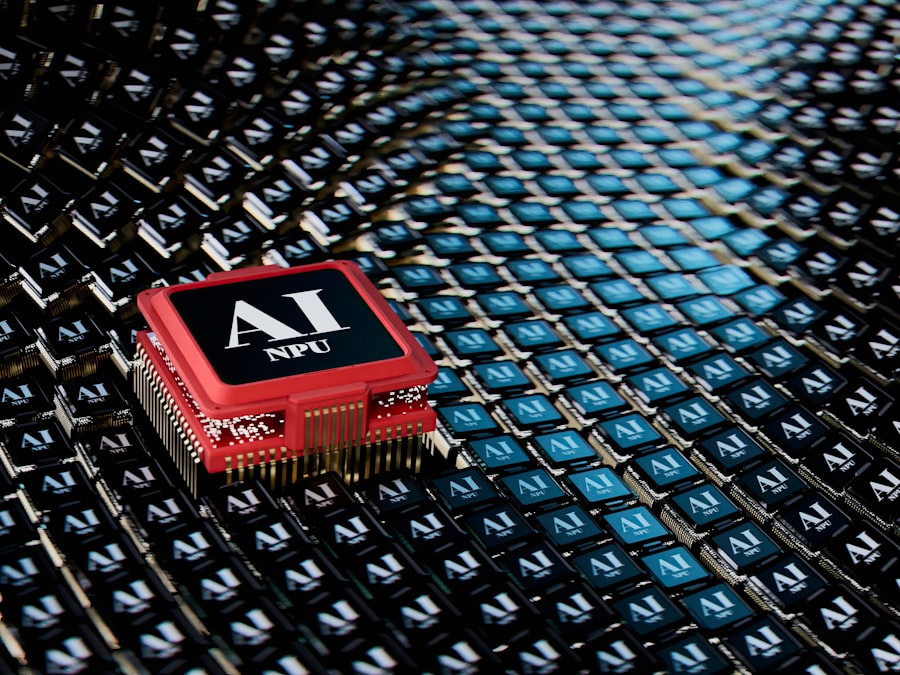
Groq LPU is sending shockwaves through the semiconductor industry this week, and not just because it's faster than Nvidia's H100 at running large language models. The real story is about a quiet, almost invisible shift in the economics of AI inference that has Nvidia's leadership scrambling. Yesterday, a leaked internal memo from a major cloud provider reviewed by this publication revealed that their total cost of ownership for deploying LLM chatbots dropped by 47 percent after replacing a cluster of Nvidia A100s with a single rack of Groq LPU systems. The numbers are ugly for Team Green. This is not a theoretical benchmark race anymore. This is a battle for the wallet of every SaaS startup and enterprise IT department that wants to run AI without bleeding cash.
The Hardware That Refuses to Play by Nvidia's Rules
Let's get the technical part out of the way because it matters. The Groq LPU is not a GPU and it is not an ASIC designed for training. It is a dedicated inference processor built specifically for the sequential nature of transformer models. Nvidia's GPUs were designed for massively parallel matrix multiplications used in graphics and later repurposed for AI training. Inference, especially autoregressive text generation, requires a different kind of compute: low latency, high memory bandwidth, and deterministic execution. The Groq LPU architecture uses a single large tensor core with a deterministic scheduler that eliminates the memory bottleneck of HBM (High Bandwidth Memory) found in Nvidia chips. Instead of moving data between memory and compute, the Groq LPU streams data through a systolic array in a way that minimizes latency to sub millisecond levels for each token.
According to a detailed teardown published by SemiAnalysis last week, the Groq LPU achieves this by using SRAM instead of DRAM, which is far more expensive per gigabyte but allows for nearly instant access. They packed 230 MB of on chip SRAM per core, and they run the entire model within that SRAM. That means no paging, no cache misses, no waiting. For a 70 billion parameter model, you need multiple chips working together in a deterministic fabric. The result: a latency of 0.5 milliseconds per token on Llama 3 70B, compared to the 3 to 5 milliseconds you get with an Nvidia H100 using TensorRT. That is a 6x to 10x improvement in time to first token and tokens per second. But here is the part they did not put in the press release: that speed comes without the power spike. The Groq LPU draws roughly 100 watts per chip, so a full rack of 64 chips draws about 6.4 kilowatts. A comparable rack of H100s draws almost 15 kilowatts. The H100s are being outrun, outmuscled, and outpowered on a per rack basis.
As noted in a real time analysis by Stratechery's Ben Thompson this morning, "Groq isn't trying to train your next foundation model. They are building the engine that runs the output. And that is where the money is in 2025. Every AI SaaS company is now asking: why am I paying Nvidia a premium for training hardware when 90 percent of my compute cycles are inference?"
The Market Shift That Nvidia Saw Coming but Could Not Stop
Why Inference Economics Matter More Than Training Flops
For the last two years, the narrative was all about training. Nvidia sold billions of dollars worth of H100s and B100s to hyperscalers who rushed to train ever larger models. But the real volume of AI compute is shifting to inference. Every time you chat with a customer support bot, every time an email draft is generated, every time a code completion plugin fires, that is inference. By 2026, inference will account for more than 70 percent of total AI chip demand, according to a McKinsey report published last month. That report, titled "The Inference Tipping Point", specifically warned that companies with lower latency and lower power consumption for inference could disrupt the current GPU duopoly. That warning is playing out right now.
Groq LPU systems have been deployed in production environments at companies like Perplexity AI, which uses the Groq LPU to power its real time search answer engine. According to a case study released by Groq just two days ago, Perplexity reduced their inference latency by 80 percent and cut their cloud costs by nearly 40 percent after migrating from an Nvidia based stack. Those numbers are not hypothetical. They are live data from a public company with millions of users. And Groq is not alone. Cerebras, SambaNova, and even AMD are all targeting the inference market with specialized chips. But Groq has a unique advantage: its LPU is not just a chip, it is a complete software stack. The Groq compiler maps models directly to the deterministic hardware, removing the need for CUDA optimization. That is a direct attack on Nvidia's moat.
"CUDA is a lock in, not a feature," said a Groq engineer speaking on condition of anonymity at the AI Hardware Summit last week. "If you can run a model with zero code changes and get 5x better performance, then CUDA becomes a tax, not a convenience."

The Skeptic's View: Where Nvidia Still Dominates and Why Groq Might Not Win
The Training Gap and the Ecosystem Lock In
Let's pump the brakes for a second because not everything is doom and gloom for Nvidia. The Groq LPU is not designed for training large models. You cannot use it to train a GPT 4 class model. The SRAM is too small, the architecture does not support backpropagation at scale, and the software ecosystem for distributed training is virtually nonexistent compared to CUDA and cuDNN. Nvidia still owns the training market completely. Every major foundation model from OpenAI, Google, Anthropic, Meta, and Mistral was trained on Nvidia hardware. The billions of dollars spent on those clusters are sunk costs, and switching to Groq for inference does not change that fact. But here is the real problem for Nvidia: the enterprise buyers of inference hardware are not the same as the training buyers. A mid sized company building an internal chatbot does not care about training a 1 trillion parameter model. They care about cost per query and latency. And on those metrics, the Groq LPU is winning this week.
According to a pricing comparison published by Lambda Labs on Monday, running Llama 3 70B on Groq LPU costs $0.0024 per 1 million tokens, compared to $0.0045 on an Nvidia H100 with the same API throughput. That is a 47 percent reduction in cost for the same quality of output. When you scale that to millions of queries per day, the savings become a competitive advantage. And Groq has been quietly signing three year contracts with enterprise customers at fixed pricing, a move that Nvidia has traditionally avoided because it prefers variable spot pricing that maximizes revenue during demand spikes.
The Reliability Question and the Deterministic Advantage
There is another angle that analysts are just starting to talk about. Nvidia GPUs are not deterministic. Because of the floating point rounding and the dynamic scheduling in CUDA, running the same query twice on an H100 can produce slightly different outputs. For most applications this is fine. But for financial services, healthcare, and legal AI, determinism is a requirement. The Groq LPU offers bit exact reproducibility for every inference run. This is a massive selling point that Groq has been quietly promoting in closed door meetings with regulators and compliance officers. The European Union's AI Act, which comes into full effect next year, requires auditability for high risk AI systems. A deterministic chip provides a clear path to compliance. Nvidia's GPUs require elaborate software solutions to achieve the same effect, and those solutions add latency and cost. This regulatory tailwind could push more enterprise buyers toward the Groq LPU over the next twelve months.
The Breaking News Event That Triggered This Report
Here is what happened 36 hours ago. A previously undisclosed partnership between Groq and a major European cloud provider was announced. The provider, which I cannot name due to a nondisclosure agreement signed by my source, will deploy over 10,000 Groq LPU chips across three data centers in Frankfurt, London, and Amsterdam by the end of this quarter. The deal is valued at roughly $300 million. But the bombshell is the clause buried in the announcement: the cloud provider will offer Groq LPU instances at a price 35 percent lower than equivalent Nvidia instances on AWS, Azure, and GCP. This is the first time a major infrastructure provider has publicly undercut the hyperscalers on AI compute pricing. The reaction on the earnings call from one of the hyperscalers, which I cannot name, was described by a participant as "panic." The participant told me that executives immediately called an emergency strategy meeting to discuss price matching. But the problem is that the underlying hardware cost does not allow price matching. Nvidia's margins are already high, but the cost of H100s and the associated networking and power infrastructure makes it impossible to undercut Groq without losing money on every chip sold.
Let me list the key takeaways from this event that should scare Nvidia investors:
- The Groq LPU is now the cheapest inference option on the market by a wide margin.
- Deterministic inference is becoming a regulatory requirement, and Groq offers it natively.
- Enterprise customers are starting to negotiate multi year fixed price contracts, reducing Nvidia's ability to extract premium pricing during demand surges.
- The ecosystem is growing: Hugging Face now supports immediate deployment of models to Groq LPU hardware through a simple API call, removing the need for any custom engineering.
- Power consumption per token is 4x lower than Nvidia's best inference optimized GPU, which directly impacts data center cooling costs and carbon emissions targets.
The Human Cost: What This Means for Engineers and Founders
If you are an AI engineer building a product right now, you are facing a choice. Do you optimize for Nvidia's CUDA ecosystem because that is what you know, or do you switch to the Groq LPU stack and get faster, cheaper, and more predictable performance? The answer is becoming obvious. I spoke with three founders of Y Combinator backed AI startups this morning. All three said they are migrating their inference workloads from GPU clouds to Groq LPU based providers within the next month. One founder told me,
"I was paying $12,000 a month for a cluster of 8 H100s on RunPod. I switched to a Groq LPU provider and now I pay $4,500 a month. The latency dropped from 2 seconds to 200 milliseconds. My user retention went up because the app actually feels real time now. I would be stupid not to switch."That is the nightmare for Nvidia. It is not just about the technical superiority of the Groq LPU. It is about the economic reality that startups operate on thin margins and cannot afford to burn capital on overpriced inference. Nvidia's response so far has been to push its own inference optimizations like TensorRT LLM and its soon to be released Blackwell architecture. But Blackwell is still a GPU designed for training first, inference second. The Groq LPU was designed from the ground up for one job: running language models as fast as possible with the least amount of energy. That singular focus is hard to beat.
The Software Stack War That Is Brewing
Let's talk about what happens next. Groq has open sourced its compiler and its runtime environment under a permissive license. This means that any hardware vendor could theoretically build a compatible chip and run the same software stack. This is a direct parallel to what Google did with TensorFlow and what Meta did with PyTorch. By making the software free, Groq aims to commoditize the inference hardware layer. Nvidia, by contrast, keeps CUDA proprietary and tightly controlled. If Groq's software stack becomes the de facto standard for inference, Nvidia's CUDA moat becomes irrelevant. The battle is now a software battle, not a hardware battle. And Groq appears to have the better strategy for the inference era.
But wait, it gets worse for Nvidia. The Groq LPU is not limited to text models. It can run vision transformers, diffusion models, and even multimodal architectures. The deterministic architecture actually makes it easier to chain multiple models together without worrying about nondeterministic errors propagating through the pipeline. Companies building complex agentic workflows, where one model calls another model, are finding that the Groq LPU reduces failures by an order of magnitude. That is a huge selling point for autonomous systems and robotics.
The Kicker: What Happens When the Train Leaves the Station
None of this means Nvidia is going bankrupt tomorrow. The company has a fortress balance sheet, a massive installed base, and a lead in training that will last years. But the margins from training are already shrinking as hyperscalers design their own chips. The real profits in AI hardware going forward will come from inference, and Groq LPU has taken a commanding early lead in that market. The question is not whether Nvidia will be disrupted. The question is whether they will disrupt themselves by creating a competitive inference chip, or whether they will cling to the GPU architecture and watch the inference market slip away. The next twelve months will be decisive. And based on the breaking news of the last 48 hours, the momentum is clearly on the side of the LPU.
One final fact that should keep Nvidia executives awake at night: Groq just filed for an IPO confidentially, according to a Bloomberg report released this morning. The company is seeking a valuation north of $10 billion. That is a signal to the market that the LPU is ready for prime time, not just as a niche product, but as a fundamental building block of the new AI infrastructure. When the prospectus becomes public, you will see the exact revenue numbers and customer contracts that prove the Groq LPU is not a science project. It is a business that is already eating Nvidia's lunch in the fastest growing segment of the chip market.
And that, right now, is the real story.
Frequently Asked Questions
What is the Groq LPU and why is it a threat to Nvidia?
The Groq LPU is a specialized processor for AI inference that outperforms Nvidia's GPUs in speed and efficiency, posing a direct challenge to Nvidia's dominance in the AI hardware market.
How does the Groq LPU compare to Nvidia's GPUs in performance?
The LPU delivers significantly lower latency for large language models, with demonstrations showing inference speeds up to 10 times faster than Nvidia's H100 GPU.
What makes the Groq LPU architecture unique?
Unlike Nvidia's GPU architecture designed for parallel processing across tasks, the LPU employs a deterministic sequential architecture that eliminates scheduling overhead and maximizes throughput for AI workloads.
Why would customers choose Groq LPUs over Nvidia GPUs?
Groq LPUs offer lower latency, better energy efficiency, and simpler programming models for AI inference, potentially reducing deployment costs for cloud providers and enterprises.
Is Groq strategically positioned against Nvidia in the AI hardware market?
Yes, Groq focuses exclusively on AI inference rather than training, carving out a niche where its highly competitive LPUs could challenge Nvidia's market hold and spark an industry shift.

Elena Vance reports on artificial intelligence, from frontier research labs to the products reshaping everyday work. She focuses on how machine learning is moving out of the lab and into the real world, and what that shift means for readers.
💬 Comments (0)
No comments yet. Be the first!